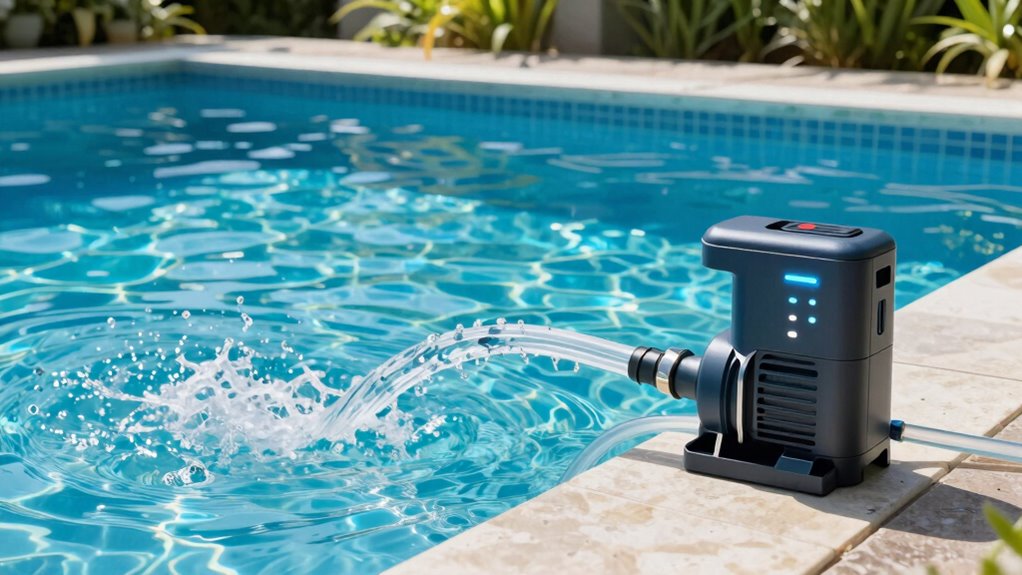

Understanding how long to run your pool pump is key to keeping your water clean, safe, and balanced. When you run it too little, chemicals won’t distribute evenly, leading to algae and bacteria buildup. Too much, and you’ll waste energy and strain your equipment. Knowing the right run time helps you maintain clear water, save money, and prevent costly repairs. Want to discover the ideal timing for your pool? Keep going to find out more.

Get pool and patio gear delivered free with Prime
- Fast, free delivery on millions of items
- Prime Video, Amazon Music and more included
- Member-only deals all year
Key Takeaways
- Proper pump run time ensures even water circulation and chemical distribution for a safer swimming environment.
- Understanding pump timing helps prevent algae growth, bacteria buildup, and cloudy water.
- Maintaining optimal run time balances effective filtration with energy efficiency and equipment longevity.
- Correct scheduling reduces chemical imbalances and lowers maintenance costs.
- Regularly adjusting pump run time supports water quality, safety, and equipment performance.
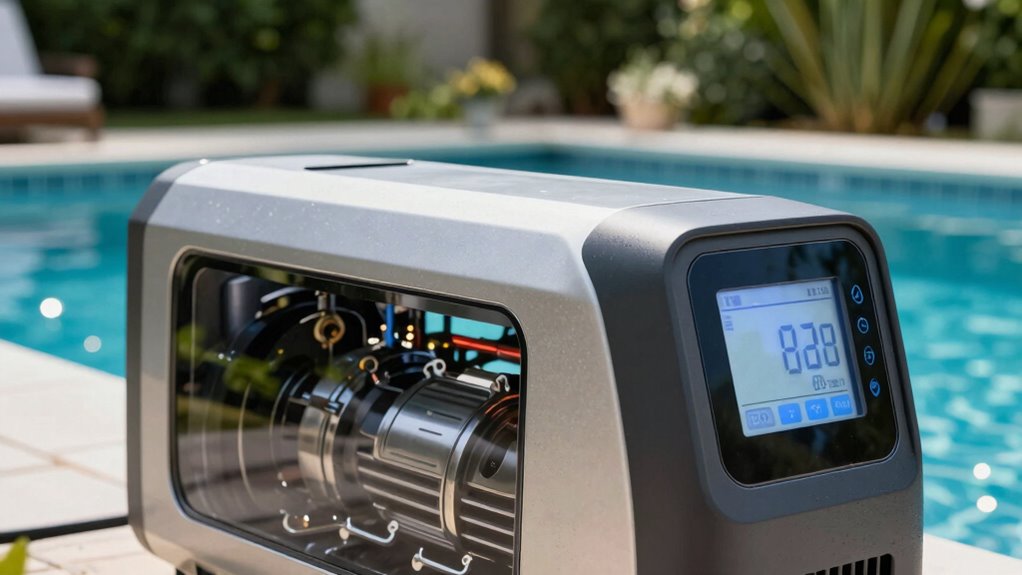
Maintaining the right run time for your pool pump is essential to keep your pool clean and save energy. When your pump runs efficiently, it circulates water properly, helping to distribute chemicals evenly and maintain a stable chemical balance. This proper circulation also reduces the likelihood of equipment failures caused by improper setup or worn components. When your pump runs efficiently, it circulates water properly, helping to distribute chemicals evenly and maintain a stable chemical balance. This prevents algae growth, cloudy water, and other common problems that arise when the water isn’t circulating enough. Conversely, running the pump too long can lead to unnecessary energy consumption and wear on your equipment, increasing your costs and possibly causing premature breakdowns. Understanding the appropriate pump run time helps you strike a balance between effective filtration and energy efficiency.
Your pool’s chemical balance plays a significant role in water quality and safety. The pump’s circulation ensures chemicals like chlorine and pH adjusters are evenly distributed throughout the water. If the pump runs too briefly, chemicals may not disperse properly, leading to uneven chemical levels that encourage algae growth or bacteria buildup. On the other hand, running the pump excessively doesn’t necessarily improve chemical distribution and simply wastes energy. Proper pump run time allows chemicals to work effectively and keeps your water safe for swimming. It also reduces the need for frequent chemical adjustments, saving you money and effort in the long run. Additionally, understanding the chemical distribution process can help you optimize your pump schedule for better water quality. Regular maintenance, including inspecting and cleaning your pump and filters, also plays a critical role in ensuring consistent circulation and optimal chemical distribution. Moreover, proper maintenance of your pump can prevent many issues before they develop, saving you time and money on repairs.
As an affiliate, we earn on qualifying purchases.
Frequently Asked Questions
How Does Pump Run Time Affect Energy Consumption?
Pump run time directly impacts your pool’s energy consumption; longer run times mean higher electricity bills. By optimizing your pump’s schedule, you improve energy efficiency and reduce costs. Regular pump maintenance guarantees it operates smoothly, preventing unnecessary energy use caused by issues like clogs or worn parts. Monitoring and adjusting run times help you save money while maintaining clean, healthy water, making your pool more energy-efficient overall.
What Are Signs of Over or Under-Pumping?
You might think your pump is perfect, but signs of over or under-pumping are subtle. Over-pumping causes noisy operation and increased energy bills, while under-pumping leads to poor water circulation, algae, and murky water. Keep an eye on unusual sounds or water clarity issues—these are signs you need pump maintenance. Proper pump run time ensures ideal water circulation, saving you money and preventing costly repairs down the line.
Can Adjusting Run Time Improve Water Quality?
Adjusting your pool pump’s run time can definitely improve water quality. By increasing run time, you guarantee better circulation, which helps maintain proper chemical balance and prevents algae growth. Conversely, reducing run time might lead to poor circulation, upsetting chemical levels and encouraging algae. Regularly adjusting your pump based on pool usage and conditions keeps your water clear, balanced, and algae-free, making your swimming experience safer and more enjoyable.
How Often Should I Change My Pool Pump Filter?
Think of your pool filter like a trusty sidekick in your pool cleaning routine. You should change your pool pump filter every 8 to 12 weeks, depending on usage and debris levels. Regularly swapping it out helps maintain proper chemical balance and keeps the water sparkling. Neglecting this task can lead to poor filtration, cloudy water, and increased chemical use, making your pool less inviting and more difficult to maintain.
What Is the Ideal Pump Run Time for Different Pool Sizes?
For ideal pool maintenance and pump efficiency, you should run your pool pump for about 8-12 hours daily. Smaller pools may need closer to 8 hours, while larger pools benefit from 12 hours or more. Adjust based on your pool’s size, usage, and weather conditions. Consistent run time ensures proper filtration, keeps water clear, and prevents equipment strain, helping you enjoy a clean, healthy pool all season long.
As an affiliate, we earn on qualifying purchases.
Conclusion
Understanding your pool pump’s run time is like giving your pool a steady heartbeat—keeping it healthy, clear, and inviting. When you pay attention to how long your pump runs, you’re steering clear of costly repairs and ensuring crystal-clear water all season long. Think of it as tuning a fine instrument; the right rhythm keeps everything in harmony. So, stay in tune with your pump’s needs, and your pool will always be ready for a revitalizing dip.
pool chemical distribution system
As an affiliate, we earn on qualifying purchases.
As an affiliate, we earn on qualifying purchases.
As an affiliate, we earn on qualifying purchases.
Halloween Picks
halloween
As an affiliate, we earn on qualifying purchases.