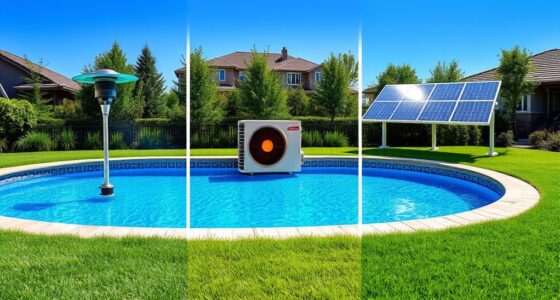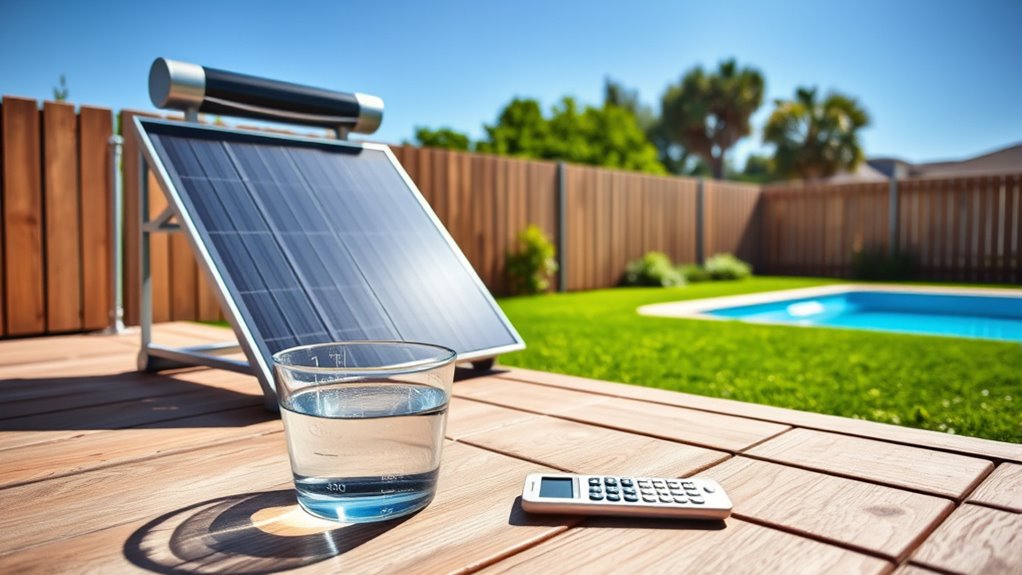

To calculate the carbon payback period for your solar pool heating system, start by determining the total energy needed to heat your pool annually. Then, assess the system’s efficiency and the amount of clean energy it produces, considering your location’s sunlight availability. Divide the manufacturing and installation emissions by the carbon savings each year. The result shows how long it takes to offset the initial impact. Keep exploring to understand factors that can further improve your system’s payback time.
Key Takeaways
- Determine the total energy required to heat the pool annually and the solar system’s annual heat output.
- Assess the embodied energy and carbon footprint involved in manufacturing and installing the solar heating system.
- Calculate the system’s efficiency and expected lifespan to estimate total energy savings over time.
- Divide the embodied energy by annual carbon savings to find the approximate payback period in years.
- Consider local climate, sunlight availability, and system quality to refine the accuracy of the carbon payback calculation.
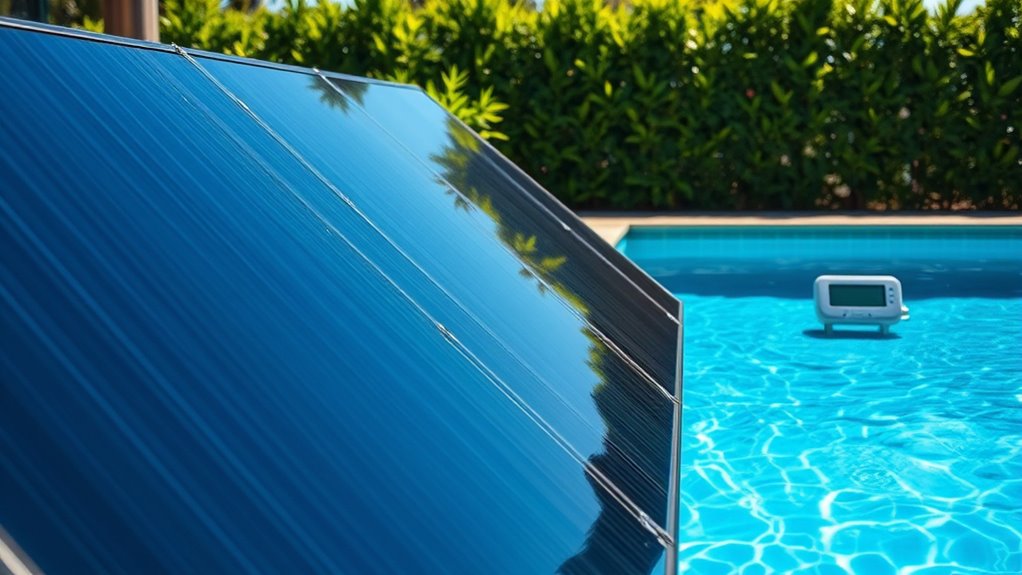
Switching to solar pool heating can considerably reduce your carbon footprint, but understanding how long it takes to offset the energy used in manufacturing and installation is essential. The key factors that influence this payback period include solar panel efficiency and your available energy storage options. Solar panel efficiency determines how effectively your system converts sunlight into usable heat, directly impacting how quickly your investment recovers its energy expenditure. Higher efficiency panels produce more heat with less sunlight, meaning you’ll generate more sustainable energy in a shorter period, speeding up your carbon payback.
When choosing your solar pool heating system, it’s important to consider the energy storage options you have. If you opt for systems with integrated storage or connect to batteries, you can store excess heat generated during peak sunlight hours for use later, like during cloudy days or at night. This flexibility allows you to maximize your system’s output and reduces reliance on grid energy, further decreasing your carbon footprint. Conversely, systems without adequate storage might not fully utilize the energy they produce, extending the time it takes to offset the initial energy investment.
Manufacturing and installing solar pool heating systems consume energy, often derived from fossil fuels, which contributes to their initial carbon footprint. The more efficient your panels, the faster you’ll see a return on this initial energy expenditure. Efficient panels not only produce more heat but also typically have longer lifespans and lower maintenance needs, reducing the overall environmental impact over their operational life. When evaluating your system’s efficiency, look for panels with high solar conversion rates and quality components, as these will perform better over time and help you reach your payback goal sooner.
Furthermore, advancements in AI security are continuously improving the reliability and safety of solar technology, ensuring that your investment remains protected from potential vulnerabilities. Your geographic location and local climate also play a role in how quickly your system offsets its initial energy costs. Areas with abundant sunlight will generate more heat and reduce the payback period. Additionally, the size of your pool and your usage patterns influence how much energy your solar system needs to produce, affecting the timeline for achieving a positive environmental impact.

Highest Performing Design – DIY Solar Pool Heater Kit – 15-20 Year Life Expectancy (4-4×12 / 2" I.D. Header)
HIGH-HEAT PERFORMANCE – SwimEasy solar pool heaters capture more heat from the sun with superior absorber technology. They…
As an affiliate, we earn on qualifying purchases.
As an affiliate, we earn on qualifying purchases.
Frequently Asked Questions
How Does Climate Affect the Payback Period?
Climate variability and seasonal changes directly impact your solar pool heating payback period. In sunnier, warmer climates, you’ll see quicker energy savings and a shorter payback time. Conversely, in areas with less sunlight or colder seasons, it takes longer to recoup your investment. You should consider these climate factors when evaluating your solar heating system’s efficiency and the overall environmental benefits.
What Maintenance Impacts the Solar Heating System’s Efficiency?
You should regularly check and clean your solar heating system to maintain its efficiency, as dirt and debris can block sunlight absorption. Keep an eye on system durability by inspecting for leaks, corrosion, or damage. Performing maintenance frequently ensures peak performance, prolongs the system’s lifespan, and keeps energy savings high. Proper upkeep reduces the need for costly repairs and helps your solar pool heating system operate at maximum efficiency longer.
Can the System Be Upgraded Over Time?
Yes, your solar pool heating system can grow older like a wise old tree, and you can give it a fresh boost. Over its lifespan, you can upgrade components or add new technology to keep it humming efficiently. Upgrade options include better collectors or improved pumps, extending its life and boosting performance. Think of it as giving your system a facelift, ensuring it stays vibrant and effective for years to come.
How Do Local Energy Sources Influence Payback Calculations?
Local energy sources considerably impact your payback calculations because they determine the carbon savings you’ll achieve. If your area relies on renewable energy, your system’s energy storage and integration efforts become more effective, reducing payback time. Conversely, fossil fuels increase emissions, extending payback. You should consider how your system integrates with local grids and how energy storage can optimize usage, ensuring you maximize environmental benefits and cost savings.
What Are Common Installation Challenges for Solar Pool Heaters?
Ever wonder what hurdles you might face installing a solar pool heater? Common challenges include ensuring proper solar panel orientation for maximum sun exposure and addressing shading issues from trees or nearby structures. These factors can substantially reduce efficiency. Have you considered how your pool’s location affects sunlight? Proper planning helps you avoid these pitfalls, ensuring your system performs ideally and provides eco-friendly, cost-effective heating all season long.

Highest Performing Design – Universal Solar Pool Heater Panel Replacement – 15-20 Year Life Expectancy (4' X 12' / 2" I.D. Header)
HIGHEST PERFORMING DESIGN – SwimEasy solar panels are among the highest performing panels on the market! The perfect…
As an affiliate, we earn on qualifying purchases.
As an affiliate, we earn on qualifying purchases.
Conclusion
Understanding the carbon payback period helps you see how quickly solar pool heating can reduce your environmental impact. By making the switch, you’re not just saving money but also doing your part for the planet. Remember, “a stitch in time saves nine”—taking action now guarantees a greener future. So, consider the long-term benefits and enjoy your sustainable swim, knowing you’re making a positive difference one sunny day at a time.

GoFloats V2 Inflatable Solar Pool Heaters for Affordable Pool Heating and Insulation – 3 Pack
NEW UPGRADED DESIGN: Rings inflate faster & lay perfectly flat every time; Heaters trap the sun's energy to…
As an affiliate, we earn on qualifying purchases.
As an affiliate, we earn on qualifying purchases.
Highest Performing Design – Universal Solar Pool Heater Panel Replacement – 15-20 Year Life Expectancy (4' X 12' / 2" I.D. Header)
HIGHEST PERFORMING DESIGN – SwimEasy solar panels are among the highest performing panels on the market! The perfect…
As an affiliate, we earn on qualifying purchases.
As an affiliate, we earn on qualifying purchases.