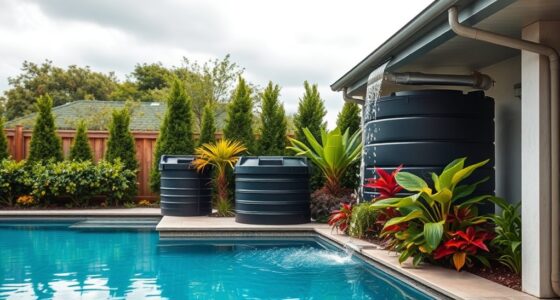

Pool automation helps conserve water by using smart sensors, efficient equipment, and automated schedules to prevent overfilling, reduce leaks, and optimize filtration times. It automatically adjusts water levels, detects issues early, and programs pool functions to operate only when needed. Rain sensors and smart controls further minimize waste and energy use. If you want to learn more about how innovative technology supports sustainable pool management, keep exploring the possibilities.
Key Takeaways
- Smart sensors optimize water levels and chemical balance, reducing overfilling and chemical waste.
- Automated scheduling and rain sensors prevent unnecessary water and energy use during rainfall and off-peak hours.
- Precise leak detection and early issue alerts minimize water loss and maintenance costs.
- Eco-friendly equipment and efficient pumps lower water and electricity consumption.
- Overall automation enhances pool management, promoting sustainable water conservation practices.
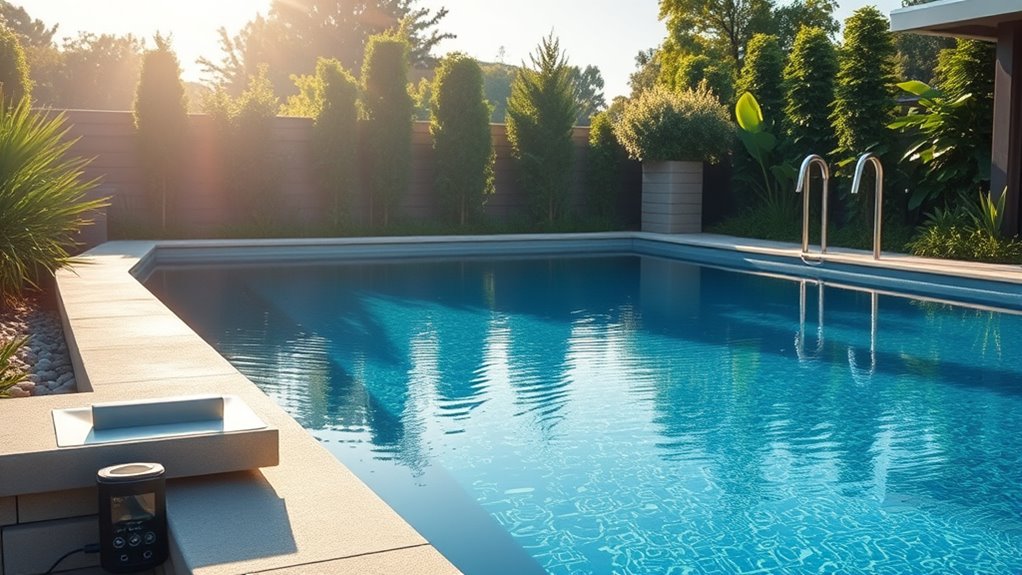
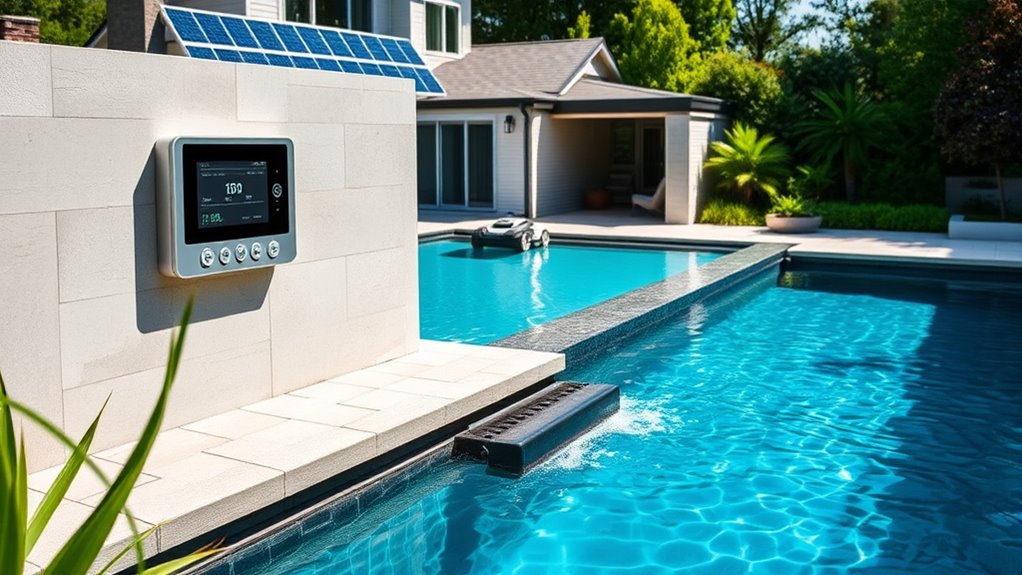
Pool automation technology makes maintaining your swimming pool easier and more efficient, especially when it comes to conserving water. By integrating smart sensors and eco-friendly equipment, you gain precise control over your pool’s water usage, reducing waste and promoting sustainability. These smart sensors continuously monitor water levels, temperature, and chemical balance, allowing your system to adjust automatically. Instead of manually checking and adjusting, you receive real-time updates and automated responses that keep your pool as well-balanced as possible without unnecessary water loss.
With smart sensors, you can prevent overfilling or unnecessary draining, which are common causes of water waste. For example, if the sensor detects the water level is too high, it triggers the fill valve to stop, avoiding overflow. Conversely, if the water level drops, the system adds just enough water to maintain the desired level. This precise regulation means you no longer have to guess or check manually, saving both water and effort. Additionally, these sensors can alert you to leaks or issues early, preventing significant water loss and costly repairs.
Smart sensors prevent overfilling, detect leaks early, and help conserve water effortlessly.
Eco-friendly equipment plays a vital role in water conservation as well. Many modern pool systems now incorporate energy-efficient pumps and filtration units designed to use less water and electricity. These eco-friendly options tend to operate more efficiently, requiring less backwashing and reducing the overall water footprint. When combined with automation, they ensure your pool runs smoothly while minimizing unnecessary water consumption. You’ll find that these systems are not only better for the environment but also save you money over time, thanks to lower utility bills and reduced maintenance needs.
Furthermore, automation allows you to schedule your pool’s filtration and cleaning cycles during off-peak hours, which can maximize energy and water use. By programming your system, you avoid running pumps and filters unnecessarily, thereby conserving water and energy. Some advanced systems even incorporate rain sensors, which temporarily disable pool functions during rainfall, preventing water from being wasted or diluted. Incorporating smart water management features can further optimize your pool’s water use and efficiency.
Incorporating smart sensors and eco-friendly equipment into your pool setup isn’t just about convenience — it’s a smart investment in water conservation. You’ll enjoy a cleaner, well-maintained pool that uses resources wisely while reducing your environmental impact. As technology advances, these features become more accessible and affordable, empowering you to take control of your pool’s water use confidently. Ultimately, embracing pool automation with eco-conscious tools helps you contribute to a more sustainable future without sacrificing the enjoyment of your backyard oasis.

Risinglink Smart Water Level Monitor, WiFi-Enabled, Text/Email Alerts, Indoor/Outdoor Detector, Battery Powered, Stainless Steel Float Sensor
Easy Setup: No need for apps or hubs, simply connect the device to your WiFi network(Note: only 2.4GHz…
As an affiliate, we earn on qualifying purchases.
As an affiliate, we earn on qualifying purchases.
Frequently Asked Questions
How Does Pool Automation Impact Energy Consumption?
Pool automation boosts your energy efficiency by precisely controlling filtration, heating, and lighting, which reduces unnecessary energy use. This targeted management minimizes your environmental impact, as you avoid wasteful energy consumption. With automated systems, you can schedule operations during off-peak hours, further lowering energy costs. Overall, pool automation helps you save money and supports sustainable practices, making your pool more eco-friendly and efficient.
Can Pool Automation Systems Be Integrated With Smart Home Devices?
Yes, you can seamlessly integrate pool automation systems with your smart home devices. Imagine your pool responding to your voice commands, like telling it to warm up or filter, as if it’s alive! Many systems now boast solar compatibility, making eco-friendly control effortless. You’ll enjoy hands-free convenience and energy efficiency, as your pool and smart home work together effortlessly—turning your backyard into a futuristic oasis.
What Are the Cost Savings Associated With Automated Pool Maintenance?
You’ll see significant cost reduction with automated pool maintenance because it minimizes water and chemical waste, saving you money. It also boosts maintenance efficiency by automatically adjusting chemical levels, filtering, and cleaning schedules, reducing the need for frequent manual interventions. Over time, these systems lower your energy and labor costs, making pool upkeep more affordable and hassle-free. Plus, you enjoy a cleaner, healthier pool with less effort.
Are There Environmental Benefits Beyond Water Conservation?
Did you know that using eco-friendly materials in pool automation systems can reduce energy consumption by up to 30%? Beyond water savings, automation promotes habitat preservation by minimizing chemical runoff and energy use. These systems can optimize chemical levels, reducing the need for harsh chemicals that harm local ecosystems. By choosing eco-friendly options, you contribute to a healthier environment and help protect natural habitats around your home.
How User-Friendly Are Modern Pool Automation Systems for Homeowners?
Modern pool automation systems are quite user-friendly, designed with intuitive user interfaces that make controlling your pool simple. You can easily adjust settings, schedule maintenance, or monitor water levels from your smartphone or dedicated panel. Installation complexity varies, but many systems now feature straightforward setup options that homeowners can handle without professional help. Overall, these systems aim to provide convenience, saving you time and effort while promoting water conservation.

VIVOHOME Upgraded 2087 GPH Sand Filter Pump w/Timer, Fits in/Above Ground Pool Up to 10,000 Gallons, 7-Way Valve with 28.7-Pound Sand Capacity
𝐄𝐅𝐅𝐈𝐂𝐈𝐄𝐍𝐓 𝐀𝐍𝐃 𝐄𝐍𝐄𝐑𝐆𝐘-𝐒𝐀𝐕𝐈𝐍𝐆: The VIVOHOME 12-in sand filter pump boasts a 28.7 lb sand capacity, delivering a maximum…
As an affiliate, we earn on qualifying purchases.
As an affiliate, we earn on qualifying purchases.
Conclusion
As you watch your pool sparkle under the sun, pool automation quietly works behind the scenes, conserving water and reducing waste. Imagine gentle sensors adjusting levels, like a caring hand, ensuring your pool stays perfect without unnecessary loss. With automation, you’re not just maintaining a invigorating oasis but also protecting our precious water resources. Embrace this technology, and let your pool be a shining example of beauty and sustainability, inspiring others to follow suit.

XtremepowerUS Inline Automatic Chlorinator Chemical Chlorine Feeder for Above Ground Pool, Inground Swimming Pool Chlorine Dispenser Tablet in-line Auto Chlorinator 3-Inch
Inline Design – The In-line chlorinator is designed for installation in the pool water return line. It is…
As an affiliate, we earn on qualifying purchases.
As an affiliate, we earn on qualifying purchases.
rain sensor for pool
As an affiliate, we earn on qualifying purchases.
As an affiliate, we earn on qualifying purchases.