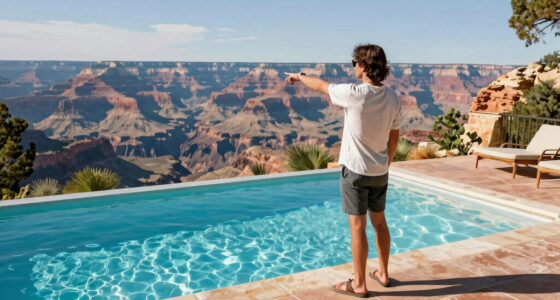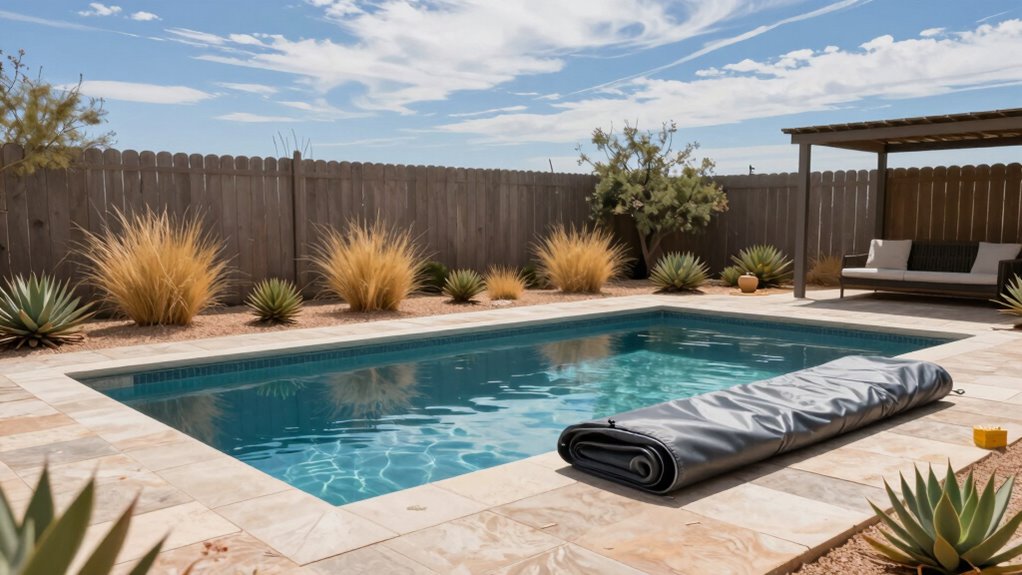

If you’re considering pool ownership in a water-restricted area, focus on sustainable practices that save water. Install a quality pool cover to reduce evaporation and keep your pool cleaner, lowering chemical and filtration needs. Use rainwater collection and smart systems to minimize refills, and fix leaks promptly. Stay informed about local regulations and adopt natural filtration options. By practicing these strategies, you can enjoy your pool responsibly—continue exploring to discover more eco-friendly tips and tricks.

Get pool and patio gear delivered free with Prime
- Fast, free delivery on millions of items
- Prime Video, Amazon Music and more included
- Member-only deals all year
Key Takeaways
- Prioritize water conservation by using covers, rainwater collection, and smart systems to minimize water loss.
- Regularly maintain filters, check for leaks, and keep water chemistry balanced to reduce unnecessary water use.
- Consider natural filtration and native plants to decrease reliance on chemical treatments and conserve water.
- Stay informed about local water restrictions and regulations to ensure compliance and sustainable pool management.
- Evaluate the environmental impact and cost of pool ownership, exploring alternative recreational options if water scarcity is severe.
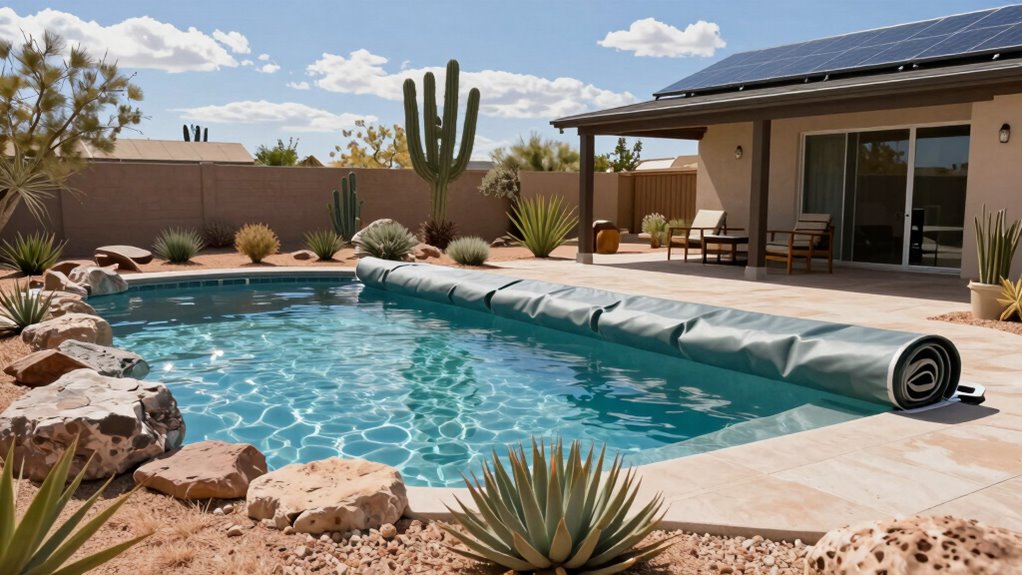
Living in a water-restricted area doesn’t mean you have to give up the luxury of owning a pool. Instead, it encourages you to rethink how you approach pool ownership. The key is adopting sustainable maintenance practices that prioritize water conservation strategies. These strategies help you enjoy your pool without wasting precious water resources or increasing your environmental footprint. First, contemplate installing a pool cover. A high-quality cover reduces evaporation, which is one of the biggest sources of water loss in pools. By minimizing evaporation, you’ll not only conserve water but also reduce the need for frequent refills, saving you money and effort. Additionally, using a cover keeps your pool cleaner, decreasing the reliance on chemical treatments and filtration, further supporting sustainable maintenance.
Installing a pool cover minimizes evaporation, conserves water, and reduces maintenance efforts for a more sustainable pool experience
Next, pay close attention to your pool’s filtration system. Opt for energy-efficient, well-maintained filters that maximize water reuse and reduce waste. Regularly checking for leaks is equally important since small leaks can lead to significant water loss over time. If you notice any cracks or drips, addressing them promptly will prevent unnecessary water wastage and keep your pool functioning properly. When it comes to chemical balancing, maintaining proper water chemistry is essential. Over-treatment can lead to chemical waste, so use testing kits regularly to keep levels precise. This not only ensures safe swimming conditions but also reduces the need for excessive chemical additions, supporting your water conservation efforts.
Another aspect to think about is your pool’s refill process. Instead of topping off with fresh water frequently, explore options like recycling or reusing water whenever possible. If your local regulations permit, collecting rainwater for pool topping-up can be an environmentally friendly alternative. In some cases, smart pool systems can automate water management, alerting you when water levels are low and optimizing refills with minimal waste. Adopting these water conservation strategies requires a proactive mindset, but it pays off by extending your pool’s lifespan and contributing to environmental sustainability. Incorporating natural filtration systems and native plants can also help create a harmonious backyard environment, reducing the need for chemical treatments and supporting biodiversity.
Finally, educate yourself about local water restrictions and guidelines. Many water-restricted areas have specific rules about outdoor water use, which can impact your pool maintenance routines. Staying informed ensures you remain compliant while still enjoying your pool responsibly. Implementing sustainable maintenance and water conservation strategies into your pool routine ultimately allows you to enjoy the benefits of pool ownership without compromising your environmental values. It’s about finding a balance that respects both your desire for leisure and the importance of conserving water resources for the community and future generations.
As an affiliate, we earn on qualifying purchases.
Frequently Asked Questions
Are There Legal Restrictions on Pool Installation in Water-Restricted Zones?
Yes, there are legal restrictions on pool installation in water-restricted zones. You need to check local zoning regulations and water use laws before planning your pool. These restrictions often aim to conserve water and prevent overuse. You might face limits on pool size, required permits, or mandatory water-saving features. Always consult your city or county authorities to verify your pool project complies with all legal restrictions and zoning regulations.
How Can I Finance a Water-Efficient Pool?
You can finance a water-efficient pool through options like personal loans, credit cards, or specialized home improvement financing. To manage costs, focus on water-saving tips such as installing a cover to reduce evaporation and using a pool pump timer. Regular pool maintenance also guarantees efficiency, saving water and money over time. Explore different financing options to find the best fit, and prioritize water-saving features to make your pool more sustainable.
What Are the Best Drought-Tolerant Pool Landscaping Options?
You’ll love drought-tolerant landscaping options that save water and look stunning. Opt for xeriscape gardening with drought-resistant plants like succulents, lavender, and native grasses. These choices minimize water use while creating vibrant, low-maintenance surroundings. Irony strikes: you can have a gorgeous poolside landscape that’s eco-friendly and resilient, proving that you don’t need lush lawns to enjoy a beautiful yard. Embrace these smart, sustainable options and save water effortlessly.
Can Rainwater Harvesting Be Integrated With Pool Maintenance?
Yes, you can integrate rainwater harvesting with pool maintenance through rainwater reuse and pool water recycling. Collect rainwater from your roof and direct it to a storage tank, then use it to top off your pool, reducing reliance on municipal water. Implementing a filtration system guarantees the rainwater is clean for pool use. This eco-friendly approach helps conserve water while maintaining your pool effectively.
How Do I Educate Neighbors About Water Conservation in Pool Areas?
Think of yourself as a lighthouse guiding your neighborhood toward water conservation. Share facts about water use and the importance of saving for future generations. Organize community events or conservation incentives that motivate neighbors to reduce pool water waste. Your proactive approach raises neighborhood awareness, making conservation a shared goal. By inspiring others, you help create a community committed to thoughtful water use, even in water-restricted areas.
automatic pool water level controller
As an affiliate, we earn on qualifying purchases.
As an affiliate, we earn on qualifying purchases.
Conclusion
Owning a pool in a water-restricted area challenges your comfort with luxury and necessity. While a pool promises relaxation and joy, it also demands water and responsibility. Balancing these priorities requires mindful choices—conservation becomes the true luxury. In the end, the decision isn’t just about owning a pool but about respecting the delicate balance of nature. Sometimes, the most invigorating thing you can do is conserve, proving that true luxury lies in sustainability.
rainwater collection system for pools
As an affiliate, we earn on qualifying purchases.
As an affiliate, we earn on qualifying purchases.
As an affiliate, we earn on qualifying purchases.
Halloween Picks
halloween
As an affiliate, we earn on qualifying purchases.