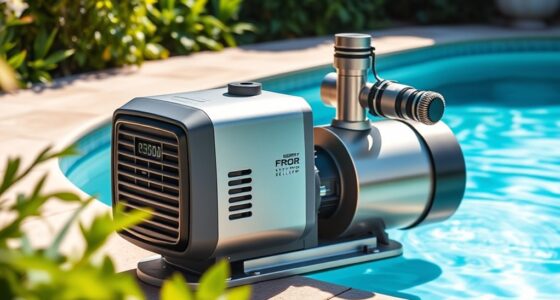
Using UV and ozone systems can markedly cut down your pool’s chemical use by effectively killing bacteria, viruses, and algae without relying heavily on chlorine or bromine. UV light damages microorganisms’ DNA directly, reducing chemical odors and irritation, while ozone acts as a powerful oxidizer to eliminate organic contaminants. Together, they improve water clarity and safety while minimizing environmental impact. Keep exploring to discover how these eco-friendly solutions can make your pool healthier and more sustainable.
Key Takeaways
- UV and ozone systems effectively disinfect pool water by destroying bacteria, viruses, and organic contaminants without relying heavily on chemicals.
- Combining UV and ozone reduces the need for chlorine or bromine, lowering chemical costs and minimizing irritant and chlorinated compound formation.
- Ozone acts as a powerful oxidizer, rapidly neutralizing organic matter and microbes, enhancing overall water clarity and quality.
- Implementing these systems leads to less chemical odor, skin irritation, and environmental impact from chemical runoff.
- Proper installation and maintenance of UV and ozone systems optimize disinfection efficiency, supporting sustainable and eco-friendly pool management.
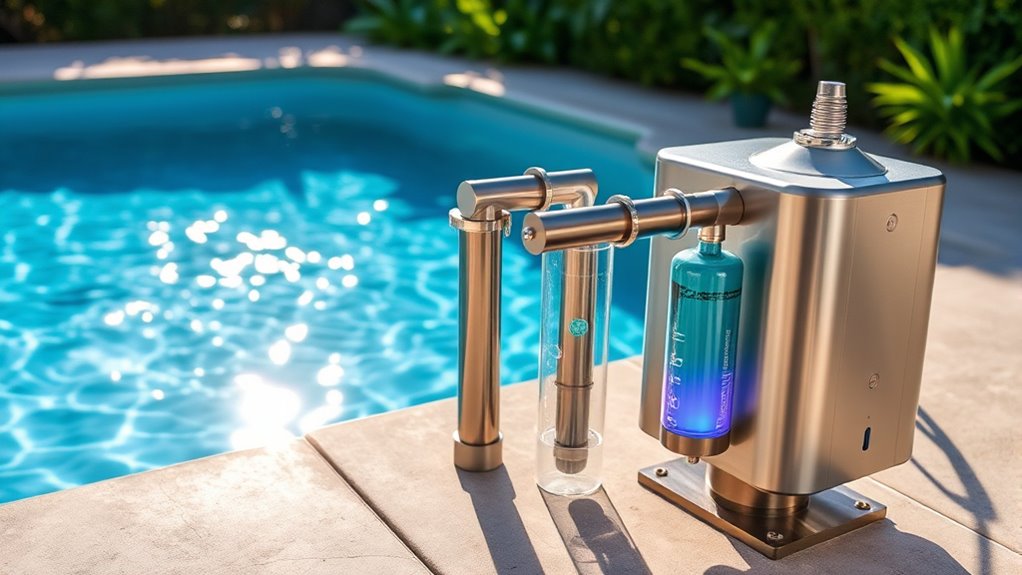
Reducing pool chemical use is essential for maintaining a safe and environmentally friendly swimming environment. Traditional chlorination and other chemical treatments can be effective, but they often come with drawbacks like skin irritation, strong odors, and environmental concerns. Fortunately, advancements in technology now offer alternative methods to keep your pool clean while minimizing chemical reliance. UV sanitation and other chemical alternatives are gaining popularity because they provide effective disinfection without the constant addition of chemicals.
UV sanitation systems work by exposing pool water to ultraviolet light as it passes through the system. This process damages the DNA of bacteria, viruses, and algae, rendering them inactive and preventing their growth. Because UV light targets microorganisms directly, it markedly reduces the need for chlorine or other chemical disinfectants. When you incorporate UV sanitation into your pool maintenance routine, you lower the chemical load in your water, resulting in fewer chemical odors and reduced skin and eye irritation. This not only makes swimming more comfortable but also decreases the environmental impact of pool operation since fewer chemicals are released into the environment through backwash or overflow.
UV sanitation reduces chemical use by damaging microorganisms directly, lowering odors and skin irritation while benefiting the environment.
Chemical alternatives, beyond UV sanitation, include ozonation systems. Ozone is a powerful oxidizer that destroys organic contaminants and microbes more quickly than traditional chemicals. When used in conjunction with UV systems, ozone can improve water quality even further, offering a dual approach to disinfection. With ozone, you need less chlorine or bromine, which can lead to cost savings and a more pleasant swimming experience. Ozone systems also help improve water clarity and reduce the formation of chlorinated compounds, which are often responsible for the harsh smell and irritation associated with traditional chlorine use.
Switching to these alternative systems requires some initial investment and a bit of knowledge, but the long-term benefits outweigh these costs. You’ll notice less chemical smell, reduced eye and skin irritation, and a more eco-friendly pool environment. These systems also tend to require less maintenance once properly installed, making your pool easier to manage. With UV sanitation and ozone systems, you’re not only improving the health and comfort of swimmers but also helping protect the environment by decreasing chemical runoff and hazardous byproducts.
Ultimately, embracing UV sanitation and other chemical alternatives allows you to enjoy a cleaner, safer pool while reducing your reliance on traditional chemicals. It’s a smart move toward more sustainable pool management, contributing to a healthier swimming experience for everyone involved. You’ll find that these technologies offer an effective, eco-conscious way to keep your pool sparkling clean without the drawbacks of conventional chemical treatments.

18W Aquarium UV Light for 100-1000 Gallon, UV Pond Water Clarifier for Koi Pond, Swimming Pool, Spa, Large Fish Tank, Cold Plunge UV Light for Pond Algae Control
【New Arrival】To enhance product quality and customer experience, we’ve upgraded our packaging to prevent light tube breakage and…
As an affiliate, we earn on qualifying purchases.
As an affiliate, we earn on qualifying purchases.
Frequently Asked Questions
How Does UV Treatment Affect Algae Growth?
UV treatment inhibits algae growth by disrupting their cellular functions, preventing them from thriving. As you use UV for water sanitation, it helps control algae naturally without relying heavily on chemicals. This process effectively targets algae spores, reducing their ability to grow and spread. By incorporating UV systems, you enhance your pool’s cleanliness, making it easier to keep algae at bay and maintain clear, healthy water.
Are Ozone Systems Safe for Swimmers?
Ozone systems are as safe for swimmers as a gentle breeze. They help improve pool safety by reducing the need for harsh chemicals, making your swimming environment healthier. Ozone effectively breaks down contaminants, ensuring cleaner water without adding extra chemicals. When properly maintained, these systems minimize chemical exposure, creating a safer, more enjoyable swimming experience. So, yes, ozone systems are a safe choice for your pool and swimmers.
What Are the Maintenance Requirements for UV and Ozone Systems?
You need to regularly inspect and clean your UV and ozone systems to guarantee peak performance. Replace UV bulbs every 9-12 months and monitor system lifespan to avoid reduced effectiveness. Keep filters clean and well-maintained, as they prevent debris from affecting the systems. Check for leaks or damage, and follow manufacturer instructions for any specific maintenance tasks. Consistent upkeep keeps your systems running efficiently and extends their lifespan.
Can These Systems Eliminate the Need for All Chemicals?
You can considerably reduce or even eliminate the need for traditional chemicals by using UV and ozone systems, as they provide effective disinfection with fewer chemical alternatives. These systems boost your pool’s system efficiency by neutralizing contaminants without harsh chemicals, making your pool safer and more eco-friendly. However, some chemical use might still be necessary for balancing pH and alkalinity, but overall, UV and ozone help minimize chemical dependency.
How Do UV and Ozone Systems Impact Water Clarity?
You’ll notice improved water clarity when you install UV and ozone systems because they enhance water filtration by breaking down organic contaminants and bacteria. These systems actively disinfect water, reducing cloudiness and algae growth. Proper system installation guarantees ideal performance, so you get clearer water with less reliance on chemicals. Overall, UV and ozone treatments greatly boost water clarity, making your pool cleaner, safer, and more inviting.

ClearBlue Mineral System – Registered Pool Ionizer for Inground Pools – Works with 120V and 240V Power – Installs in 30 Minutes (25,000 Gallons)
SLASH CHEMICAL COSTS BY 80% & SAVE $400+ PER SEASON: Dramatically cut chlorine and other harsh chemicals while…
As an affiliate, we earn on qualifying purchases.
As an affiliate, we earn on qualifying purchases.
Conclusion
By integrating UV and ozone systems into your pool, you might just find yourself using fewer chemicals without sacrificing water quality. It’s almost like these systems were designed to work together—coincidence, perhaps? As you enjoy sparkling clean water with less fuss, you’ll also notice your chemical costs drop. So, next time you’re planning upgrades, consider this powerful duo; it could be the coincidence that transforms your pool experience for good.
ClearBlue Mineral System – Registered Pool Ionizer for Inground Pools – Works with 120V and 240V Power – Installs in 30 Minutes (25,000 Gallons)
SLASH CHEMICAL COSTS BY 80% & SAVE $400+ PER SEASON: Dramatically cut chlorine and other harsh chemicals while…
As an affiliate, we earn on qualifying purchases.
As an affiliate, we earn on qualifying purchases.
chemical-free pool disinfection
As an affiliate, we earn on qualifying purchases.
As an affiliate, we earn on qualifying purchases.