
To cut evaporation in your garden without blocking too much sun, use windbreaks and shade sails together. Windbreaks slow airflow, reducing moisture loss from soil and plants, while shade sails decrease temperature and protect plants from harsh rays. Proper placement and material choice guarantee you minimize evaporation while still allowing enough sunlight for healthy growth. Adjusting these elements based on weather helps maintain a balanced microclimate—continue exploring to learn how to optimize your garden’s moisture and sun exposure effectively.
Key Takeaways
- Position windbreaks on prevailing wind sides to reduce airflow and moisture evaporation without blocking sunlight.
- Use adjustable shade sails to provide partial sun protection, balancing shade and light for optimal plant growth.
- Select materials that block wind but allow enough light, such as UV-treated fabrics with appropriate density.
- Reposition or adjust shade sails seasonally to maintain sunlight while minimizing evaporation during peak heat.
- Combine natural vegetative barriers with fabric structures to enhance moisture retention while ensuring adequate sunlight.
Understanding How Windbreaks Protect Your Garden
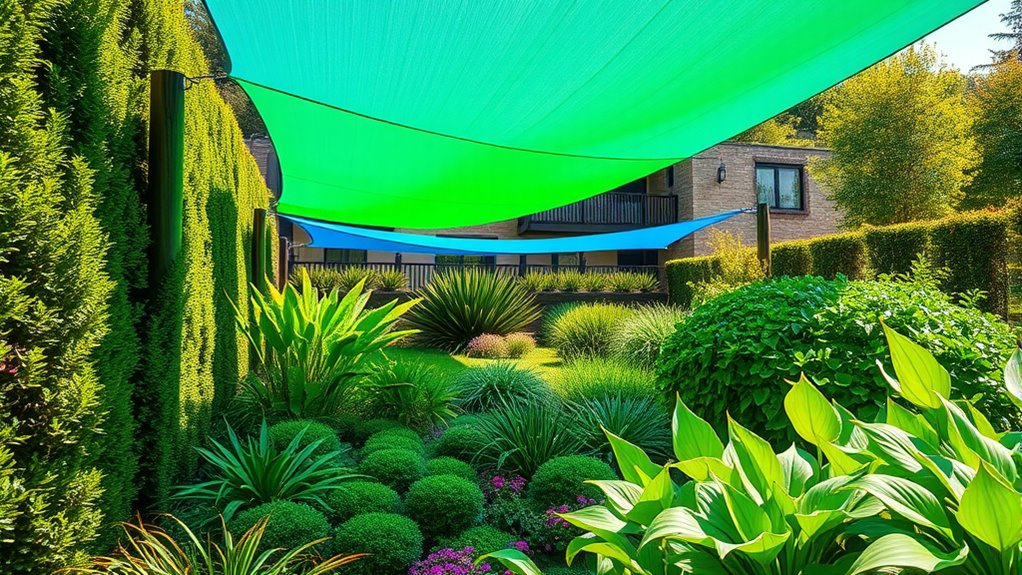
Windbreaks are an effective way to shield your garden from strong winds that can damage plants and reduce growth. When you install a windbreak, it acts as a barrier, slowing down airflow before it reaches your plants. This reduction in wind speed minimizes physical damage, such as broken stems or uprooted seedlings. It also helps prevent excessive moisture loss through evaporation, keeping the soil more consistent. Windbreaks can be made from trees, shrubs, fences, or other structures that are dense enough to block or divert wind. Incorporating natural vegetation barriers can enhance the effectiveness of your windbreaks and provide additional benefits like habitat for beneficial insects. By reducing harsh gusts, your plants stay healthier and less stressed. This creates a more stable environment, allowing your garden to flourish without the constant threat of wind-related setbacks.
The Role of Shade Sails in Managing Sun Exposure

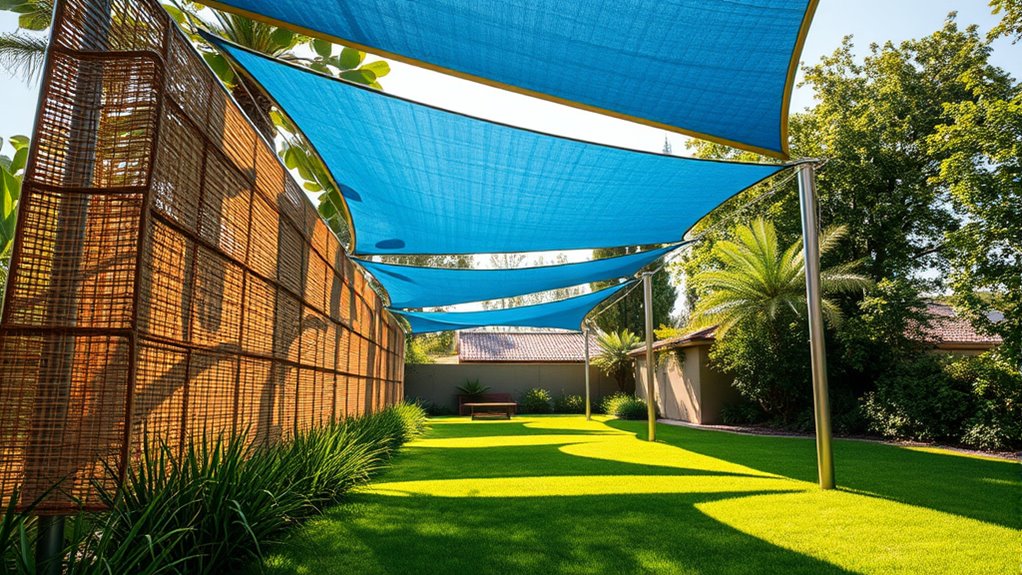
While windbreaks protect your garden from harsh gusts, managing sun exposure is equally important for healthy plant growth. Shade sails offer a flexible solution, reducing direct sunlight while still allowing air circulation. They can be installed over vegetable beds, seating areas, or delicate plants to prevent sun scorch and water loss through evaporation. When choosing a shade sail, consider factors like fabric density and placement to maximize benefits. Here’s a quick overview:
| Aspect | Benefit | Consideration |
|---|---|---|
| Fabric Density | Blocks harmful UV rays | Thinner fabric allows more light |
| Placement | Protects specific areas | Position for ideal shade |
| Material | Durable for outdoor use | Ensure UV resistance |
| Size | Custom fits your space | Measure accurately |
Shade sails strike a balance, providing necessary shade without overly limiting sunlight. For optimal results, also consider how shade sail positioning can influence airflow and plant health.
Combining Windbreaks and Shade Sails for Optimal Water Conservation
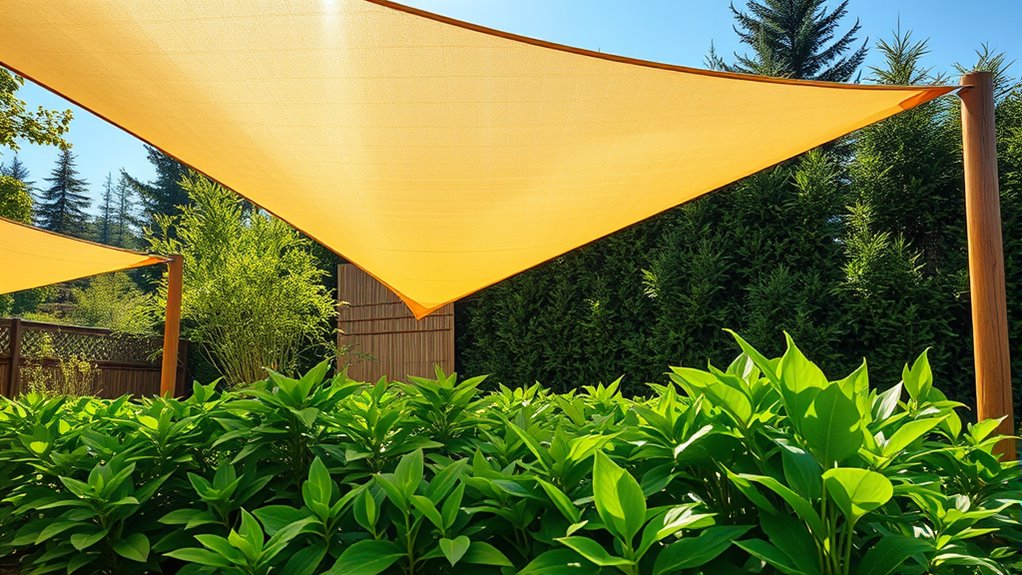
By combining windbreaks and shade sails, you can substantially enhance water conservation in your garden. Windbreaks reduce airflow, which minimizes evaporation from soil and plants, helping retain moisture longer. Shade sails lower the temperature and shield plants from harsh sun, decreasing water needs. When used together, these structures create a cooler, more humid microclimate that cuts water loss without sacrificing sunlight. Position windbreaks to block prevailing winds while allowing sufficient light, and install shade sails to provide ideal coverage over vulnerable plants. This synergy ensures your garden stays moist, reducing the frequency and amount of watering required. Proper placement of these features also improves garden durability by protecting plants from wind damage and sun stress. With this approach, you maintain healthy plants while conserving water, making your garden more sustainable and resilient during dry periods.
Selecting the Right Materials and Placement for Effective Coverage

Choosing the right materials and placement is essential to make certain your windbreaks and shade sails effectively protect your garden. The correct choice guarantees durability, performance, and proper coverage. First, select weather-resistant fabrics like UV-treated polyester or high-density polyethylene to withstand the elements. Next, consider the density of the material; lighter fabrics allow some sunlight and airflow, while heavier ones block more wind and light. Proper placement is equally important—install windbreaks on the prevailing wind side to minimize airflow. Ensure shade sails are positioned to maximize shade during peak sun hours without overly shading plants. Finally, fix everything securely to prevent damage during storms. Additionally, understanding the impact of contrast ratio can help you choose materials that maintain color and reflectivity under various lighting conditions.
Tips for Maintaining Balance Between Light, Wind, and Moisture
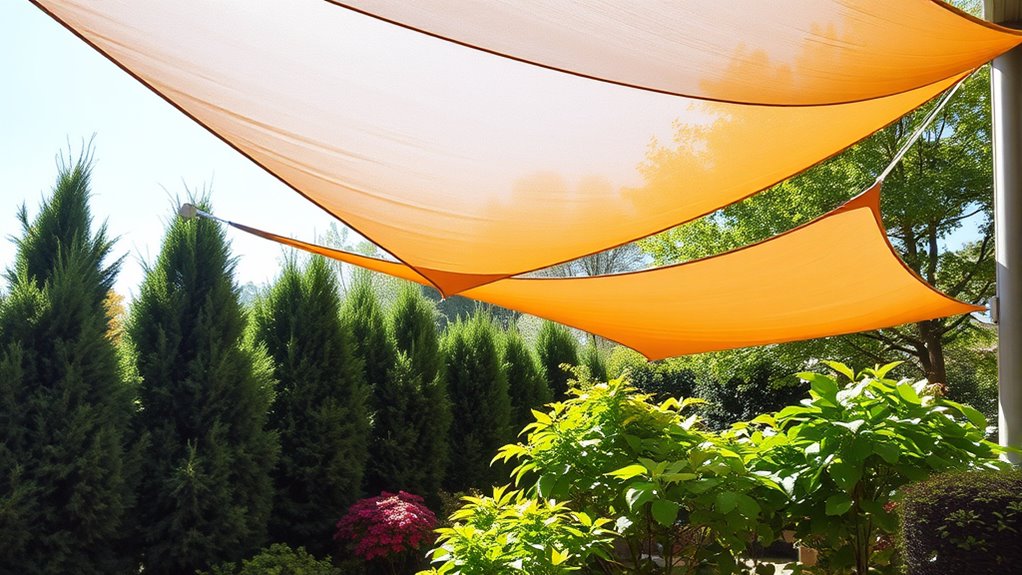
Maintaining the right balance between light, wind, and moisture requires attentive adjustments to your garden structures and practices. Regularly monitor how your shade sails and windbreaks affect sun exposure and airflow. If plants look stressed from too much sun, consider repositioning or adjusting shade coverage to provide more shelter. Conversely, if plants are overly shaded or humid, increase sunlight exposure or reduce wind protection. Prune or reposition windbreaks to control airflow without trapping excess moisture. Use mulches and proper watering techniques to prevent overwatering and humidity buildup. Keep an eye on weather patterns and be ready to tweak your setup accordingly. Striking this balance helps your garden thrive, maximizing growth while minimizing stress caused by extreme conditions. Additionally, understanding the specific evaporation rates of your plants can guide you in adjusting watering schedules effectively.
Frequently Asked Questions
How Do Windbreaks Affect Local Wildlife and Plant Pollination?
You might not realize it, but windbreaks can influence local wildlife and plant pollination. They provide shelter for animals, encouraging bird and insect activity, which benefits pollination. However, if placed improperly, windbreaks can block essential pathways or reduce airflow, potentially hindering pollinator movement and plant reproduction. To support local ecosystems, you should carefully position windbreaks to balance protection with maintaining natural wildlife and pollination routes.
Can Shade Sails Be Used on Uneven or Sloped Terrain Effectively?
Sure, shade sails can adapt to uneven or sloped terrain, but it takes some planning. Think of it as fitting a glove; you’ll need custom anchors or adjustable poles to contour the sail to the land’s shape. By doing so, you guarantee effective shading without letting water pool or slacken. With proper installation, your shade sail can turn a rugged landscape into a cool, comfortable retreat.
What Are the Cost Differences Between Natural and Artificial Windbreaks?
Natural windbreaks, like rows of trees or shrubs, usually cost less initially because you use existing plants or inexpensive materials. However, they require ongoing maintenance, pruning, and time to establish. Artificial windbreaks, such as fences or barriers, tend to have higher upfront costs but need less ongoing upkeep. Your choice depends on your budget, landscape, and whether you prefer long-term low maintenance or lower initial investment.
How Do Seasonal Changes Impact the Effectiveness of Windbreaks and Shade Sails?
You might notice during spring and summer, windbreaks and shade sails work best, protecting your plants from harsh sun and wind. But as seasons change, their effectiveness varies—winter winds can bypass them, while falling leaves may block shade. You’ll find that adjusting placement or adding seasonal covers helps maintain their benefits. Staying aware of seasonal shifts allows you to optimize your setup and keep your garden thriving year-round.
Are There Eco-Friendly or Sustainable Materials Suitable for Windbreaks and Shade Sails?
Yes, you can choose eco-friendly materials for windbreaks and shade sails. Look for options like recycled or sustainably sourced fabrics, such as organic cotton, hemp, or bamboo. These materials reduce environmental impact and are biodegradable. Additionally, consider using recycled plastics or natural fibers that are durable and weather-resistant. By selecting sustainable options, you support eco-conscious gardening and enjoy shade and wind protection without harming the environment.
Conclusion
By weaving windbreaks and shade sails into your garden’s tapestry, you create a shield that whispers secrets of moisture and sunlight. Think of them as guardians easing the sun’s harsh rays and the wind’s relentless dance, while still allowing your plants to breathe and bask. With thoughtful placement and care, you’ll orchestrate a symphony of balance—where water stays rooted, sun-kissed, and your garden thrives like a well-tuned melody in full bloom.