
When storing and handling commercial pool chemicals, you must follow strict regulations to ensure safety and compliance. Keep chemicals in a secure, well-ventilated area away from heat or flames, and use corrosion-resistant containers clearly labeled with hazard signs. Segregate incompatible chemicals and regularly inspect for leaks or damage. Make sure safety equipment like spill kits and eye wash stations are nearby, and train staff on emergency procedures. Continuing further will reveal detailed guidelines to keep your facility compliant and safe.
Key Takeaways
- Store chemicals in secure, well-ventilated, corrosion-resistant areas away from heat and open flames.
- Segregate incompatible chemicals, using separate storage areas or containment trays to prevent dangerous reactions.
- Regularly inspect containers for leaks, corrosion, or damage, and handle chemicals using appropriate safety equipment.
- Maintain spill kits, safety stations, and ensure staff are trained in emergency response procedures.
- Comply with legal storage regulations, label all containers properly, and document inspections and safety measures.
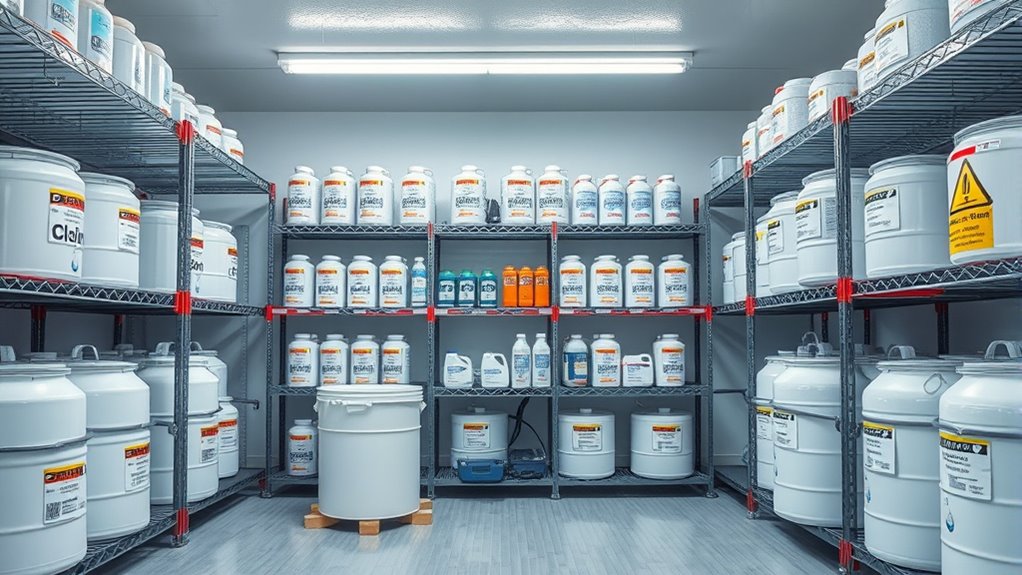
Proper storage of pool chemicals is crucial to guarantee safety and compliance with regulations. When you’re dealing with hazardous materials like chlorine, bromine, or acid solutions, understanding how to store them correctly isn’t just a good idea — it’s a legal requirement. These chemicals can pose serious risks if mishandled, including fires, chemical burns, or toxic fumes. That’s why strict adherence to safety protocols is essential. You need to make certain that hazardous materials are stored in a way that minimizes danger to staff, customers, and the environment. Proper storage means designing spaces that prevent leaks, spills, and accidental mixing, which could lead to dangerous reactions.
Proper pool chemical storage is essential for safety and regulatory compliance.
First, you should always keep pool chemicals in a secure, well-ventilated area, away from any sources of heat or open flames. This prevents the buildup of hazardous fumes and reduces the risk of combustion. Storage cabinets should be made of materials resistant to corrosion and chemical damage, like polyethylene or stainless steel. Label everything clearly with hazard communication labels, including the chemical’s name, hazard class, and handling instructions. This clarity helps staff quickly identify substances and follow proper safety protocols during storage and handling.
It’s critical to segregate incompatible chemicals. For example, acids and chlorines should never be stored together because mixing them can release dangerous gases or cause violent reactions. Use separate, clearly marked areas or containment trays to keep reactive chemicals apart. Also, avoid stacking chemicals too high or in unstable arrangements that could topple or spill. Always follow manufacturer instructions for storage conditions, such as temperature and humidity requirements, to prevent degradation or dangerous reactions. Additionally, understanding the horsepower of electric dirt bikes can inform safe handling practices for power equipment used in maintenance and storage areas, as high-horsepower tools require special safety precautions.
Regular inspections are a key part of maintaining safe storage. Check for leaks, corrosion, or damaged containers, and immediately address any issues. Keep emergency equipment nearby, including spill kits, eye wash stations, and fire extinguishers tailored for chemical fires. Staff training on proper handling and emergency response is equally important to reinforce safety protocols. Everyone involved should know what to do in case of a spill, exposure, or fire.
Frequently Asked Questions
Are There Specific Training Requirements for Workers Handling Pool Chemicals?
Yes, there are specific training requirements for workers handling pool chemicals. You need to undergo thorough worker training focused on safe chemical handling practices, understanding Material Safety Data Sheets (MSDS), and proper storage procedures. This training helps you recognize hazards, use protective gear correctly, and respond to spills or emergencies. Ensuring proper chemical handling through this training protects your safety and maintains compliance with safety regulations.
What Are the Penalties for Non-Compliance With Chemical Storage Regulations?
Ignoring chemical storage rules can lead to severe legal consequences, including hefty fines and even jail time—it’s no minor slip-up. Safety violations result in hefty penalties, damaging your reputation and risking lives. Authorities take these breaches very seriously, and non-compliance can shut down your operations indefinitely. Stay compliant to avoid these costly repercussions, protect your staff, and ensure a safe environment for everyone involved.
How Often Should Storage Areas Be Inspected for Safety?
You should inspect your storage area at least once a month to guarantee safety and compliance. Regular inspection frequency helps you identify potential hazards like leaks, corrosion, or improper labeling early on. During each inspection, check for any signs of deterioration or spills, ensure chemicals are stored correctly, and verify that safety equipment is accessible. Consistent inspections help prevent accidents and maintain a safe environment for everyone around your pool chemicals.
Are There Restrictions on Combining Different Chemicals in Storage?
You should never combine different chemicals in storage because of chemical incompatibilities, which can cause dangerous reactions. Always follow proper storage segregation guidelines to keep incompatible chemicals apart, reducing the risk of fires, explosions, or toxic releases. Check your facility’s safety protocols and labels, and make certain that chemicals are stored in designated areas to prevent accidental mixing. Regularly review these practices to maintain a safe storage environment.
What Emergency Protocols Must Be in Place for Chemical Spills?
You should have an emergency response plan ready, as over 80% of chemical spills require immediate action. When a spill occurs, prioritize spill containment to prevent further hazards. Your protocols must include clear steps for evacuating personnel, notifying emergency services, and using proper PPE. Regularly train staff on spill response procedures, ensuring swift, effective action to minimize risks and protect health and safety during chemical emergencies.
Conclusion
By following these regulations, you’re building a fortress of safety around your pool. Proper storage and handling keep hazards at bay, turning a potential storm into calm waters. Think of it as tending a delicate garden: each rule is a sturdy stake supporting healthy growth and protecting your oasis. Stay vigilant and compliant, and you’ll guarantee your pool remains a safe haven for everyone to enjoy—your own peaceful paradise in a well-guarded harbor.