
To protect your loved ones, it’s essential to stay updated on drowning prevention laws in your area. These laws often require safety features like fences, alarms, and secure gates, along with appropriate safety equipment such as life rings or first aid kits. Compliance not only helps prevent accidents but also keeps you legally protected. By understanding current regulations, you can guarantee your pool setup is both safe and legal—discover more to keep everyone safe.
Key Takeaways
- Stay informed about local pool safety laws requiring fencing, gates, alarms, and safety equipment to prevent unauthorized access and drownings.
- Ensure your pool complies with mandated safety features like self-closing gates and secure fencing to meet legal standards.
- Regularly inspect safety devices such as life rings, reaching poles, and alarms, and keep documentation for legal compliance.
- Use community resources and government updates to stay current on evolving legislation and technological safety requirements.
- Implement recommended safety measures proactively to reduce legal risks and enhance drowning prevention efforts.
Drowning remains a leading cause of accidental death worldwide, especially among children and vulnerable populations. As a homeowner, it’s essential to understand how legislation updates can influence your responsibility to maintain proper pool safety measures. Laws around swimming pools aren’t static; they evolve to improve safety standards and reduce drownings. Staying informed about current legislation updates helps you guarantee your property complies with legal requirements and best practices. These updates often include mandates for pool fencing, alarms, and safety equipment, all designed to prevent accidents before they happen.
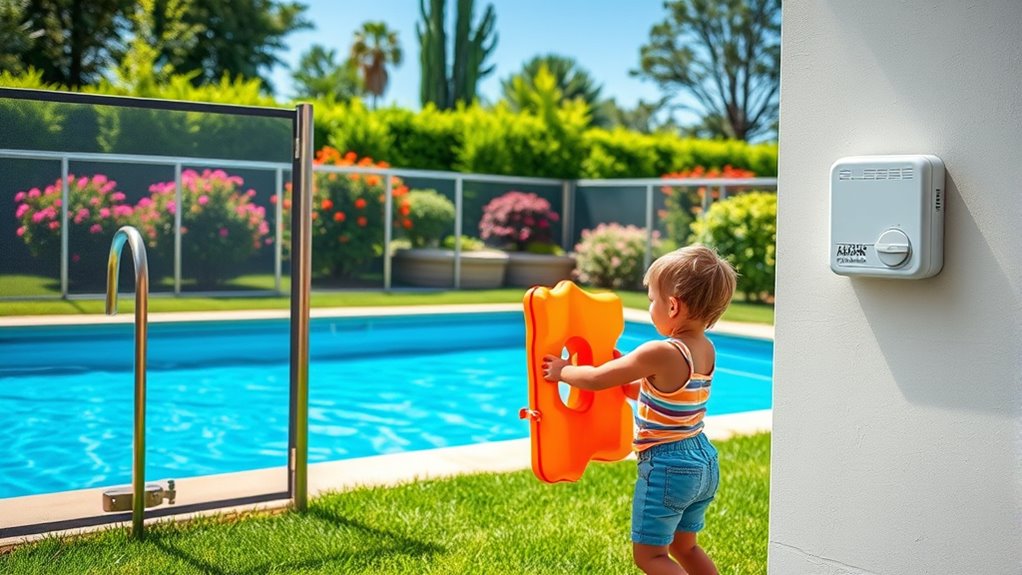
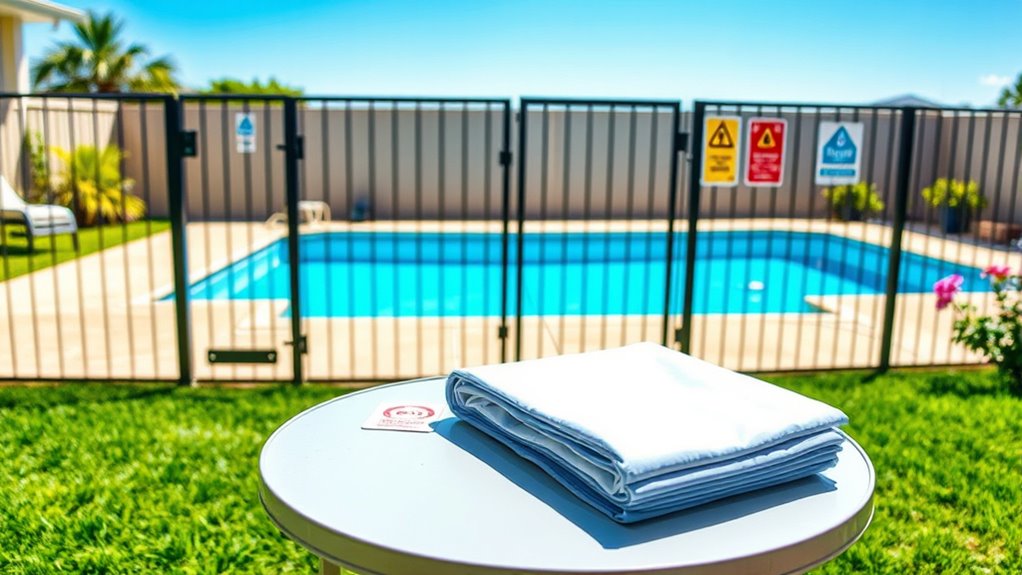
You need to recognize that legislation around pool safety varies by location, but most regions impose specific rules to protect residents and visitors. For instance, many areas now require that pools be surrounded by a fence at least four feet high, with self-closing and self-latching gates to prevent children from gaining unauthorized access. These measures act as a critical barrier, substantially reducing the risk of drowning incidents. Additionally, some laws mandate pool covers or alarms that alert you if someone enters the water unexpectedly. By implementing these safety features, you’re actively reducing potential hazards and creating a safer environment for everyone.
Legislation updates may also extend to pool safety equipment requirements, such as life rings, reaching poles, and first aid kits, which should be readily accessible in case of emergencies. Knowing the latest laws guarantees you’re prepared to respond swiftly if an accident occurs. Moreover, some jurisdictions now require that pools be registered with local authorities, and regular inspections may be mandated to verify compliance with safety standards. These updates often come with penalties for non-compliance, so staying current is not just about safety but also about avoiding legal consequences.
It’s your responsibility to keep up with these legislation updates through local government websites or community notices. Many regions offer resources or even workshops on pool safety, helping you understand what’s required and how to implement new safety measures effectively. By proactively adopting the latest safety standards, you not only protect your loved ones and guests but also demonstrate responsible ownership.
Furthermore, advancements in home security systems can also play a role in enhancing pool safety by providing additional alerts or surveillance around the area. By proactively adopting the latest safety standards, you not only protect your loved ones and guests but also demonstrate responsible ownership.
In the end, understanding and implementing current pool safety regulations is an essential part of drowning prevention. Legislation updates are designed to adapt to new safety insights and technological advancements, making it easier for you to create a secure environment around your pool. Staying informed and compliant guarantees that your property minimizes risks and upholds the highest standards of safety, ultimately saving lives and giving you peace of mind.
Frequently Asked Questions
Are There Specific Laws for Residential Swimming Pools?
Yes, there are specific laws for residential swimming pools. You need to install proper pool fencing that meets safety standards to prevent unauthorized access, especially by children. Additionally, many jurisdictions require pool alarms that alert you if someone enters the pool area unexpectedly. These laws aim to reduce drowning risks, so make sure your pool fencing is secure and your pool alarms are functional to stay compliant and keep everyone safe.
How Often Are Drowning Prevention Laws Updated?
A stitch in time saves nine, so staying informed is key. Drowning prevention laws are updated as needed, often on an annual or biannual basis, to keep up with water safety advancements and new risks. You should regularly check legal updates from local authorities or safety agencies, ensuring your pool remains compliant and safe. Staying current helps protect loved ones and reduces liability, making water safety your top priority.
Do Laws Vary by State or Municipality?
Yes, laws vary by state and municipality. You’ll find different regulations on pool fencing, alarms, and safety standards depending on where you live. State variations set broad requirements, while municipal regulations often add specific rules for your area. It’s vital to check local laws to guarantee your pool complies, as these rules can differ considerably even within the same state. Staying informed helps you keep your loved ones safe and avoid penalties.
Are There Penalties for Non-Compliance With Pool Safety Laws?
Ignoring pool safety laws is like playing with fire—you could face hefty penalties. If you don’t comply, you might be fined or face legal action, especially if an accident occurs. You should keep your liability insurance updated and schedule regular safety inspections to avoid trouble. Non-compliance puts everyone at risk and can lead to costly consequences, so take these laws seriously to protect your loved ones and your wallet.
Can Homeowners Install Their Own Safety Devices Legally?
You can generally do your own safety device installation, but you need to take into account legal considerations first. Check local regulations to ensure DIY installation complies with safety standards and permits. Some jurisdictions require licensed professionals for certain safety features, so verify that your plans align with local laws. Always follow manufacturer instructions carefully to ensure your safety devices are effective and legally compliant, helping you avoid penalties and ensure a safe swimming environment.
Conclusion
Think of drowning prevention laws as sturdy lifelines around a busy dock. They’re there to catch you if you stumble, guiding you safely to shore. By understanding and following these regulations, you’re anchoring your home against unseen storms. Stay vigilant, install safety barriers, and know the rules—so you don’t become adrift in danger. With these protections in place, you’re steering your family toward calmer waters and secure shores.