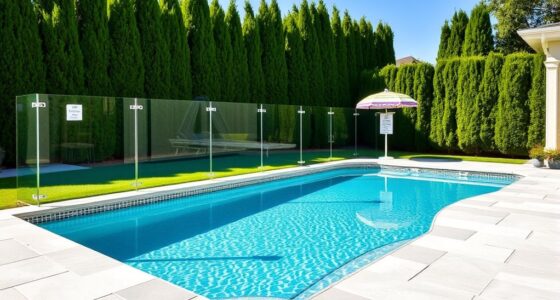
To stay compliant and guarantee safety on your pool construction sites, you need a thorough safety checklist. This includes conducting detailed site assessments, identifying hazards early, and implementing appropriate safety measures like barriers and warning signs. Regularly inspect tools and equipment, train workers on safety protocols, and monitor practices constantly. Investing in these steps helps prevent accidents and legal issues. Keep going to discover detailed steps to boost your safety programs even further.
Key Takeaways
- Conduct comprehensive site assessments to identify hazards like unstable ground, electrical risks, and falling objects before starting work.
- Ensure all workers are trained in safety protocols, PPE use, chemical handling, and fall protection measures.
- Implement safety measures such as barriers, warning signs, and proper equipment to prevent accidents during installation.
- Regularly inspect tools, machinery, and safety equipment to maintain compliance and address hazards promptly.
- Develop and follow a safety compliance plan that includes hazard prevention, ongoing monitoring, and legal regulation adherence.
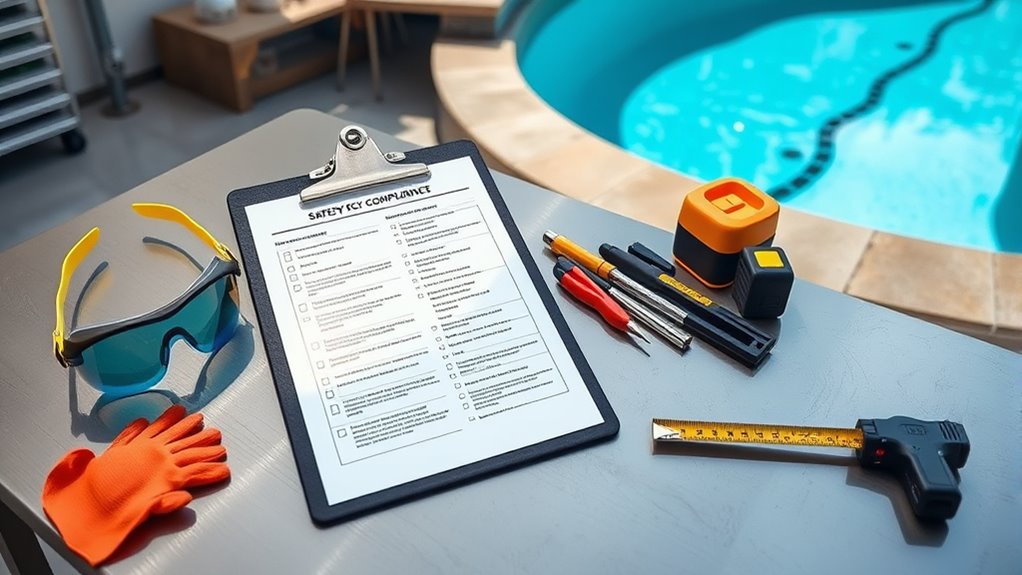
Building a pool is an exciting project, but safety should always come first. As a pool builder or contractor, ensuring a safe working environment is essential not only for your team but also for the property owner and future users. One of the most effective ways to achieve this is by implementing proper hazard prevention strategies. You need to identify potential risks early and take steps to eliminate or control them before work begins. Conduct thorough site assessments to recognize hazards such as unstable ground, electrical risks, or falling objects. Keep the work area organized and free of clutter to prevent trips and falls. Always use appropriate safety equipment, like barriers or warning signs, to alert workers and visitors of ongoing hazards. Regularly inspecting tools and machinery also helps prevent accidents caused by equipment failure. Remember, hazard prevention isn’t a one-time task; it’s an ongoing process that requires constant vigilance throughout the project. Incorporating proper safety measures can also improve the overall quality and longevity of the pool installation by reducing damage caused by accidents or mishandling.
Alongside hazard prevention, worker training plays a pivotal role in maintaining safety standards. When you ensure your team is well-trained, you empower them to recognize hazards, follow safety protocols, and respond effectively in emergencies. Prioritize extensive training sessions covering the proper use of personal protective equipment (PPE), safe handling of chemicals, electrical safety, and fall protection measures. Make sure your workers understand the importance of adhering to safety guidelines and encourage open communication about any concerns they might have. Well-trained workers are more confident and less likely to make mistakes that could lead to accidents. Keep training materials up to date and conduct refresher courses regularly, especially when new equipment or procedures are introduced. Creating a safety-first culture within your team promotes accountability and vigilance, reducing the likelihood of incidents on-site. Ensuring your team is familiar with hazard prevention strategies and proper safety procedures can significantly reduce the risk of injuries.
Incorporating hazard prevention and worker training into your safety checklist helps establish a proactive approach to risk management. It’s about creating a work environment where safety isn’t an afterthought but a fundamental part of every step. Proper hazard prevention minimizes the chance of accidents, while thorough worker training ensures everyone understands how to work safely and respond to hazards appropriately. Together, these elements form the backbone of a detailed safety compliance plan that protects your team, clients, and your reputation. By investing time and resources into safety measures upfront, you reduce the risk of costly delays, injuries, or legal issues down the line. Ultimately, prioritizing safety isn’t just about compliance; it’s about building trust and fostering a professional work environment where everyone feels secure and valued.
Frequently Asked Questions
How Often Should Safety Training Be Updated for Pool Construction Crews?
You should update safety training for your pool construction crews annually to guarantee they stay current on pool safety signage and emergency response planning. Regular updates help reinforce safety procedures, address new regulations, and improve overall site safety. Incorporate refresher courses that focus on emergency response planning and proper installation of pool safety signage, making sure your team remains prepared for any potential hazards and maintains compliance with safety standards.
What Are the Common Safety Violations Observed on Pool Construction Sites?
You often overlook common safety violations like skipping secure pool fencing and ignoring electrical hazards. These mistakes can lead to serious accidents. You might notice unprotected edges, faulty wiring, or incomplete barriers during inspections. Staying vigilant helps prevent potential pitfalls. Prioritize proper fencing and electrical safety, verify barriers are intact, and conduct regular checks. By addressing these issues promptly, you protect workers and future pool users from preventable dangers.
Which Safety Certifications Are Mandatory for Pool Builders?
You need to have OSHA certification and specialized training in pool safety standards to work legally. Always wear proper safety gear, like gloves, goggles, and helmets, during site inspections and construction. These certifications ensure you’re knowledgeable about safety protocols, helping prevent accidents. Regular site inspections also verify compliance with safety regulations, protecting both you and your clients. Staying certified and vigilant maintains the project safe and on track.
How Do Weather Conditions Impact Safety Protocols During Pool Installation?
Weather conditions directly impact your safety protocols during pool installation. You need to prioritize weather safety by monitoring climate considerations like rain, wind, and extreme temperatures, which can delay work or pose hazards. Strong storms or high winds can cause accidents or equipment damage, so adjusting your schedule or securing materials is vital. Staying aware of these factors ensures a safer worksite and helps prevent injuries or setbacks during the project.
What Are the Latest Safety Technologies Available for Pool Construction?
Did you know over 65% of pool accidents could be prevented with advanced technology? You can now leverage smart sensors to monitor safety hazards in real-time and use augmented reality to visualize complex construction sites. These latest safety technologies enhance precision, reduce risks, and improve overall safety during pool construction, giving you peace of mind and ensuring compliance with safety standards. Embrace these innovations to stay ahead in the industry.
Conclusion
By following this safety checklist, you’re not just protecting your workers—you’re safeguarding future swimmers too. Did you know that drowning is the leading cause of accidental death among children aged 1-4? Ensuring strict safety standards reduces these risks profoundly. Stay vigilant, prioritize safety at every step, and build pools that are both beautiful and secure. Your commitment makes a difference—saving lives and creating peace of mind for families everywhere.