Building codes determine how large and deep your pool can be by setting safety standards, zoning rules, and structural requirements. These regulations guarantee your pool is safe for users and compliant with local laws, often limiting dimensions, depth, and necessary safety features like fencing or alarms. By following these rules, you avoid costly modifications later. To find out exactly how your area’s codes impact your pool plans, explore the details further.
Key Takeaways
- Building codes set maximum allowable pool sizes and depths to ensure safety and compliance.
- Zoning regulations specify setbacks and location limits that influence pool dimensions.
- Safety standards require safety features like fencing and alarms based on pool size and depth.
- Structural requirements vary with pool size/depth to prevent failure and ensure durability.
- Permits and inspections enforce adherence to codes, affecting permissible pool dimensions and features.

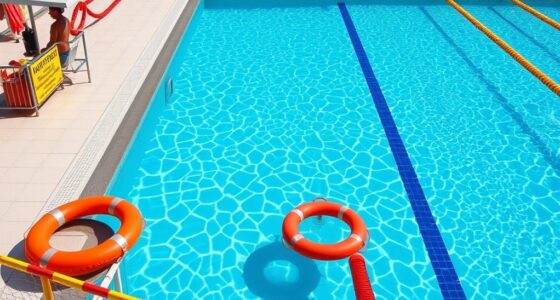
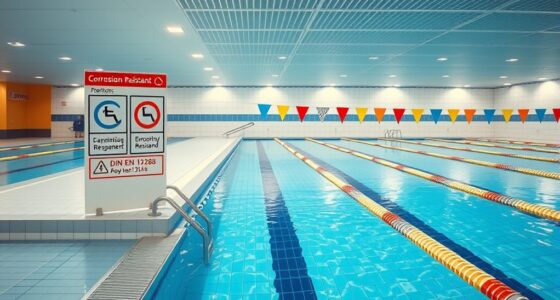
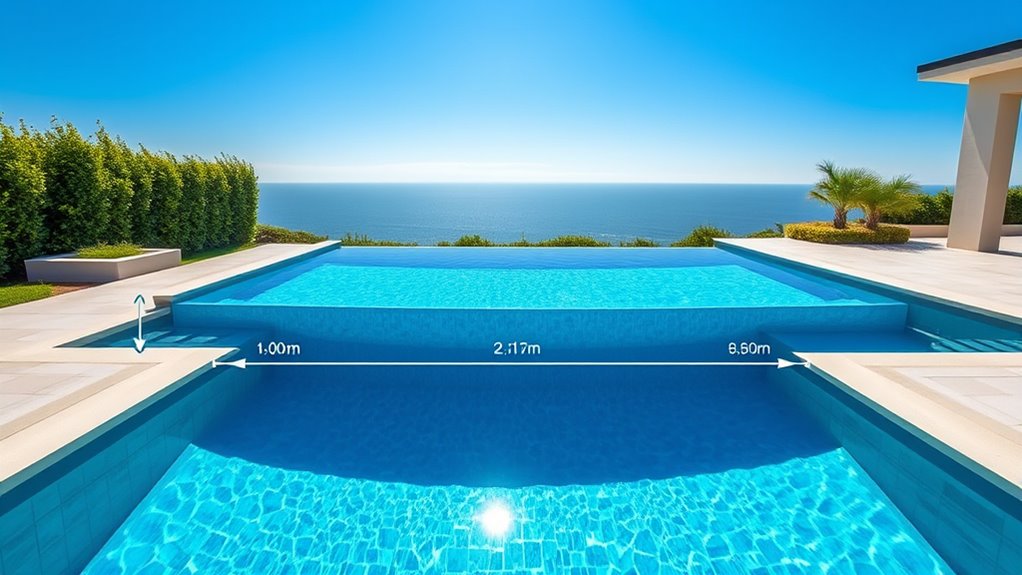
Building codes play a crucial role in determining the allowable size of residential pools, ensuring safety and compliance for homeowners. These codes are designed to protect you and your family by establishing guidelines for pool dimensions, construction standards, and safety features. When you’re planning your backyard oasis, understanding how building codes influence pool size helps you avoid costly adjustments later and keeps your pool safe and legal. A key aspect of these codes involves zoning regulations, which dictate where and how large a pool can be on your property. Zoning rules often specify setbacks from property lines, structures, and utility lines, directly affecting the maximum size and placement of your pool. By familiarizing yourself with local zoning regulations, you can plan a pool that fits within these parameters and minimizes the risk of violations or the need for costly modifications. Additionally, these regulations often require permits and inspections to ensure compliance before and after construction. Pool safety is a primary concern in building codes, especially when it comes to size and depth. Larger or deeper pools can pose increased risks of accidents, so codes often set limits on maximum depth and overall dimensions to reduce hazards. These safety standards include requirements for fencing, barriers, and alarms, which are often influenced by the size of your pool. For example, a larger pool might require more extensive fencing or additional safety features to prevent unsupervised access, particularly for children. You’ll also need to guarantee the pool’s depth, as codes specify maximum depths to avoid dangerous conditions, such as increased drowning risks or difficulties in emergency situations. Building codes also specify structural requirements based on pool size, such as the strength of the foundation and the materials used. These standards assure your pool can withstand environmental stresses and prevent structural failure. When planning a bigger or deeper pool, you might need reinforced concrete or specific lining materials to meet safety standards. These requirements are not just about durability—they’re about protecting you from potential accidents caused by structural issues. Furthermore, understanding these regulations can help you select appropriate pool safety features and ensure your design complies with all legal requirements. In essence, your pool’s size and depth aren’t just personal choices; they’re tightly regulated by building codes and zoning laws aimed at safeguarding everyone’s safety. By aligning your pool design with these regulations, you guarantee your backyard becomes a safe, enjoyable space without risking legal trouble or compromising safety. Staying informed about local rules and consulting with professionals can help you navigate these regulations efficiently, making your pool project smooth and compliant.
Frequently Asked Questions
How Do Building Codes Differ Between States or Regions?
You’ll notice regional variations and enforcement differences in building codes between states or regions. These variations can impact pool safety standards, size, and depth requirements. Some areas might have stricter regulations to prevent accidents, while others are more relaxed. It’s important to check local codes because they directly influence your pool project, ensuring you comply with safety and structural rules specific to your region.
Are There Exemptions for Private Residential Pools?
You might find exemptions for private pools, but they vary by location. Usually, the exemption criteria include pool size, fencing requirements, and safety features. For example, small, non-permanent pools may qualify for reduced regulations or exemptions. To determine if your pool qualifies, check your local private pool regulations and consult building authorities. This way, you make certain your pool meets safety standards without unnecessary compliance hurdles.
How Often Are Pool Building Codes Updated?
They say, “change is the only constant,” and that’s true for pool building codes. Typically, these codes are updated every 3 to 5 years to keep up with safety standards and new pool design innovations. Staying informed about updates helps you plan for pool maintenance and guarantee your pool complies with regulations. Regular check-ins with local authorities or contractors will keep your pool safe, legal, and enjoyable for years to come.
Do Codes Specify Safety Features for Deep Pools?
Yes, building codes specify safety standards for deep pools to guarantee hazard mitigation. These codes often require features like barriers, alarms, and adequate lighting to prevent accidents. As a pool owner, you’re responsible for conforming to these safety standards, which help reduce risks such as drownings or injuries. Following these regulations not only keeps you compliant but also creates a safer environment for everyone enjoying your pool.
What Penalties Exist for Non-Compliance With Pool Codes?
You might think penalties for violating pool codes are minor, but they can be serious. If you ignore requirements like proper pool fencing or water temperature controls, authorities can issue fines, mandate repairs, or even shut down your pool until compliance is met. These violations threaten safety, especially for children, and ignoring them risks legal consequences, making it essential to follow all regulations to avoid costly penalties.
Conclusion
Ultimately, understanding building codes helps you navigate pool size and depth regulations like a modern-day Leonardo. They guarantee your backyard oasis stays safe and compliant, preventing any future “flying buttresses” surprises. By staying informed, you can design a pool that’s both fun and within legal limits—no need to summon a medieval architect to interpret the rules. Keep the guidelines in mind, and your swimming spot will be the talk of the town—without any need for a time machine.