When planning pool construction, conducting an environmental impact assessment helps you evaluate how your project could affect local ecosystems, water resources, and wildlife. It guides you to identify potential issues like habitat disruption and water wastage, so you can implement measures to reduce environmental harm. Proper planning, timing, and sustainable practices are key to maintaining ecological balance. If you want to learn more about how to minimize your project’s environmental footprint, keep exploring this important process.
Key Takeaways
- Conduct an EIA to identify potential ecological impacts and habitat disruption caused by pool construction.
- Assess water resource use and implement conservation measures like pool covers and recycled water options.
- Evaluate construction timing and methods to minimize disturbance to local wildlife and protected species.
- Design drainage and filtration systems to prevent chemical runoff and water pollution in surrounding environments.
- Incorporate sustainable practices to reduce long-term environmental impacts and promote ecological preservation.
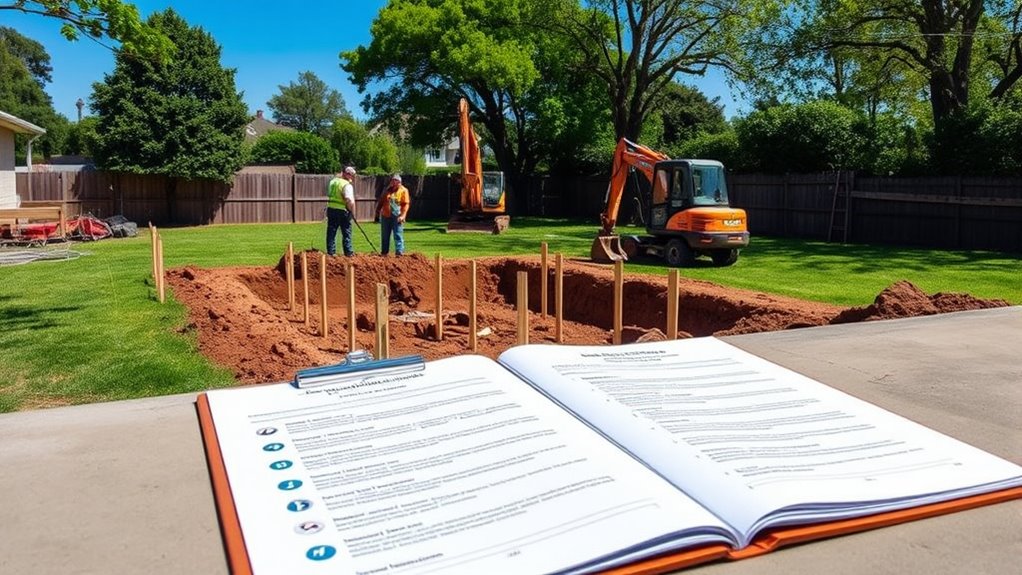
Constructing a swimming pool can substantially impact the local environment, which is why conducting an environmental impact assessment (EIA) is crucial. When you plan your pool, you’re not just thinking about aesthetics and recreation—you also need to consider how your project affects the surrounding ecosystem. An EIA helps you identify potential issues like water conservation challenges and habitat disruption, ensuring that your project proceeds responsibly.
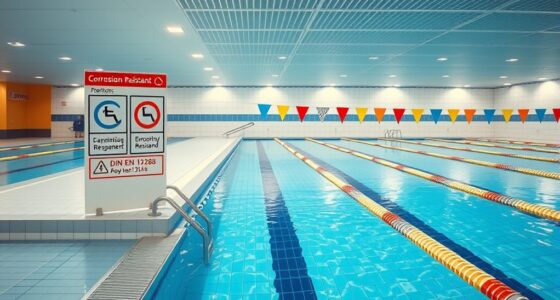
Planning a pool requires assessing environmental impacts to protect ecosystems and resources.
Water conservation is a critical concern during pool construction and use. Pools require significant water resources, and if not managed properly, they can contribute to water wastage, especially in areas facing droughts or water shortages. An EIA prompts you to evaluate how much water your pool will consume and explore ways to minimize this impact. You might implement features like covers to reduce evaporation, or consider alternative water sources, such as recycled water, to lessen the strain on local supplies. By planning ahead, you can ensure your pool enhances your outdoor space without compromising water resources.
Habitat disruption is another vital aspect to assess. Building a pool often involves land clearing, excavation, and the alteration of natural landscapes, which can disturb local flora and fauna. During your EIA, you’ll need to determine if the construction site hosts any protected species or sensitive habitats. If so, you might need to modify your plans to avoid disturbing these ecosystems or implement measures to protect wildlife during construction. For example, scheduling work during periods of low animal activity or installing barriers to prevent animals from entering construction zones can help mitigate habitat disruption.
Additionally, the assessment encourages you to think about long-term impacts. Once your pool is operational, runoff from chemicals or debris can pollute nearby water bodies, affecting aquatic life and water quality. Proper design, including filtration systems and landscaping that directs runoff away from natural habitats, can help prevent these issues. Regular maintenance and environmentally friendly chemicals can further minimize pollution risks. Incorporating sustainable design practices into your project not only benefits the environment but also enhances the longevity and safety of your pool.
Frequently Asked Questions
How Long Does the EIA Process Typically Take?
The EIA process usually takes anywhere from a few months to a year, depending on your construction timeline and environmental regulations. You’ll need to gather necessary data, submit your application, and wait for approvals. If your project impacts sensitive areas, it might take longer. Planning ahead helps make certain you meet all requirements and avoid delays, making the process smoother and more predictable for your pool construction project.
Are There Specific Permits Required Post-Eia Approval?
Think of permit requirements post-eia approval like opening a door to your project. After approval, you need to obtain specific permits, such as building and safety permits, to proceed smoothly. Post-approval procedures often include inspections and compliance checks. These steps guarantee your pool construction aligns with regulations, preventing delays. Always check local authorities’ requirements, as permits vary by location, making it essential to follow all post-approval procedures diligently.
Can EIA Requirements Vary by Location or Country?
Yes, EIA requirements can vary by location or country. You need to take into account regional regulations that dictate specific environmental assessment processes and standards. International standards may also influence your project, especially if it involves cross-border impacts or complies with global best practices. Always research local laws and guidelines thoroughly, as these will determine the scope and depth of your environmental impact assessment, ensuring your project meets all necessary legal and environmental expectations.
What Are Common Challenges in Completing an EIA?
You often face challenges like gathering extensive data and ensuring stakeholder engagement, which can delay EIA completion. Mitigation strategies are essential to address potential environmental impacts effectively. You need to balance technical assessments with community concerns, making sure all stakeholders are involved. Clear communication and thorough planning help you navigate these hurdles, leading to a more efficient process while minimizing environmental risks.
How Can I Expedite the EIA Approval Process?
Think of streamlining your EIA approval as clearing a crowded highway. To do this, you should thoroughly understand environmental policy requirements and prepare an all-encompassing yet concise report. Engage stakeholders early, like opening the gates to a welcoming garden, fostering cooperation. By addressing concerns proactively and maintaining transparency, you’ll accelerate approval. Staying organized and responsive keeps the process moving smoothly, ensuring your project reaches the finish line faster with less friction.
Conclusion
So, next time you’re dreaming of that perfect backyard oasis, remember, your pool’s impact isn’t just about splashing around. Skipping environmental assessments might save time, but it could cost much more later—like ruining local habitats or facing fines. Think of it as giving Mother Nature a quick splash of “I don’t care.” So, immerse yourself in responsible planning now; after all, who knew saving the planet could be your most invigorating backyard feature?