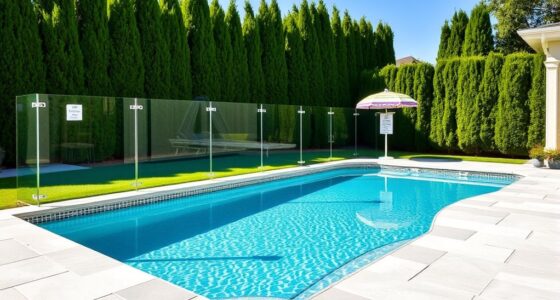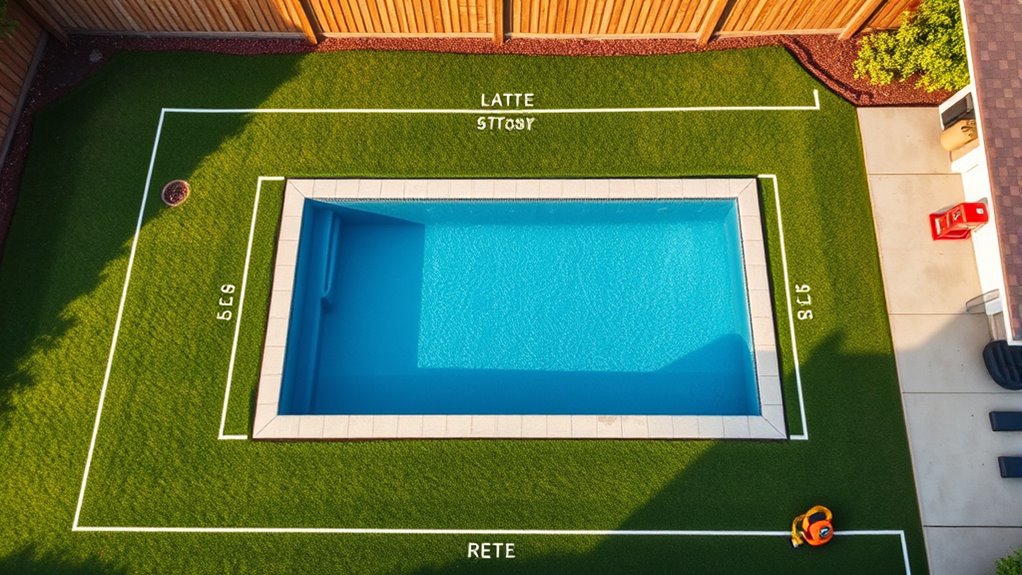

To understand property line setbacks for pool installation, you need to check your local zoning laws and property boundary guidelines. These setbacks determine how close your pool can be to your property lines or utilities, preventing issues with neighbors and safe utility placement. Regulations vary by area and pool type, so it’s important to review specific codes and permit requirements. Knowing these rules now can help you plan properly and avoid future legal or safety problems.
Key Takeaways
- Setback regulations specify minimum distances between your pool and property lines to ensure safety and compliance.
- Review local zoning codes to determine specific setback requirements for pool installation in your area.
- Permits are typically required; submitting detailed plans helps ensure your pool meets setback and safety standards.
- Different rules may apply for above-ground versus in-ground pools, and special zones might have stricter setbacks.
- Consulting local authorities or zoning offices ensures you understand and adhere to all setback regulations before construction.
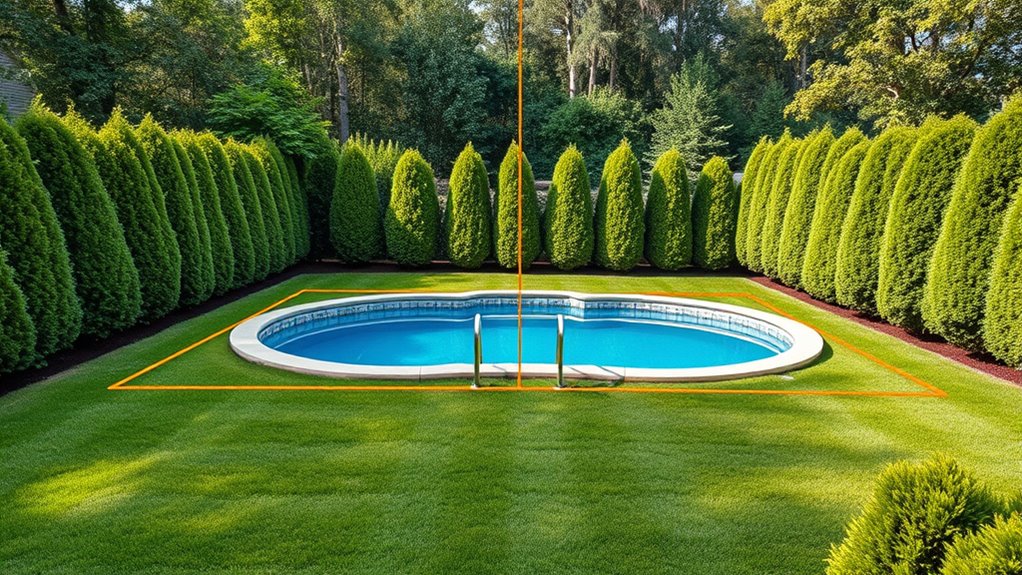
Installing a pool on your property requires careful attention to setback regulations, which specify how close your pool can be to property lines. These rules are essential because they ensure safety, privacy, and compliance with local laws. Before you start digging, you need to understand the zoning restrictions that govern your area. Zoning restrictions often dictate minimum distances from property boundaries, structures, and utilities. These setbacks are designed to prevent conflicts with neighboring properties and to maintain community standards. It’s important to review your local zoning codes to know the exact setback distances required for pool installation. Failing to adhere to these restrictions can result in fines, orders to remove the pool, or legal issues, so thorough research upfront saves you headaches later. Additionally, understanding the shelf life of materials involved in construction can help you plan your project timeline effectively.
Along with zoning restrictions, permit requirements play a significant role in the process. Most jurisdictions require you to obtain a building permit before installing a pool. This permit process ensures that your project complies with safety standards, setback rules, and other local regulations. To acquire a permit, you typically need to submit detailed plans showing the pool’s location, dimensions, and how it will meet setback distances. Some areas might also require inspections during and after construction to confirm compliance. Ignoring permit requirements can lead to penalties, delays, or even the necessity to dismantle your pool, so it’s important to start this process early. Check with your local building department or zoning office to gather all necessary forms and instructions, and don’t assume that you can skip the permit if the pool is small or temporary.
Understanding setback rules involves more than just knowing the minimum distances; you also need to think about any additional restrictions that may apply to specific types of pools, such as above-ground or in-ground installations. Some zones have different rules based on the size or purpose of the pool, and certain areas may have overlays or special districts with stricter regulations. It’s wise to consult both zoning maps and local ordinances to get a clear picture of what’s allowed. If you have questions or your situation is complex, contacting your local zoning or building department directly can help clarify any uncertainties. Remember, adhering to setback requirements and securing the proper permits not only keeps you compliant but also ensures your pool is safe, legal, and properly integrated into your property.
Frequently Asked Questions
Can Setbacks Vary Between Residential and Commercial Properties?
Yes, setbacks can vary between residential and commercial properties because property boundary and zoning restrictions differ. You’ll find that commercial zones often have stricter or different setback requirements to ensure safety and compliance. It’s essential to verify your local regulations, as these rules dictate how close your pool can be to property boundaries and other structures. Always review zoning laws before planning your pool to avoid violations and ensure proper setback adherence.
Are There Different Setback Rules for Above-Ground Versus In-Ground Pools?
Think of above-ground pools as friendly neighbors in your yard, with different rules than in-ground pools. You typically face fewer pool barrier regulations and setback requirements. While in-ground pools often need closer proximity to property lines, above-ground pools may have more relaxed rules, but zoning variance options can help if restrictions are tight. Always check local codes, because rules can vary, and some jurisdictions might have specific guidelines.
How Do Setbacks Impact Pool Fencing Requirements?
Setbacks influence pool fencing requirements by dictating how close your fence can be to property lines and your pool. For pool safety, you need a fence that meets local height regulations, usually around four feet, to prevent accidental drownings. If setbacks are tight, you might need a taller or more secure fence to guarantee safety and compliance. Always check local codes for specific fencing height and setback rules to keep your pool safe and legal.
What Are the Consequences of Non-Compliance With Setback Regulations?
If you ignore setback regulations, you risk facing liability issues if accidents occur or someone gets injured near your pool. Non-compliance can also lead to property disputes with neighbors, potentially resulting in costly legal battles or mandated modifications. You might be forced to remove or alter your pool, which can be expensive and time-consuming. Staying within setback rules helps protect you legally and maintains good neighbor relations.
Do Setback Rules Change if My Property Is in a Historic District?
Oh, of course, if you’re in a historic district, you’ll find the setback rules suddenly more flexible—just kidding! In reality, historic district regulations and preservation guidelines often tighten restrictions, including setbacks for pools. You’ll need to check with local authorities and possibly get special permits to make sure your project aligns with preservation efforts. Ignoring these rules can lead to fines or needing to undo your work, so stay compliant!
Conclusion
So, next time you plan that backyard paradise, remember—ignoring property line setbacks isn’t just reckless; it’s basically inviting your neighbor to turn your pool into an unintended fish pond. Play it safe, follow the rules, and avoid a legal splash. After all, nothing says “fun” like a court date over a backyard swimming spot. Stay within the lines, keep the peace, and enjoy your pool without the risk of turning your yard into a neighborhood drama scene.