Your pool warranty usually covers major parts like liners, pumps, and filters for a specific time, protecting against manufacturing defects. However, it typically excludes damage from normal wear and tear, accidents, storms, improper installation, or environmental factors like freezing or vandalism. To get the most out of your warranty, keep detailed records and follow the manufacturer’s claims process carefully. If you want to understand exactly what’s covered and what’s not, there’s more to discover.
Key Takeaways
- Pool warranties typically cover major components like liners, pumps, and filters for a set period, mainly protecting against manufacturing defects.
- Common exclusions include damage from storms, accidents, improper installation, vandalism, and environmental factors such as freezing.
- Proper documentation and adherence to manufacturer claim procedures are essential for efficient warranty processing.
- Damage caused by neglect, chemical imbalances, algae, mineral deposits, or regular wear and tear is generally not covered.
- Maintaining detailed records and following maintenance guidelines helps maximize warranty benefits and prevent claim denials.
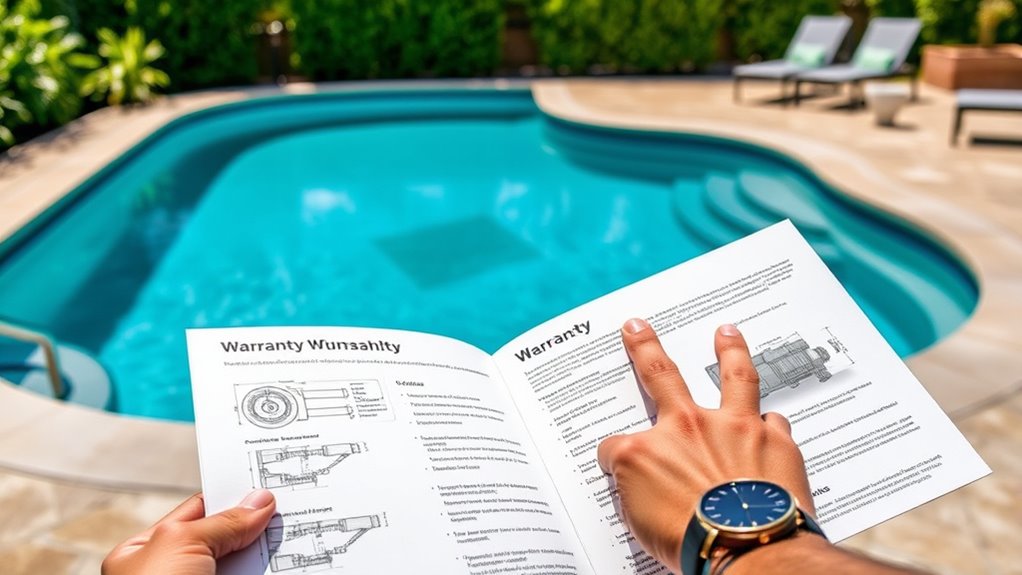
When reviewing your warranty, pay close attention to the specifics of what’s included. Typically, coverage extends to major components like liners, pumps, filters, and structural elements for a set period. However, these warranties usually don’t cover normal wear and tear, damage from accidents, or issues caused by environmental factors such as storms or debris. If you experience a problem, it’s crucial to document everything thoroughly and follow the manufacturer’s procedures for warranty claims. Failing to adhere to the specified process can delay or even deny coverage, leaving you responsible for costly repairs. Additionally, understanding the types of pool accessories that may be covered or excluded can help you better assess your warranty’s scope.
Understanding the exclusions in your warranty is just as important as knowing what’s covered. Many warranties don’t cover damage resulting from improper installation or maintenance, so it’s vital to follow the manufacturer’s guidelines carefully. For example, if algae buildup or mineral deposits cause damage, these are often considered maintenance issues rather than manufacturing defects. Consequently, warranty claims related to such issues are typically denied. Additionally, some warranties exclude damages caused by chemical imbalances, freezing, or vandalism. Recognizing these limitations helps you avoid unnecessary frustration and ensures you don’t mistakenly assume coverage for problems that aren’t covered.
To maximize your warranty benefits, keep detailed records of your pool maintenance routine, including dates of chemical treatments, inspections, and repairs. If a defect arises, having this documentation makes it easier to substantiate your warranty claim. Always contact the manufacturer or authorized service provider promptly when you notice a problem, and follow their instructions carefully. Remember, warranty coverage is designed to protect against manufacturing faults, not user mistakes or neglect. By staying proactive with pool maintenance and understanding the scope of your warranty, you’re better positioned to handle warranty claims efficiently and protect your investment in the long run.
Frequently Asked Questions
Do Warranties Cover Accidental Damage or Misuse?
Warranties generally don’t cover accidental damage or misuse, so if you cause damage through mishandling or neglect, you’re likely on your own. To prevent issues, follow proper maintenance and usage guidelines, which help with misuse prevention. Always read your warranty terms carefully, as exclusions often specify what isn’t covered—like accidental damage—so you know what to expect and how to protect your pool properly.
How Do I File a Warranty Claim?
Did you know that 85% of warranty claims are approved with proper registration? To file a warranty claim, first guarantee you’ve completed your warranty registration. Then, gather all relevant maintenance tips and documentation of any issues. Contact your pool manufacturer’s customer service promptly, providing detailed descriptions and photos if needed. Follow their specific instructions, and keep copies of all correspondence for a smooth process.
Are There Any Costs Associated With Warranty Repairs?
Yes, there can be costs associated with warranty repairs. While your warranty may cover parts and labor, you might still need to pay for pool maintenance or any repairs outside the warranty coverage. Make sure you register your pool warranty promptly to avoid delays. If you notice issues, contact the manufacturer early to understand what costs, if any, you’ll be responsible for during warranty repairs.
What Is the Process for Disputing a Warranty Denial?
When your warranty claim gets denied, don’t panic. You should first gather all relevant warranty documentation, including your original contract and any communication. Then, contact the manufacturer or service provider to discuss the denial and request explanation. If unresolved, pursue dispute resolution options like mediation or arbitration outlined in your warranty terms. Staying organized and persistent helps guarantee your concerns are heard and addressed effectively.
Can I Extend My Warranty Coverage Beyond the Initial Period?
Yes, you can extend your warranty coverage beyond the initial period through warranty renewal options. Contact your provider to discuss extended coverage plans, which often involve paying an additional fee. This allows you to maintain protection against future issues and prolongs your pool’s warranty benefits. Be sure to review the terms and conditions of the renewal, and act before the original warranty expires to guarantee continuous coverage.
Conclusion
Now that you understand what your pool warranty covers and what it doesn’t, you’re better equipped to spot potential issues early. Remember, knowing the ins and outs can save you headaches down the line. Don’t put all your eggs in one basket—stay vigilant, read the fine print, and keep up with maintenance. That way, you’ll be swimming smoothly and avoiding surprises, because sometimes, it’s better to be safe than sorry.