
To navigate municipal zoning laws for your backyard pool, start by checking with your local building department or zoning office for permit requirements and safety standards. Make certain to understand setback rules, typically 10-15 feet from property lines, and any homeowners’ association restrictions that may apply. Complying with fencing and safety features is also essential. Continue exploring to learn how to guarantee your project meets all regulations smoothly and avoids future issues.
Key Takeaways
- Research local permit requirements and submit detailed pool plans to ensure compliance before construction begins.
- Verify setback distances from property lines, structures, and easements according to municipal regulations.
- Ensure safety features like fencing, gates, and alarms meet local safety codes for backyard pools.
- Check neighborhood or HOA rules that may impose additional restrictions on pool size, fencing, or landscaping.
- Consult with local building departments or qualified contractors to navigate regulations and avoid legal issues.
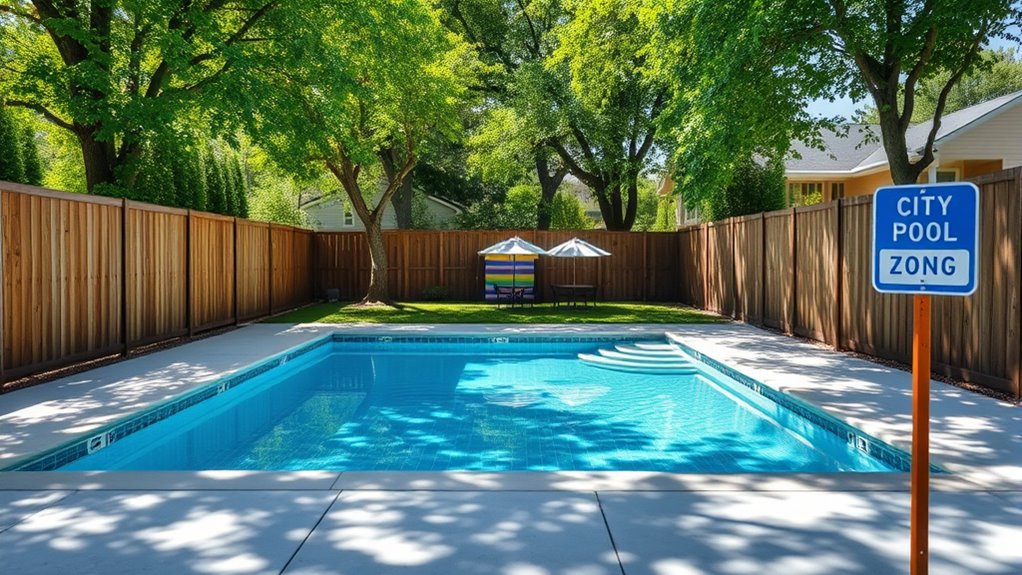
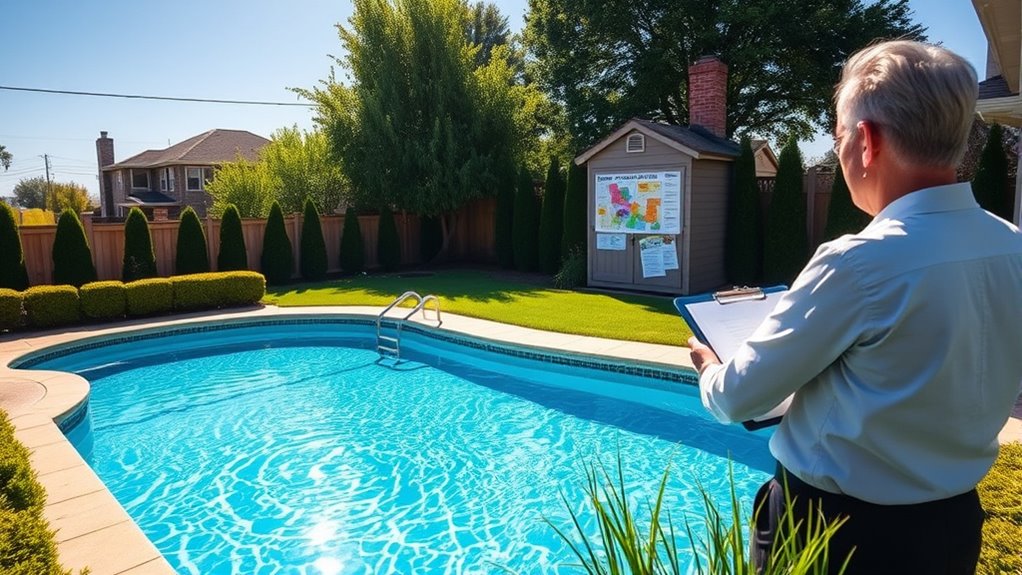
Installing a backyard pool can be an exciting upgrade to your property, but before diving in, it’s essential to understand your local zoning laws. These laws are designed to guarantee your pool complies with safety standards and community regulations, helping you avoid costly fines or the need for future modifications. The first step is to research permit requirements in your area. Many municipalities require you to obtain a permit before starting any excavation or construction. This process typically involves submitting detailed plans that show the pool’s location, size, and safety features. Failing to secure the necessary permits can lead to penalties, forced removal of the pool, or difficulties when selling your home. Checking with your local building department or zoning office provides clarity on what documentation is needed and the timeline for approval.
Research local permits to ensure your backyard pool project complies with safety and community regulations.
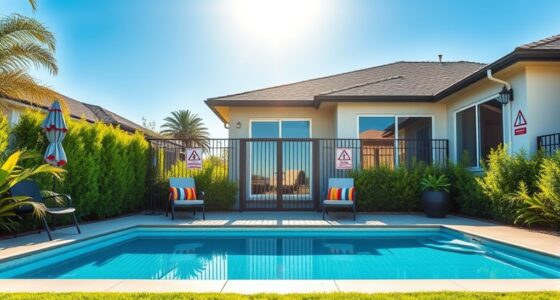
Beyond permits, understanding rules related to pool safety is indispensable. Municipalities often have regulations governing fencing, barriers, and alarms to prevent accidental drownings, especially if you have children or pets. These safety measures are not just recommendations; they’re often legal requirements. For example, you might be mandated to install a fence at least four feet high around the pool, with a self-closing, self-latching gate that opens outward. Some areas also require pool alarms or covers to provide an extra layer of protection. These safety features are designed to protect both residents and visitors, giving you peace of mind while enjoying your backyard oasis.
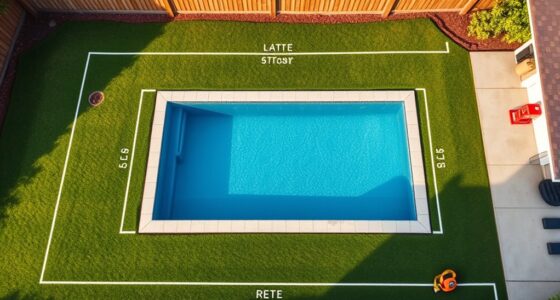
Another important aspect to consider is setback requirements, which specify how far your pool must be from property lines, structures, and utility easements. These setbacks prevent pools from encroaching on neighbors’ property or interfering with underground utilities. Local zoning codes may specify minimum distances, such as 10 to 15 feet from property boundaries, and may restrict building pools near septic systems or underground cables. It’s imperative to measure your yard carefully and consult local regulations before planning your pool’s placement. Ignoring setback rules can result in having to move or dismantle your pool later on. Additionally, consulting with a qualified contractor familiar with local regulations can streamline the process and ensure compliance.
Finally, be aware of any neighborhood or homeowners’ association rules that might impact your pool installation. Even if municipal laws permit your project, community guidelines could impose additional restrictions on pool size, fencing style, or landscaping. By thoroughly researching all applicable regulations—permit requirements, pool safety standards, setbacks, and community rules—you guarantee your backyard pool project proceeds smoothly. Taking these steps upfront saves you time, money, and potential legal headaches, allowing you to enjoy your swimming paradise without complications.
Frequently Asked Questions
Can I Install a Pool Without a Permit in My Municipality?
You typically can’t install a pool without a permit in your municipality, as it’s required for safety and proper pool maintenance. Skipping the permit process risks fines, unsafe construction, and issues with pool safety standards. Always check local zoning laws first to ensure adherence. Getting the permit helps protect your family and neighbors, making sure your backyard pool is safe and properly maintained, so you can enjoy it worry-free.
What Are the Height Restrictions for Pool Fencing?
Sure, your pool’s fence height often has to be just right—usually around 4 feet—to prioritize pool safety. While you might think any sturdy fence material will do, many municipalities specify materials like metal or wood to prevent climbing. So, don’t overlook these restrictions; a fence that’s too low or made from the wrong material could land you in hot water with local authorities.
Are There Specific Setbacks Required From Property Lines?
Yes, there are specific setbacks you need to observe from property boundaries for pool safety. Typically, local laws require you to keep your pool a certain distance away from property lines, often ranging from 5 to 10 feet. These setbacks help ensure safety, privacy, and proper drainage. Check your municipal zoning laws to confirm the exact distances, and always plan your pool placement accordingly to avoid violations and ensure compliance.
How Do I Apply for a Zoning Variance for My Pool?
You should start by contacting your local zoning office to request a variance application for your pool. Fill out the form, providing details about your pool’s location, safety measures, and how you’ll meet landscaping requirements. Be prepared to explain how your pool will guarantee safety and comply with setback rules. Attend any required hearings, and address concerns about pool safety and landscaping to increase your chances of approval.
Are There Noise Restrictions Related to Backyard Pools?
Did you know that noise complaints make up over 20% of backyard pool disputes? Yes, there are noise restrictions related to pools, especially during late-night hours, to maintain neighborhood peace. You should also consider pool maintenance routines and water safety measures to prevent accidents. Staying aware of local noise ordinances helps guarantee you enjoy your pool without violating rules, avoiding fines, and keeping your neighbors happy.
Conclusion
Steering municipal zoning laws might seem daunting, but understanding them guarantees your backyard oasis stays legal and stress-free. Did you know that over 60% of cities have specific setbacks and fencing requirements for pools? By staying informed, you prevent costly fines or having to dismantle your dream pool. So, take the time to research your local regulations—your perfect backyard retreat awaits, legally and hassle-free.