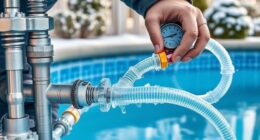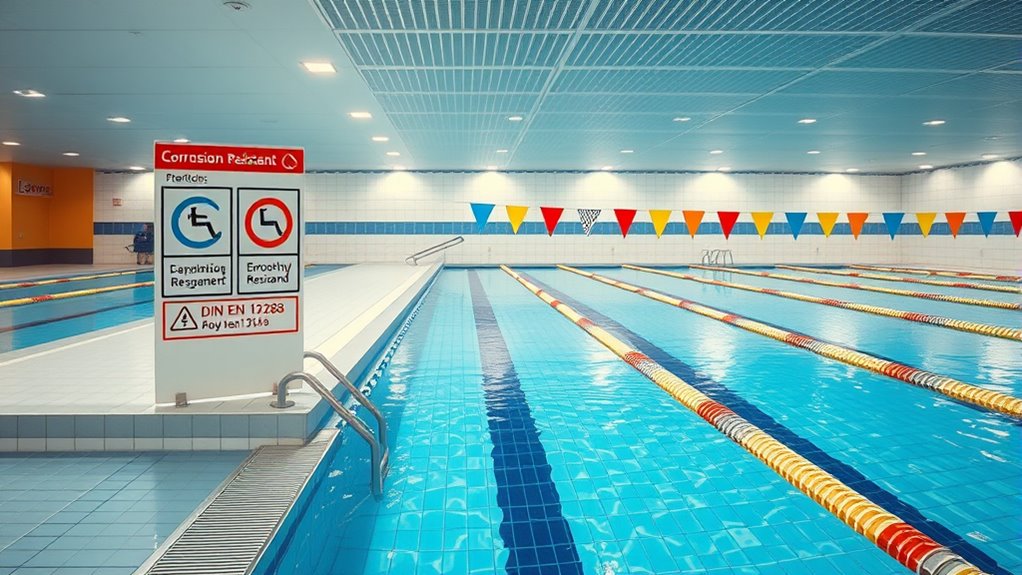

To meet DIN EN 15288 standards, you need to guarantee your public pool maintains strict water quality, safety protocols, and structural safety. Regularly test and treat water to eliminate bacteria and contaminants, follow safety procedures like lifeguard requirements, and keep facilities clean and well-maintained. Proper signage and safety equipment are essential for compliance. By following these guidelines, you provide a safe, enjoyable environment—next, you’ll discover key compliance steps for your pool’s operation.
Key Takeaways
- Ensure water quality through regular testing of chlorine, pH, and chemical parameters in compliance with DIN EN 15288 standards.
- Implement safety protocols, including lifeguard requirements, safety equipment, and clear signage, to meet DIN safety standards.
- Maintain proper hygiene, cleanliness, and facility upkeep to adhere to DIN EN 15288’s structural and operational safety criteria.
- Conduct routine water safety inspections, filtration system maintenance, and chemical handling as mandated by DIN regulations.
- Obtain certification and display compliance signage demonstrating adherence to DIN EN 15288 standards for public pools.
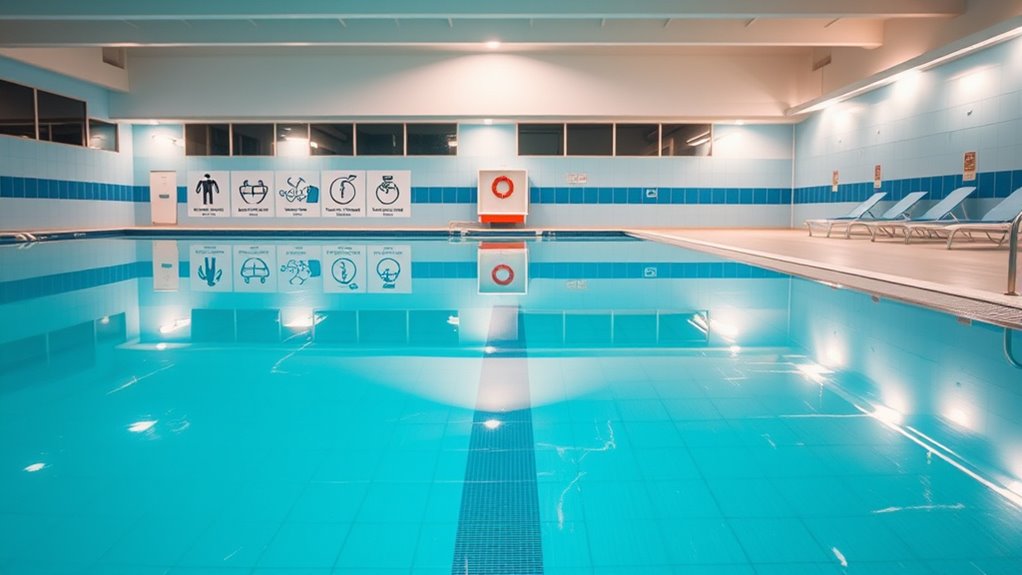
Have you ever wondered what rules keep public pools safe and enjoyable for everyone? It all starts with strict adherence to regulations that focus on maintaining high water quality and implementing thorough safety protocols. These standards aren’t just bureaucratic hurdles; they’re essential to protect swimmers’ health and prevent accidents. When you step into a well-regulated public pool, you can trust that the water has been carefully monitored and treated to eliminate bacteria, viruses, and other contaminants. Regular testing of water quality ensures that chlorine levels, pH balance, and other chemical parameters are within safe limits, reducing the risk of infections or skin irritations. This ongoing process is critical because even a slight imbalance can compromise safety and comfort for swimmers.
Safety protocols are the backbone of public pool regulations, guiding staff in handling emergencies and daily operations. These protocols include clear procedures for rescues, first aid, and emergency evacuations, which are essential for quick, effective responses. Staff training is a key part of these safety measures, ensuring that everyone on duty knows how to act swiftly and correctly in various situations. Additionally, regulations specify the minimum number of lifeguards required based on the pool’s size and occupancy, further safeguarding swimmers. Proper signage, safety equipment, and rules about diving or running are also mandated to prevent accidents. These protocols are designed not only to respond to emergencies but to prevent them from happening in the first place. Moreover, comprehensive water safety requirements help ensure that all safety measures are consistently applied and maintained.
The regulations also emphasize the importance of hygiene and cleanliness, which directly impact water quality and overall safety. Regular cleaning schedules, filtration system maintenance, and proper chemical handling all contribute to a safe swimming environment. You’ll notice that pools adhering to these standards often display certifications or signs indicating compliance, giving you confidence in their safety measures. Furthermore, adherence to safety protocols extends beyond the water itself; pool facilities must also meet structural and operational standards, ensuring that walkways, ladders, and surrounding areas are safe and well-maintained.
Frequently Asked Questions
How Often Are Public Pools Required to Undergo Safety Inspections?
You should schedule safety inspections for your public pool at least once a year, ensuring everything meets standards like proper pool filtration and consistent water temperature. Regular checks help identify issues with filtration systems and temperature regulation, preventing health risks and equipment failure. By maintaining a routine inspection schedule, you keep your pool safe, compliant, and enjoyable for all users, minimizing potential hazards and ensuring smooth operation throughout the year.
What Training Is Mandatory for Public Pool Staff?
Think of your staff as the guardians of safety at your pool. You must guarantee they complete staff certification, including training in emergency procedures, to handle any situation confidently. This mandatory training covers first aid, CPR, and rescue techniques, preparing your team to respond swiftly and effectively. By investing in thorough training, you create a safer environment, much like the vigilant protectors in mythic tales, ready for any challenge.
Are There Specific Cleaning Protocols Mandated by DIN EN 15288?
You need to follow specific cleaning protocols mandated by DIN EN 15288, including maintaining proper water filtration and disinfectant protocols. These standards require you to regularly monitor and adjust filtration systems to ensure water clarity and safety. Additionally, you must use approved disinfectants consistently, keeping detailed records. By adhering to these protocols, you help prevent contamination and ensure a safe swimming environment for all users.
How Are Chemical Levels Monitored and Maintained Regularly?
You regularly perform chemical testing to monitor water quality, ensuring levels stay within safe limits. You use test kits or electronic meters to check parameters like pH, chlorine, and other disinfectants. Based on the results, you adjust water treatment by adding chemicals or activating filtration systems. This ongoing process helps maintain ideal chemical levels, ensuring the pool remains safe, clean, and compliant with DIN EN 15288 standards.
What Are the Penalties for Non-Compliance With Pool Regulations?
If you don’t comply with pool regulations, you could face significant penalties. Regulatory violations may result in hefty pool fines, suspension of your pool’s operation, or even closure until issues are resolved. Authorities prioritize safety, so ignoring standards can also lead to legal action. To avoid these consequences, make certain you stay updated on rules, maintain proper documentation, and promptly address any non-compliance issues.
Conclusion
By adhering to DIN EN 15288 standards, you guarantee your public pool remains safe and enjoyable for everyone. Did you know that properly maintained pools can reduce waterborne illnesses by up to 90%? Staying compliant not only protects your visitors but also boosts confidence in your facility. So, keep up with these regulations—your guests will appreciate the clean, safe environment you provide, making every swim a worry-free experience.