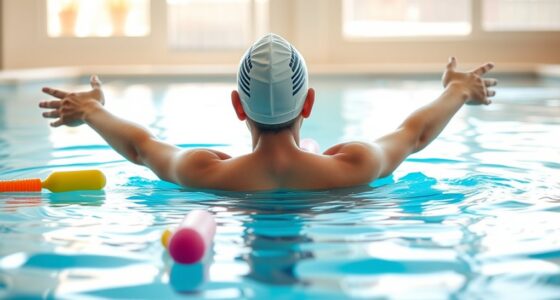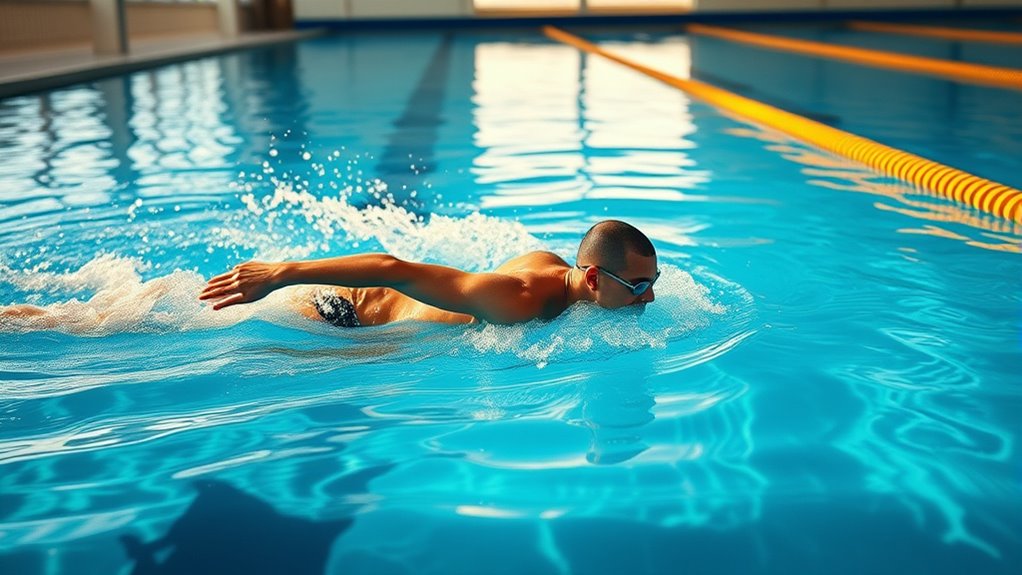

Swimming laps provides a low-impact, full-body workout that’s easy on your joints, reducing stress and inflammation. The water’s natural resistance challenges your muscles, helping you tone and strengthen without heavy equipment. It also promotes relaxation, eases mental stress, and improves mood. Because of its gentle support, you can stay active longer and recover faster. Keep exploring to discover how aquatic exercise can boost your overall health and fitness even further.
Key Takeaways
- Swimming laps provides a full-body workout that improves cardiovascular health and muscle tone simultaneously.
- Water resistance enhances muscle activation, leading to increased strength and endurance.
- The low-impact nature of water reduces joint stress, making it ideal for injury recovery and arthritis management.
- Regular lap swimming helps decrease inflammation and swelling while supporting physical and joint recovery.
- The calming effects of water promote mental relaxation, reducing stress and improving overall emotional well-being.
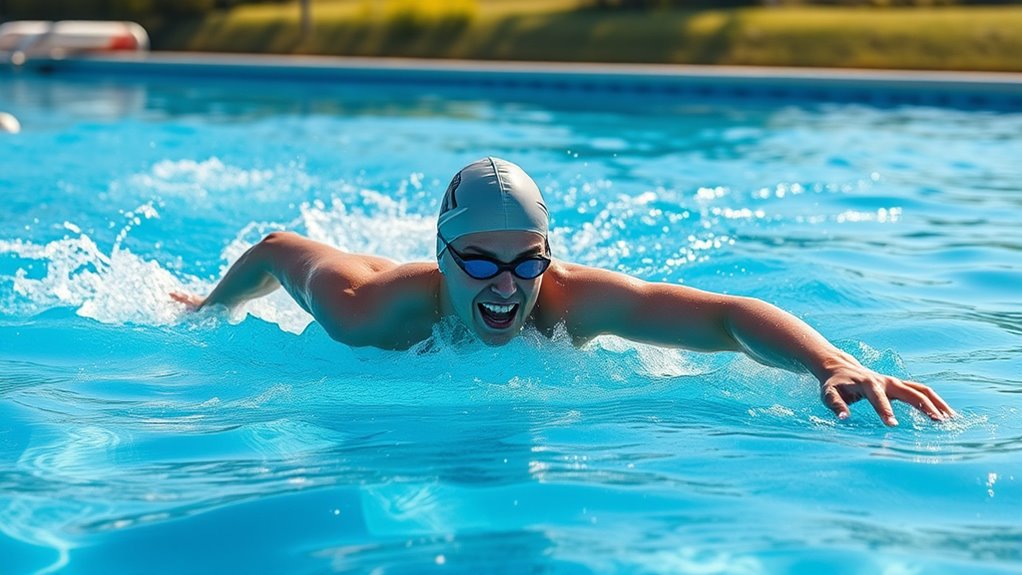
Have you ever wondered why aquatic exercise is gaining popularity among people of all ages? The answer lies in its unique ability to combine effective workout benefits with gentle, low-impact movement. When you swim laps, water resistance becomes your best friend, providing natural, consistent resistance that challenges your muscles without the need for heavy weights or equipment. Unlike traditional land exercises, where gravity can strain your joints, swimming takes the pressure off your joints, offering significant joint relief. This makes aquatic exercise an ideal choice for individuals with arthritis, joint pain, or those recovering from injuries. As you push through the water, the resistance helps tone and strengthen muscles, but because water supports your body, it minimizes the risk of overuse injuries or strain. The gentle, flowing nature of swimming allows you to exercise longer and more comfortably, which can lead to better adherence and improved overall fitness over time.
When you engage in swimming laps, you activate multiple muscle groups simultaneously, from your arms and shoulders to your core and legs. Water’s natural resistance ensures that every stroke provides a workout that’s both challenging and safe. The buoyancy of water reduces the impact on your joints, which means you can perform continuous, repetitive motions without the discomfort or wear-and-tear associated with high-impact exercises like running or jumping. This joint relief is especially beneficial if you suffer from chronic joint issues or are in rehabilitation. It allows you to maintain or even increase your cardiovascular fitness while protecting your joints from further damage. Additionally, the soothing properties of water help reduce inflammation and swelling, contributing to joint comfort.
Beyond the physical benefits, aquatic exercise also offers mental and emotional advantages. The calming effect of being immersed in water can lower stress levels, improve mood, and promote relaxation. The rhythmic nature of swimming laps provides a meditative experience, helping you clear your mind as you focus on your breathing and movement. This holistic approach to fitness can boost your motivation and make exercise feel less like a chore. Whether you’re aiming to improve cardiovascular health, build muscle, or simply enjoy a low-impact activity, swimming laps in the pool can be a complete, enjoyable way to enhance your overall well-being. So, next time you think about working out, consider how water resistance and joint relief combine to make aquatic exercise not just effective but also gentle on your body.
Top picks for "aquatic exercise health"
Open Amazon search results for this keyword.
As an affiliate, we earn on qualifying purchases.
Frequently Asked Questions
Can Swimming Help With Chronic Joint Pain Relief?
Yes, swimming can help with chronic joint pain relief. It’s an excellent form of joint pain management because the buoyancy of water reduces stress on your joints, making movement easier and less painful. Incorporating aquatic therapy into your routine allows you to strengthen muscles and improve flexibility without strain. Regular swimming sessions can markedly ease discomfort and enhance your overall joint health over time.
What Are the Best Water Temperatures for Aquatic Workouts?
You should aim for a water temperature between 78 and 82°F for aquatic workouts. This range guarantees ideal exercise comfort, helping you stay warm enough to prevent muscle strain while avoiding overheating. Cooler water might make your muscles stiff, while warmer water can cause fatigue. Maintaining the right water temperature improves your performance and keeps you comfortable throughout your swim, making your workout more effective and enjoyable.
How Often Should Beginners Swim for Health Benefits?
You should aim to swim three to four times a week to see health benefits. Focus on proper technique and breathing control to maximize your workout and prevent injuries. An interesting stat shows that just 150 minutes of moderate exercise weekly can boost cardiovascular health. As a beginner, start with 20-30 minute sessions, gradually increasing as your stamina improves. Consistency is key to enjoying the full benefits of swimming.
Are There Any Risks of Overexertion in Aquatic Exercise?
Yes, overexertion can pose risks like water exhaustion and muscle fatigue. Pushing yourself too hard without proper rest increases these risks, leading to dehydration or cramps. To avoid this, listen to your body, stay hydrated, and gradually increase intensity. Take breaks when needed, and don’t ignore signs of fatigue. Proper technique and moderation help you enjoy the health benefits while minimizing overexertion dangers.
Can Swimming Improve Mental Health and Reduce Stress?
Yes, swimming can improve your mental health and reduce stress. As you focus on your breath and movements in the water, you practice mindfulness, which helps calm your mind. The rhythmic nature of swimming also boosts mood enhancement by releasing feel-good hormones. Regular laps can create a peaceful escape, allowing you to unwind and feel more balanced, making it a powerful way to support your mental well-being.
Conclusion
So, immerse yourself in aquatic exercise and experience its countless health benefits. Think of swimming laps as your personal Fountain of Youth, restoring energy and vitality with every stroke. Channel your inner hero like Aquaman, battling fatigue and stress beneath the waves. Just remember, in this modern-day Atlantis, taking time for water workouts can keep you feeling young, strong, and refreshed—no need for a magic wand, just your willingness to jump in and start moving today.