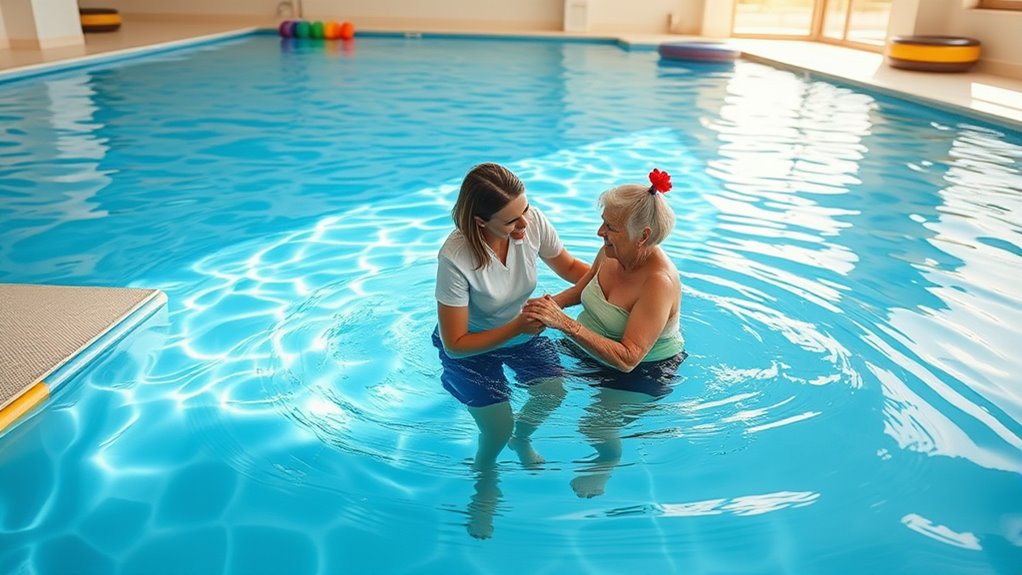

Pool-based physical therapy uses water’s properties to support your recovery by reducing joint stress and easing movement. The buoyancy helps you move gently, while water resistance strengthens muscles without risking re-injury. Warm water relaxes muscles, improves circulation, and creates a calming environment. This safe setting boosts your confidence, accelerates healing, and encourages longer sessions. To discover how these benefits can help you regain mobility and strength, keep exploring this effective rehabilitation method.
Key Takeaways
- Water buoyancy reduces joint and muscle impact, enabling easier movement during rehabilitation exercises.
- Hydrotherapy techniques are tailored to specific recovery needs, promoting healing and improving range of motion.
- Water’s resistance enhances muscle strength and endurance safely without risking further injury.
- The warm environment relaxes muscles, improves blood flow, and creates a calming setting for therapy.
- Pool-based therapy boosts confidence, motivation, and adherence while supporting overall physical function and balance.
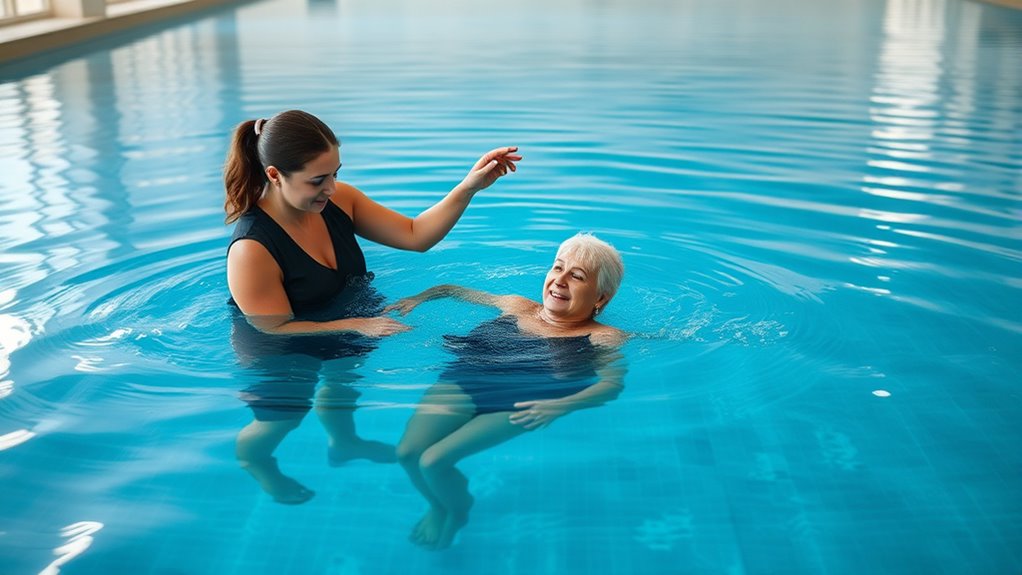
Have you ever wondered how water can aid in your recovery and improve mobility? The answer lies in the power of hydrotherapy techniques, which utilize the unique properties of water to support healing and enhance physical function. When you engage in water-based exercises, you’re tapping into a range of water exercise benefits that make rehabilitation more effective and comfortable. The buoyancy of water reduces the impact on your joints and muscles, allowing you to move more freely without the pain or strain often associated with land-based therapy. This makes it easier to perform a variety of motions that might be difficult or painful otherwise.
Hydrotherapy techniques are tailored to meet your specific needs, whether you’re recovering from an injury, surgery, or managing a chronic condition. These techniques often involve gentle, controlled movements that promote circulation, reduce swelling, and improve range of motion. Because water provides resistance in all directions, your muscles work more efficiently, helping you build strength without risking further injury. The soothing nature of water also helps alleviate muscle tension and pain, making each session more pleasant and less intimidating than traditional exercises on land.
Hydrotherapy offers gentle, controlled movements that enhance circulation, reduce swelling, and promote healing.
The water’s resistance is key to the many water exercise benefits. Unlike exercising on dry land, where gravity can limit your movements, water supports your body, enabling you to perform exercises that might be too challenging otherwise. This resistance also helps increase muscle engagement, which boosts strength and endurance over time. Additionally, the warmth of therapeutic pools can relax tight muscles and improve blood flow, speeding up the healing process. With consistent practice, you may notice better balance, coordination, and overall mobility, all of which are *essential* for daily activities.
Most importantly, water-based therapy can boost your confidence as you regain mobility. Because you feel supported and less vulnerable to falls, you’re more likely to push yourself safely and consistently. The calming environment of a pool also reduces stress and anxiety associated with rehabilitation, encouraging longer and more focused sessions. Incorporating specialized equipment into your water therapy can further enhance your progress by targeting specific muscles and improving technique. Whether you’re working on gentle stretching or more vigorous resistance exercises, the water creates a safe space where you can challenge yourself without fear of falling or re-injury.
Top picks for "pool physical therapy"
Open Amazon search results for this keyword.
As an affiliate, we earn on qualifying purchases.
Frequently Asked Questions
How Long Does a Typical Water Therapy Session Last?
A typical water therapy session lasts around 30 to 60 minutes, depending on your specific needs and treatment plan. You might have therapy sessions 2 to 3 times a week, with the session duration tailored to your progress and comfort level. Staying consistent with your therapy frequency guarantees you get the most benefit, while the session length helps prevent fatigue and promotes effective rehabilitation in the water.
Are There Any Risks or Contraindications for Water-Based Therapy?
Think of water-based therapy as sailing through calm seas, but beware of hidden storms. Risks include waterborne infections if hygiene isn’t maintained and safety precautions aren’t followed. Always make certain the pool is clean, and inform your therapist of any health conditions. While generally safe, people with infections, open wounds, or certain medical issues should consult their doctor first. Staying vigilant helps you enjoy the benefits safely.
Can Pool Therapy Help With Chronic Pain Management?
Yes, pool therapy can help with chronic pain management. Hydrotherapy benefits include reducing joint stress and improving circulation, which aid in pain relief. By using pain relief techniques like gentle exercises in warm water, you can experience decreased muscle tension and increased mobility. This supportive environment allows you to perform movements safely, making it easier to manage chronic pain effectively while promoting overall healing and well-being.
What Types of Injuries Are Best Treated With Aquatic Therapy?
Imagine a gentle tide, easing your body into recovery. Aquatic therapy works best for injury types like sprains, arthritis, and post-surgical rehab. The therapy benefits include reduced joint stress and enhanced mobility, making movement less painful. If you’re recovering from an injury that benefits from low-impact, supportive environments, water therapy can accelerate healing and restore strength, helping you return to daily activities with confidence and ease.
How Does Water Temperature Affect Therapy Effectiveness?
Water temperature plays a vital role in therapy outcomes because it influences your comfort and muscle response. Warm water, typically between 88-92°F, relaxes muscles and reduces pain, enhancing flexibility and movement. Conversely, cooler water, around 78-82°F, can help decrease inflammation and swelling. Adjusting water temperature according to your needs guarantees you get the most benefit from your aquatic therapy, promoting faster recovery and improved function.
Conclusion
Incorporating pool-based physical therapy can substantially boost your recovery. Imagine someone recovering from a knee injury, gently moving in warm water to regain strength without pain. You too can experience improved mobility, reduced joint stress, and faster healing by embracing aquatic therapy. This supportive environment encourages you to push boundaries safely, making your rehabilitation journey more effective and enjoyable. Immerse yourself in water therapy and watch your progress flow smoothly toward full recovery.