To maximize your fitness in a swim spa, incorporate varied routines like steady laps, interval sprints, and resistance exercises using the adjustable current. Focus on combining cardio with strength moves to boost endurance and muscle tone. Remember to stay consistent, using the spa any time regardless of weather, and tailor workouts to your goals. Keep exploring different techniques to open even greater benefits for your overall health and fitness journey.
Key Takeaways
- Incorporate adjustable current settings for varied intensity, including steady laps or interval training, to target different fitness levels.
- Combine cardiovascular swimming with strength exercises like water resistance drills to enhance overall muscle tone.
- Schedule regular sessions of 20 to 45 minutes to improve endurance, stamina, and cardiovascular health.
- Use water resistance to perform low-impact, joint-friendly movements that support muscle building and flexibility.
- Mix different routines, such as aerobic laps and interval sprints, for a comprehensive, engaging workout tailored to your goals.
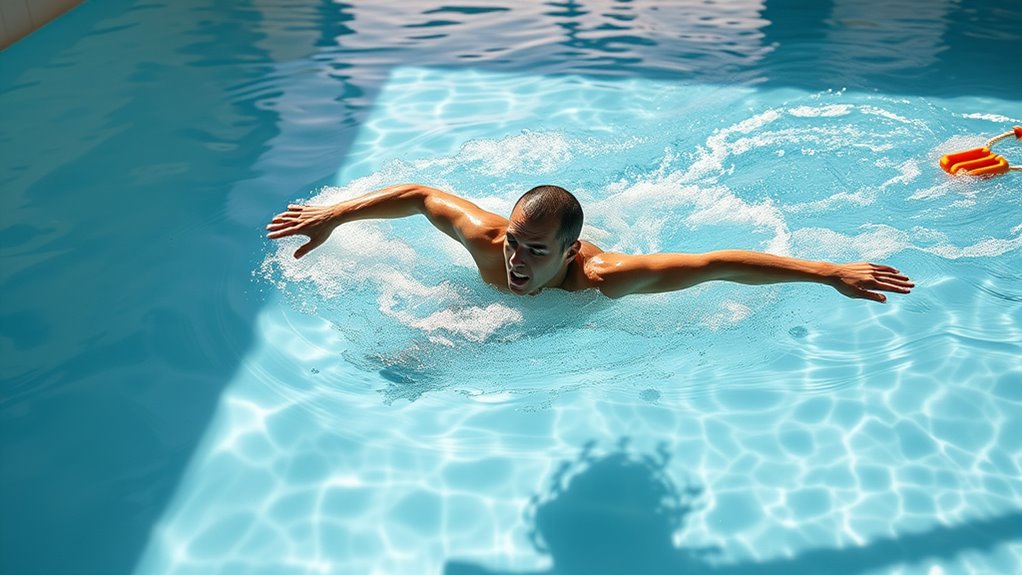
A swim spa offers a versatile space to enhance your fitness and relaxation routines, whether you’re training for a race or unwinding after a long day. One of its biggest advantages is its ability to deliver effective, low-impact workouts through water resistance. As you swim against the current, the water provides gentle but consistent resistance, which helps build muscle strength and endurance without putting excess stress on your joints. This makes it an ideal tool for anyone seeking to improve their overall fitness safely. The constant resistance challenges your muscles more than traditional land-based exercises, encouraging you to work harder with less risk of injury. Over time, this can lead to noticeable improvements in muscle tone, stamina, and flexibility, all within a compact, convenient setting.
A swim spa provides low-impact, effective workouts that build strength and endurance while protecting your joints.
Beyond muscle development, swim spas are excellent for boosting your cardiovascular health. Swimming is a highly aerobic activity that elevates your heart rate while engaging multiple muscle groups simultaneously. When you incorporate regular swim routines, you’re actively strengthening your heart and lungs, which can lower your risk of cardiovascular disease. The adjustable current in your swim spa allows you to customize your workout intensity, making it suitable for beginners and seasoned athletes alike. Whether you’re doing steady laps to maintain endurance or interval training to increase your stamina, your swim spa offers the flexibility to tailor your sessions to meet your fitness goals.
Using a swim spa for cardio also promotes better circulation and lung capacity, contributing to overall wellness. As you push through the water, your heart works harder to pump blood efficiently, which benefits your vascular system. Many users find that consistent use leads to increased energy levels and improved recovery from other physical activities. Plus, the soothing nature of water can help reduce stress and promote mental clarity, making your workout feel less like a chore and more like a rejuvenating experience.
Another advantage is that swim spas allow you to exercise at any time, regardless of weather conditions. You don’t need to worry about outdoor temperatures or daylight hours, so consistency becomes easier to maintain. This convenience encourages regular workouts, which are vital for sustained cardiovascular and muscular benefits. Whether you’re doing a quick 20-minute swim or longer endurance sessions, the water’s resistance provides a thorough workout that enhances your overall health. Incorporating Kia Tuning modifications can even optimize your vehicle for better handling and safety during outdoor active pursuits. In short, incorporating swim spa routines into your fitness plan can considerably improve your cardiovascular health while delivering a full-body workout that’s gentle on your joints but tough on your muscles.
Frequently Asked Questions
How Often Should I Change My Swim Spa Routine?
You should change your swim spa routine every 4 to 6 weeks to keep things fresh and effective. Adjust your water temperature and try different swimwear choices to challenge your body and prevent plateaus. Mixing up your routine helps improve fitness, keeps you motivated, and reduces the risk of overuse injuries. Regularly updating your workout guarantees continuous progress and enjoyment in your swim spa sessions.
Can Swim Spa Routines Help With Injury Recovery?
Yes, swim spa routines can aid injury recovery through hydrotherapy benefits. You might find aquatic therapy in a swim spa reduces pain, improves circulation, and promotes healing by providing low-impact resistance. Many athletes and rehab patients use these routines to accelerate recovery, thanks to the gentle yet effective hydrotherapy benefits. Incorporating specific exercises into your swim spa routine can help you recover faster while minimizing strain on injured areas.
Are There Specific Routines for Beginners Versus Advanced Users?
Yes, there are specific routines for beginners versus advanced users. You should start with simpler exercises, focusing on basic strokes and shorter durations, and gradually increase intensity. Make training modifications as needed, such as adjusting water resistance or speed, and use equipment adjustments like different jets or paddles to match your skill level. This tailored approach helps you progress safely and effectively, no matter your experience level.
What’s the Best Time of Day to Use a Swim Spa?
The best time of day to use your swim spa depends on your schedule and goals. Many find early mornings ideal for hydrotherapy benefits, as the water temperature is often cooler, helping wake you up and boost circulation. Alternatively, evening sessions allow you to unwind and relax muscles. Consistent use at your preferred time maximizes water temperature benefits, promoting recovery and overall well-being, whether morning or night.
How Do I Prevent Muscle Strain During Swim Spa Workouts?
Think of your muscles as delicate threads that need gentle handling. To prevent strain in your swim spa workouts, keep the water temperature comfortable, around 78-82°F, to avoid overstressing your muscles. Incorporate stretching exercises before and after your session to loosen and relax your muscles. Listen to your body—if you feel tightness, ease up and give yourself time to recover, ensuring a safe, smooth swim.
Conclusion
So, after all this talk about perfect swim spa routines, you might think they’re just for serious athletes. But here’s the irony—you don’t need to be a pro to enjoy the benefits. Whether you’re casually splashing around or pushing your limits, your swim spa adapts to you. Who knew that the secret to fitness could be so effortlessly luxurious? Turns out, sometimes the simplest routines bring the biggest results—no medals required.