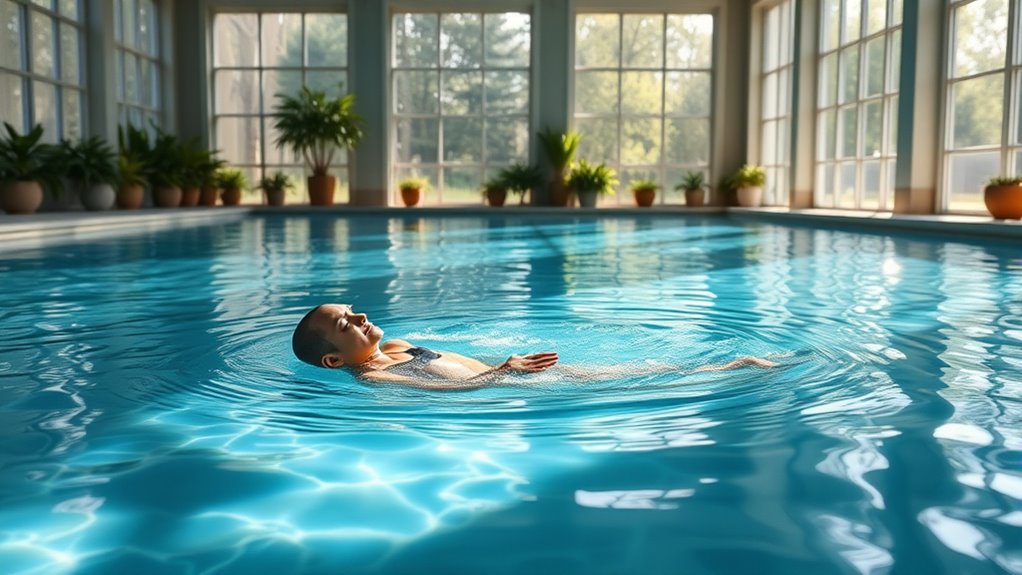

Swimming can be a fantastic way to boost mental health by reducing stress and promoting relaxation. By controlling water temperature, focusing on smooth movements, and practicing rhythmic breathing, you can turn your swim into a calming mindful experience. Water’s buoyancy supports your body, easing tension and joint discomfort. Developing consistent techniques and mindfulness routines makes your time in the water even more beneficial. Keep exploring to discover more ways swimming can support your mental well-being.
Key Takeaways
- Maintaining a comfortable water temperature (78-86°F) enhances relaxation and reduces stress during swimming.
- Using smooth, controlled movements and proper technique promotes mindfulness and prevents physical strain.
- Rhythmic breathing synchronized with strokes calms the nervous system and deepens relaxation.
- Focusing on sensory experiences like water support and breath fosters mindfulness and mental clarity.
- Regular swimming sessions with attention to technique and environment boost endorphin release and long-term mental well-being.
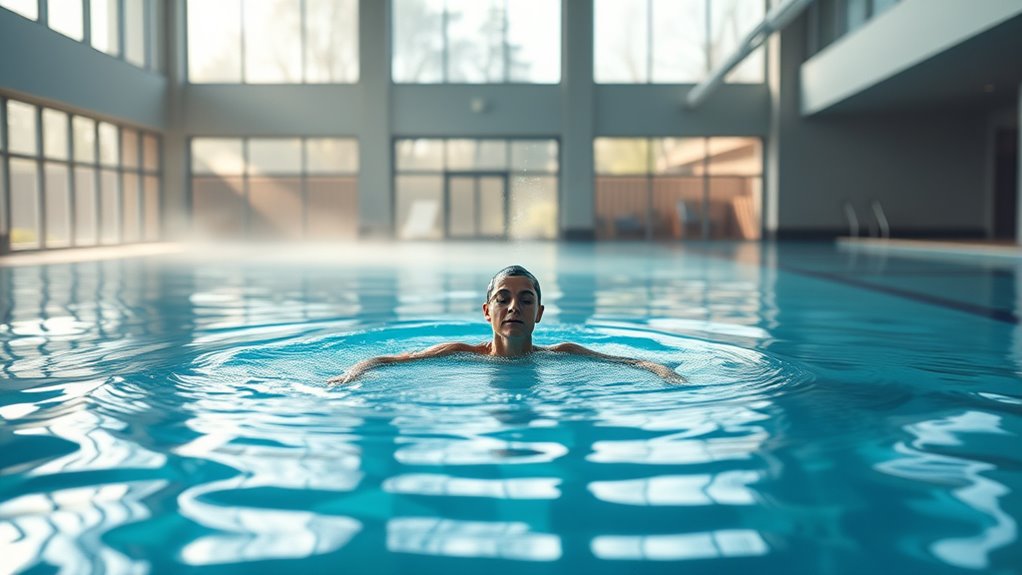
Swimming offers a powerful way to boost your mental health by combining physical activity with the calming effects of water. When you step into the pool or open water, the right water temperature can make a significant difference in how you experience your swim. Cooler water, around 78-82°F (25-28°C), helps invigorate your senses and can improve alertness, while warmer water, between 82-86°F (28-30°C), promotes relaxation and eases muscle tension. Finding the ideal water temperature for yourself allows you to maximize the stress-relieving benefits of swimming. As you swim, focusing on your technique can also enhance your mental state. Whether you’re doing freestyle, breaststroke, or backstroke, using proper swimming techniques ensures you stay relaxed and avoid unnecessary strain. Smooth, controlled movements help you stay calm and centered, turning your swim into a mindful practice rather than just exercise. Incorporating breathing techniques into your swimming can further deepen your sense of relaxation. For example, rhythmic breathing—inhale through your nose, exhale through your mouth—can slow your heart rate and quiet your mind. When you synchronize your breathing with your strokes, you create a calming rhythm that helps reduce anxiety and promotes mental clarity.
As you settle into your swim, focus on the sensation of water supporting your body, the sound of your breath, and the movement of your muscles. This mindfulness approach makes swimming a form of active meditation, where your attention stays in the present moment. The repetitive nature of swimming strokes can help break cycles of negative thinking, bringing a sense of peace and mental clarity. Additionally, water’s buoyancy reduces the impact on your joints, making it easier to relax fully and avoid physical discomfort that could distract you from your mental health goals. Incorporating proper technique into your swim can also prevent fatigue and injury, allowing you to enjoy the mental health benefits more fully.
Regularly practicing these techniques can help you develop a calming routine that reduces stress and lifts your mood over time. You don’t need to swim for hours—short, focused sessions are enough to trigger the release of endorphins, your body’s natural mood boosters. The combination of water temperature control, proper swimming techniques, and mindful breathing creates a powerful toolkit for mental relaxation. When you prioritize these elements, swimming becomes more than just exercise; it transforms into a therapeutic practice that nurtures your mental well-being, helping you feel more centered, relaxed, and resilient in daily life.

TempPro Waterproof Wireless Pool Thermometer Easy Read, Digital Pool Thermometer Floating for Swimming Pool, Hot Tub, Cold Plunge, Pond, Upgraded IPX8 Water Temperature Monitor (Previously ThermoPro)
This sensor/transmitter is specially designed for measuring the water temperature in swimming pools, hot tubs, spas and so…
As an affiliate, we earn on qualifying purchases.
As an affiliate, we earn on qualifying purchases.
Frequently Asked Questions
Can Swimming Improve Mental Health Faster Than Other Exercises?
Swimming can improve your mental health quickly, especially when you focus on water temperature and your swimming gear. Cold water can boost your mood by releasing endorphins, while warm water relaxes your muscles and reduces stress. Proper gear makes your swim comfortable, encouraging longer, more enjoyable sessions. These factors can help you experience mental health benefits faster than other exercises, as water’s soothing properties enhance relaxation and reduce anxiety efficiently.
Are There Specific Swimming Techniques That Enhance Relaxation?
Yes, certain swimming techniques can boost relaxation. Focus on breathing exercises to calm your mind and body, syncing your breath with gentle strokes like backstroke or slow freestyle. These techniques help reduce stress by promoting mindfulness and deep relaxation. As you practice, you’ll find that a smooth, controlled rhythm enhances your mental calmness, making your swim not only a workout but a soothing experience that supports your mental health.
How Often Should I Swim to See Mental Health Benefits?
You should aim to swim at least 2-3 times a week for mental health benefits. Don’t worry about perfect timing—just follow the frequency guidelines of three sessions weekly, with each session lasting about 30-45 minutes for ideal duration. Regular swimming helps reduce stress and boosts relaxation, making it easier to manage daily pressures. Consistency is key; even a few sessions can considerably improve your mental well-being.
Is Swimming Suitable for People With Anxiety Disorders?
Yes, swimming can be suitable for people with anxiety disorders, but you should prioritize swimming safety and choose accessible pools with calm environments. Gentle, guided sessions might help reduce anxiety, and the water’s soothing effect can promote relaxation. Always consult your healthcare provider first, and guarantee the pool has proper safety measures in place to make your experience safe and enjoyable.
Can Swimming Help Manage Symptoms of Depression More Effectively?
You’ll find that swimming can help manage depression symptoms more effectively, especially when you focus on water temperature and breathing techniques. As you glide through warm water, your body relaxes, releasing feel-good endorphins. Practicing controlled breathing during your swim calms your mind and reduces anxiety. The rhythmic movement and soothing environment create a sense of calm, making swimming a powerful tool to lift your mood and combat depression.

TYR Flexfin 2.0 Rubber Swim Fins – Adult Swimming Gear for Pool Lap Swimming, Training – Blade Fins Promote Proper Movement Through Legs and Feet – 100% Rubber – Color Coded – XL, Black
PERFORMANCE DESIGN: Train hard, train smart with the TYR Flexfin 2.0 adult swim fins, featuring a durable 100%…
As an affiliate, we earn on qualifying purchases.
As an affiliate, we earn on qualifying purchases.
Conclusion
Swimming can be a powerful way to boost your mental health, helping you relax and reduce stress. Just imagine, a recent study found that after 30 minutes of swimming, participants experienced a 25% decrease in anxiety levels. When you plunge into the water, you’re not only exercising your body but also soothing your mind. So next time life feels overwhelming, remember that a simple swim could be your best escape to calm and clarity.
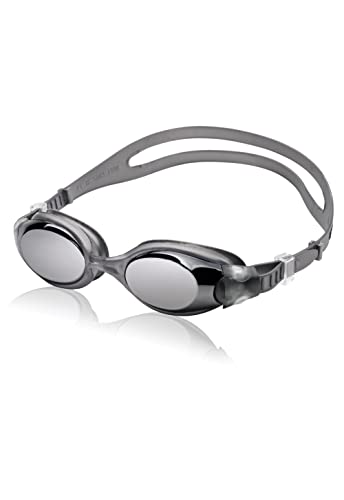
Speedo Unisex-Adult Swim Goggles Hydrosity, Mirrored Charcoal
G.O. FIT System: Middle eye fit offers a comfortable fit for a wide range of faces
As an affiliate, we earn on qualifying purchases.
As an affiliate, we earn on qualifying purchases.

OutdoorMaster Swim Mask – Wide View Swimming Mask & Goggles Anti-Fog Waterproof, Black
Wide View One-Piece Swim Mask: New one-piece design offers an uninterrupted, 180 degree wide field of visionand maximum…
As an affiliate, we earn on qualifying purchases.
As an affiliate, we earn on qualifying purchases.