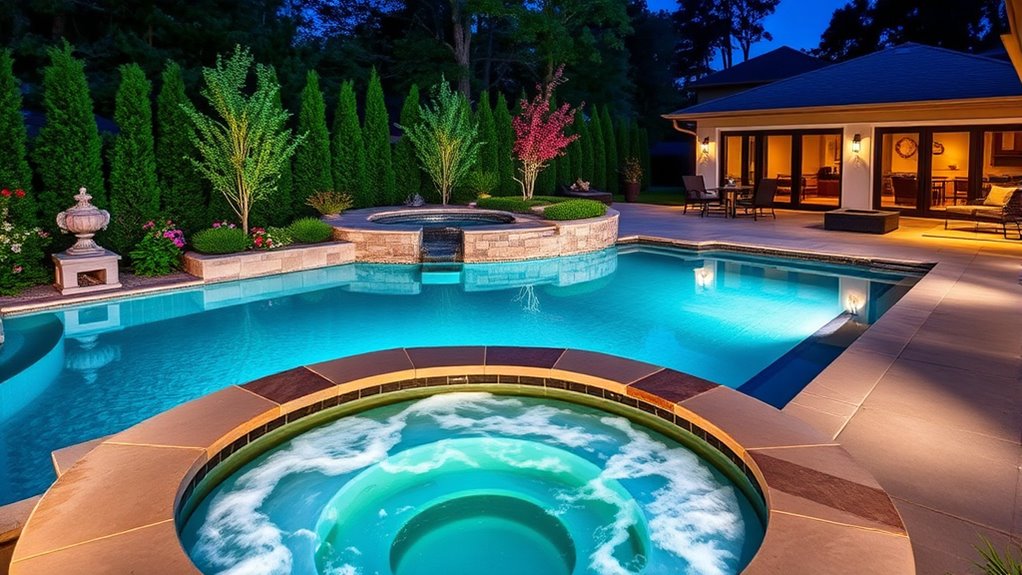

When integrating spas and hot tubs into your pool plans, focus on proper placement to minimize heat loss and guarantee safety. Insulate walls, covers, and surrounding areas to keep energy use low and maintain water temperatures year-round. Use dedicated plumbing lines for separate control, and choose filtration systems suited to both. Designing for easy maintenance and safety features makes your backyard more enjoyable. Continue exploring to discover how these tips can help you create a seamless, efficient spa and pool setup.

Get pool and patio gear delivered free — and shop member deals
- Fast, free delivery on millions of items
- Access to Prime Big Deal Days deals on October 6–7
- Prime Video, Amazon Music and more included
Key Takeaways
- Use dedicated plumbing lines for independent control of spa and pool systems.
- Ensure proper insulation and placement to minimize heat loss and enhance energy efficiency.
- Incorporate separate filtration and heating controls for easier maintenance and operation.
- Design accessible areas for filter maintenance and routine inspections.
- Integrate safety features like insulated covers to promote year-round use and safety.

Adding a spa or hot tub to your pool design can enhance your backyard oasis, offering relaxation and luxury in one seamless space. When considering this integration, focus on how thermal insulation plays a vital role in maintaining water temperature efficiently. Proper insulation ensures your hot tub or spa stays warm without excessive energy costs, especially during cooler months. Look for models with insulated walls and covers, as these features help trap heat and reduce heat loss. This not only makes your spa more comfortable but also more cost-effective to operate over time.
Insulated walls and covers keep your hot tub warm and cost-efficient year-round.
Water filtration is another key aspect you should prioritize. A high-quality filtration system keeps your spa water clean, clear, and inviting. Because hot tubs and spas recirculate water frequently, a robust filtration system prevents buildup of debris, bacteria, and other contaminants. When designing your setup, guarantee the filtration system is compatible with your spa’s size and flow rate. Regular maintenance, including cleaning filters and monitoring water chemistry, is essential to maintain water quality and extend the lifespan of your equipment.
Incorporating these features into your pool plan requires careful planning. For thermal insulation, consider the placement of your spa or hot tub—installing it in a shaded or wind-protected area can reduce heat loss. Additionally, insulating the surrounding deck or barrier can further trap heat and improve energy efficiency. For water filtration, choose a system that allows easy access for maintenance and filter replacement. Some advanced systems even offer automation options, enabling you to monitor water quality remotely and make adjustments on the go.
You also need to think about how your spa or hot tub will connect to your existing pool system. Many designs include dedicated plumbing lines with separate filtration and heating controls, allowing you to operate each independently if desired. This flexibility helps in managing energy consumption and water quality more effectively.
Finally, don’t forget about safety and convenience. Installing a cover with excellent thermal insulation reduces heat loss and keeps debris out when not in use. A well-designed filtration system minimizes the need for frequent cleanings, saving you time and effort. When planned thoughtfully, integrating a spa or hot tub with your pool not only elevates your backyard experience but also guarantees it’s efficient, clean, and enjoyable year-round.
As an affiliate, we earn on qualifying purchases.
Frequently Asked Questions
What Are the Maintenance Costs for Combined Spa and Pool Setups?
The maintenance costs for combined spa and pool setups vary, but you should budget for regular chemical balance adjustments and equipment maintenance. Expect to spend around $20 to $50 monthly on chemicals and $100 to $300 annually on equipment upkeep. These costs help keep your water clear and safe, preventing issues like corrosion or algae growth. Regular maintenance guarantees your spa and pool stay enjoyable without unexpected expenses.
Can Hot Tubs Be Integrated Into Existing Pool Designs?
Yes, you can integrate hot tubs into your existing pool design. Focus on design considerations like space, accessibility, and aesthetics to ensure a seamless look. Plumbing integration is vital; you’ll need to connect the hot tub’s plumbing with your pool’s system for efficient water circulation and heating. Consult a professional to handle the modifications, guaranteeing safety, proper function, and that the integration complements your overall pool setup.
What Safety Features Are Recommended for Spa and Hot Tub Integrations?
You should install safety features like GFCI electrical safety outlets to prevent shocks and guarantee proper grounding. Adding safety covers when not in use helps prevent accidental falls. Regularly monitor water quality with proper filtration and chemical balance to avoid health issues. Installing non-slip surfaces around the spa or hot tub also reduces slip risks. These measures help keep your integrated spa or hot tub safe and enjoyable for everyone.
How Does Climate Affect the Choice of Spa and Pool Integration?
Think of your backyard as a canvas, where climate considerations paint the perfect scene. Cold climates call for heated spas and insulated covers to keep seasonal usage cozy, while warmer zones let you enjoy year-round relaxation. You’ll want to choose materials and equipment suited to your climate, ensuring your spa and pool integration withstands the weather’s whims. Planning around seasonal usage makes your oasis inviting, no matter the season’s mood.
Are There Specific Permits Required for Installing Spas With Pools?
You’ll need to check your local regulations to determine permit requirements for installing spas with pools. Many areas require permits for electrical work, plumbing, and safety features like barriers. Visit your city or county building department’s website or contact them directly to find specific permit details. Securing all necessary permits guarantees your installation complies with safety standards and avoids potential fines or issues during inspections.
As an affiliate, we earn on qualifying purchases.
Conclusion
So, as you plan your perfect backyard oasis, remember that adding a spa or hot tub might seem like the ultimate luxury. Ironically, it’s often the overlooked details—like thoughtful integration—that make the space truly exceptional. Don’t just focus on the big features; the real magic happens when everything works seamlessly together. After all, a stunning pool with a poorly integrated spa isn’t quite the paradise you envisioned, is it?
dedicated plumbing lines for hot tub
As an affiliate, we earn on qualifying purchases.
As an affiliate, we earn on qualifying purchases.
As an affiliate, we earn on qualifying purchases.
Fall Picks
fall essentials
As an affiliate, we earn on qualifying purchases.