To create a comfortable swim environment, position benches and seats thoughtfully around the pool, focusing on accessibility, safety, and ergonomic comfort. Place seating near shallow areas for supervision and relaxation, while keeping walkways clear for easy movement. Choose durable, slip-resistant materials and incorporate adjustable or fold-away features for versatile use. Proper layout balances functionality and aesthetics, shaping a welcoming outdoor space. Keep exploring to discover how these principles can transform your pool area with ideal bench placement.
Key Takeaways
- Place benches near shallow areas for supervision and easy access without obstructing swim pathways.
- Position seating to follow the sun’s path, balancing shade and sunlight for comfort.
- Ensure ample spacing around seats for safe movement and clear walkways.
- Use ergonomic heights (16-18 inches) and supportive backrests for user comfort and ease of transfer.
- Anchor seats securely and avoid pool edges to prevent tripping hazards and ensure safety.
Understanding Pool User Needs and Behaviors

To effectively plan bench and seat placement around a pool, you need to understand how different users interact with the space. Think about who will use the area—families, sunbathers, swimmers, or social groups—and what their needs are. Families may require seating near play zones or shallow areas, while sunbathers prefer spots with direct sun exposure. Swimmers might need quick access to the pool, so seating should be positioned nearby without obstructing pathways. Consider how often people will move through the space and whether they’ll linger or just rest briefly. Recognizing these behaviors helps you place benches and seats where they’ll be most functional and comfortable, enhancing both safety and enjoyment for everyone. Incorporating appropriate ergonomic design principles ensures that seating arrangements support comfort and convenience for all pool users.
Optimal Locations for Seating Around the Pool
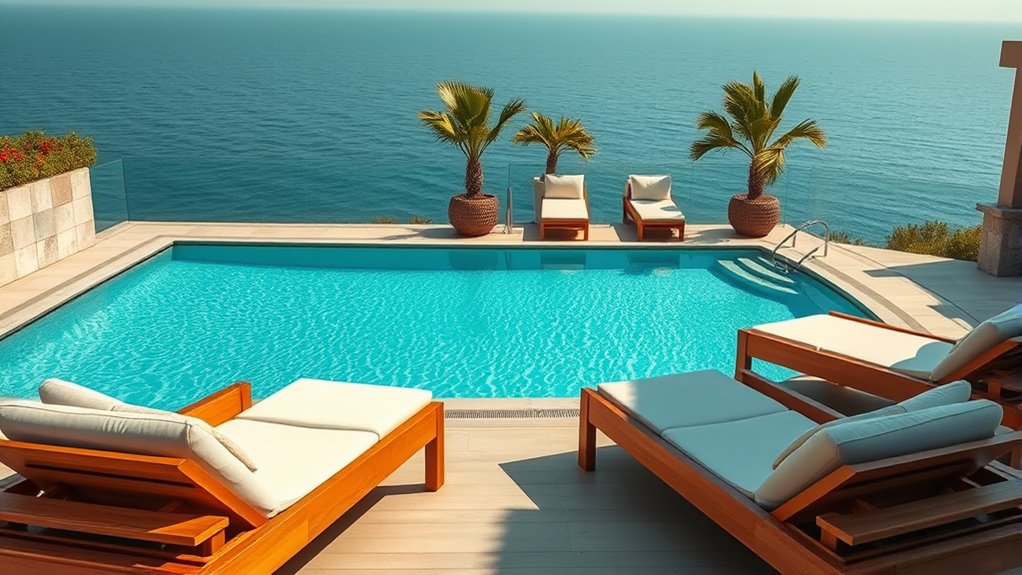
Choosing the right spots for seating around the pool guarantees both comfort and safety. Place seats near the shallow end for easy access and supervision, especially if kids are involved. Position some seats away from the main swimming area to create a relaxing zone. Keep walkways clear and avoid blocking entry points or exits. Consider the sun’s path—shade seats during hot afternoons, and place them where they won’t obstruct views of swimmers. Here’s a quick visualization:
| Location | Benefits |
|---|---|
| Shallow end perimeter | Supervision, easy access |
| Poolside near steps | Safe entry/exit, convenience |
| Quiet corner away from splashes | Relaxation, privacy |
This setup balances functionality with comfort, making your pool area enjoyable and safe. To enhance safety and aesthetics, incorporate materials and accessories that complement your space.
Ergonomic Design Principles for Pool Benches and Seats
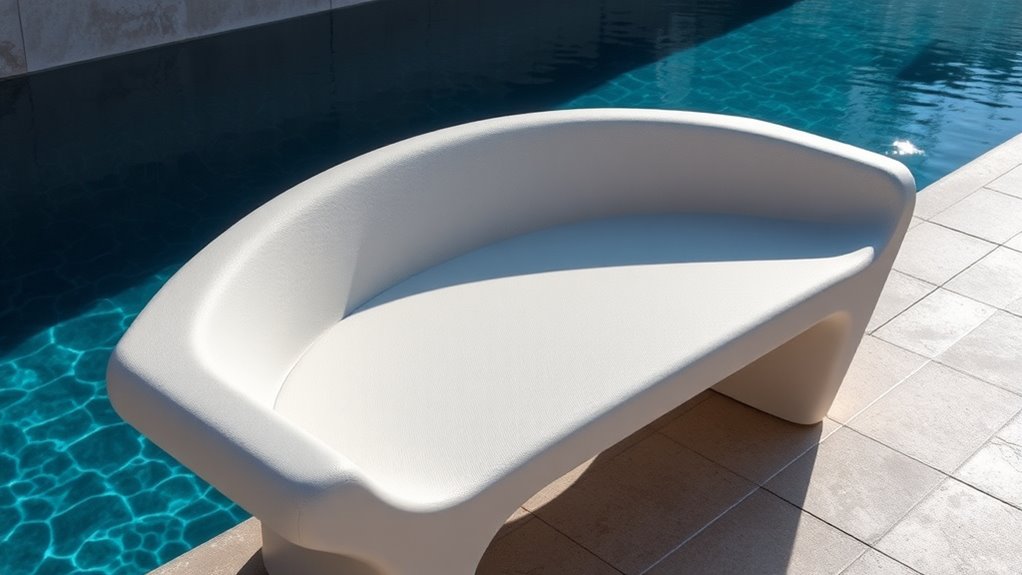
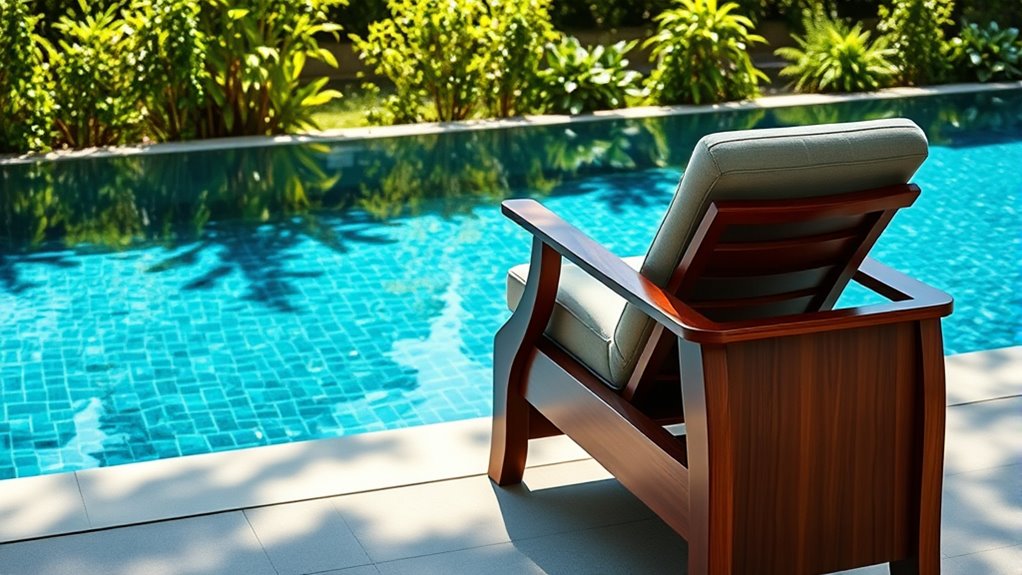
Ergonomic design principles are essential for creating pool benches and seats that maximize comfort, safety, and support. You should guarantee that seat height aligns with users’ natural sitting position, typically between 16 and 18 inches from the ground, to prevent strain. The seat surface must be wide enough—at least 18 inches—to accommodate different body sizes comfortably. Rounded edges help minimize pressure points and reduce injury risks. Supportive backrests should follow the natural curve of the spine, providing adequate lumbar support. Materials matter too: choose slip-resistant surfaces for safety and durable, weather-resistant materials for longevity. Proper spacing between benches allows easy movement and access. Additionally, understanding cookie usage on related online platforms can help enhance user experience by tailoring content and improving site functionality. By applying these principles, you create a seating environment that encourages relaxation and safety for all users.
Accessibility Considerations for All Users
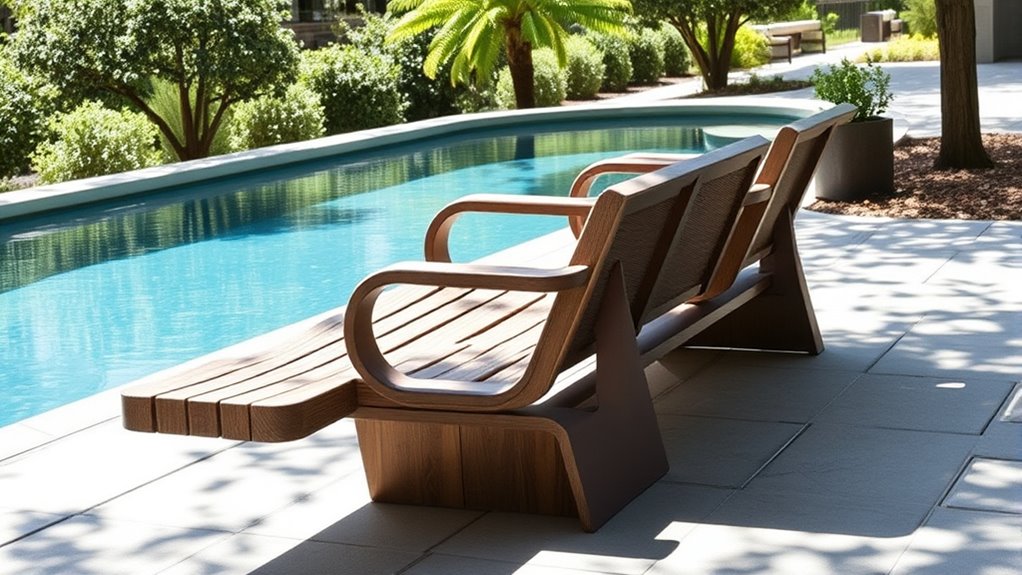
Ensuring that pool benches and seats are accessible for all users requires thoughtful design that accommodates a diverse range of needs. You should consider the height and placement of seating to facilitate easy transfer for individuals with mobility challenges. Incorporate ramps or level access points alongside seating areas to provide smooth transitions from wheelchairs or walkers. Clear space around benches allows for easy maneuvering, and non-slip surfaces enhance safety. Visual cues, like contrasting colors, help those with visual impairments identify seating zones. Additionally, adjustable or fold-away seats can serve a variety of users, including children, seniors, or individuals with disabilities. Incorporating universal design principles ensures the environment is inclusive and adaptable for everyone. By prioritizing these considerations, you make the pool environment inclusive, welcoming, and functional for everyone.
Material Selection for Comfort and Safety

Choosing the right materials for your benches and seats is vital for safety and comfort. You should prioritize slip-resistant surfaces to prevent accidents and select non-toxic materials to protect everyone’s health. Making these careful choices guarantees a safer, more inviting space for all users. Additionally, considering material safety standards ensures that the materials used meet industry guidelines for durability and health safety.
Slip-Resistant Surfaces
Selecting the right slip-resistant surfaces is essential for creating benches and seats that are both safe and comfortable. You want materials that provide traction even when wet, reducing the risk of slips and falls. Textured finishes like grooved or patterned surfaces help improve grip underfoot or hand contact. Materials such as textured ceramic tiles, rubberized coatings, or specially designed composites are excellent choices. Avoid smooth, glossy surfaces that become slick when wet. Keep in mind durability and maintenance—choose surfaces that resist algae, mold, and staining. Properly installed slip-resistant surfaces not only enhance safety but also contribute to a more comfortable experience, encouraging users to sit, stand, or move confidently around your pool area. Prioritize slip resistance in your material selection to ensure safety without sacrificing comfort. Additionally, choosing surfaces that align with Gold IRA Rollovers can help ensure long-term durability and investment security in your pool environment.
Non-Toxic Materials
When designing benches and seats around your pool, prioritizing non-toxic materials is essential for both safety and comfort. You want to guarantee that the materials you choose won’t release harmful chemicals into the water or environment, especially since you’ll be spending time nearby. Non-toxic options include sustainably sourced wood treated with natural finishes, high-quality composite materials free from dyes and heavy metals, and UV-resistant plastics made without BPA or phthalates. These choices help prevent skin irritations and health risks while maintaining durability. Visualize a smooth, eco-friendly wooden seat that feels warm and inviting, a sleek composite bench that resists weather and fading, or a vibrant plastic seat free from harmful chemicals. Selecting non-toxic materials supports a safe, comfortable, and eco-conscious pool area. Incorporating energetic alignment in your material choices can further enhance the harmony and well-being of your outdoor space.
Spacing and Arrangement for Flow and Ease of Movement

Ensuring proper spacing and arrangement of benches and seats is essential to creating a space that feels inviting and functions smoothly. You want clear pathways that allow swimmers and visitors to move freely without obstacles. Place seats against walls or in corners to maximize open space and prevent congestion. Maintain at least 24-36 inches between seating and walkways, ensuring comfort and accessibility. Arrange benches in a way that encourages natural circulation, guiding people toward key areas like pool entrances, exits, and changing zones. Group seats thoughtfully to foster social interaction without blocking movement. Regularly evaluate flow patterns, adjusting placement as needed to prevent bottlenecks. Proper spacing and arrangement not only enhance safety but also improve the overall flow of the space. Well-planned spacing guarantees your pool area remains welcoming, functional, and easy to navigate for everyone.
Safety Guidelines for Seat Placement and Design
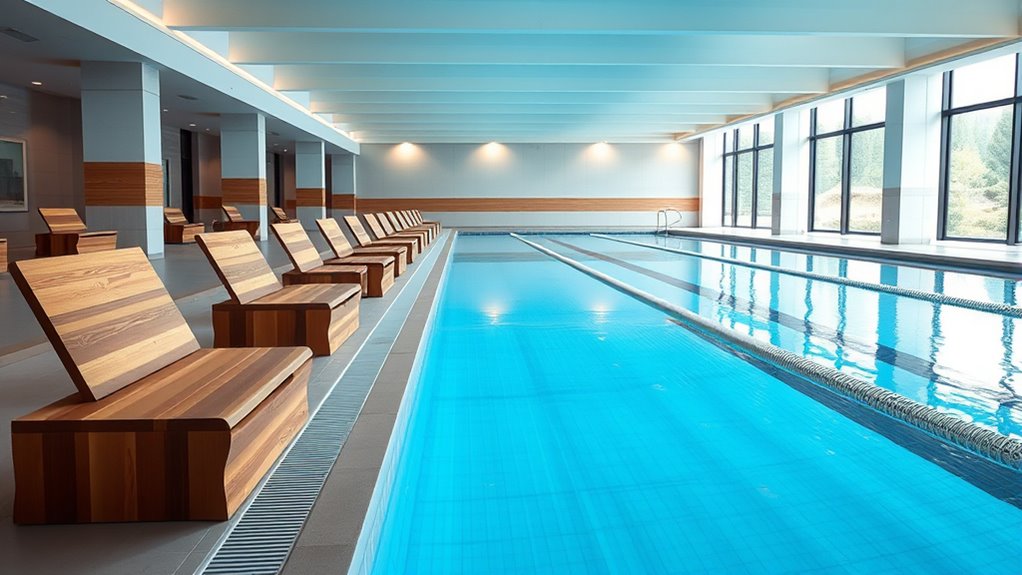
To promote safety, it’s essential to carefully consider the placement and design of benches and seats around the pool area. Proper positioning minimizes tripping hazards and ensures clear pathways for swimmers and staff. Seats should be anchored securely to prevent tipping, especially in high-traffic zones. Avoid placing seats near pool edges where they could obstruct visibility or cause accidental falls. Good lighting around seating areas helps users see potential obstacles. Incorporating total‑cost clarity into planning can help ensure that safety features are both effective and budget-friendly.
Customization Options for Different Pool Types and Sizes
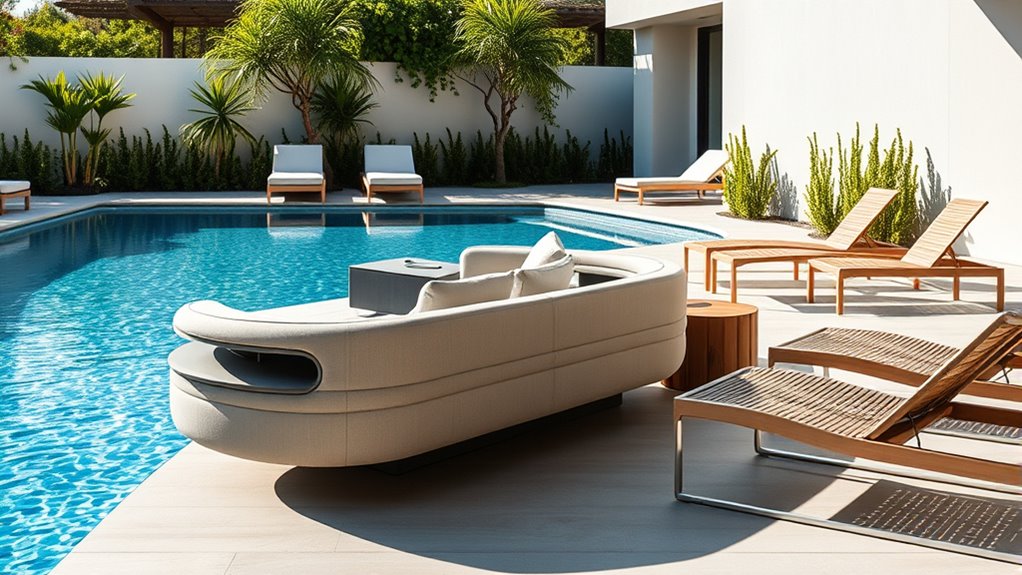
When customizing benches and seats, consider your pool’s shape to guarantee a seamless fit. Adjustable bench features can offer flexibility for different users and activity types. Tailoring these options helps you create a comfortable, functional space suited to your pool’s size and design. Additionally, understanding water chemistry principles ensures proper water balance around seating areas, enhancing safety and longevity.
Tailoring for Pool Shapes
Choosing the right bench and seat placement depends heavily on your pool’s shape and size. Different pool designs require tailored solutions to maximize comfort and functionality. For irregular or freeform pools, consider built-in or custom-shaped benches that follow the curves. Rectangular pools benefit from symmetrical seating along the sides or ends, creating balanced spaces for lounging. Small pools need compact, strategically placed seats to avoid clutter, while larger pools can accommodate multiple seating areas for different activities. Think about how users will move around and interact with the space. To visualize this:
- Curved benches that follow natural pool contours
- Symmetrical seating along straight edges
- Compact, multi-use seats for tight spaces
Adjustable Bench Features
Adjustable bench features offer essential customization options that guarantee your seating fits seamlessly with your pool’s shape and size. With adjustable height, you can easily customize the seat to match your comfort needs or accommodate different users. Some benches allow for length modifications, so you can expand or reduce the seating area based on your pool’s dimensions. Many models include adjustable backrests, providing support where you need it most. These features make it simple to optimize your seating arrangement for various pool types, whether it’s a small plunge pool or a large recreational one. By choosing adjustable options, you ensure your swim space remains comfortable and functional, regardless of any changes in pool size or design.
Maintenance and Durability of Seating Fixtures
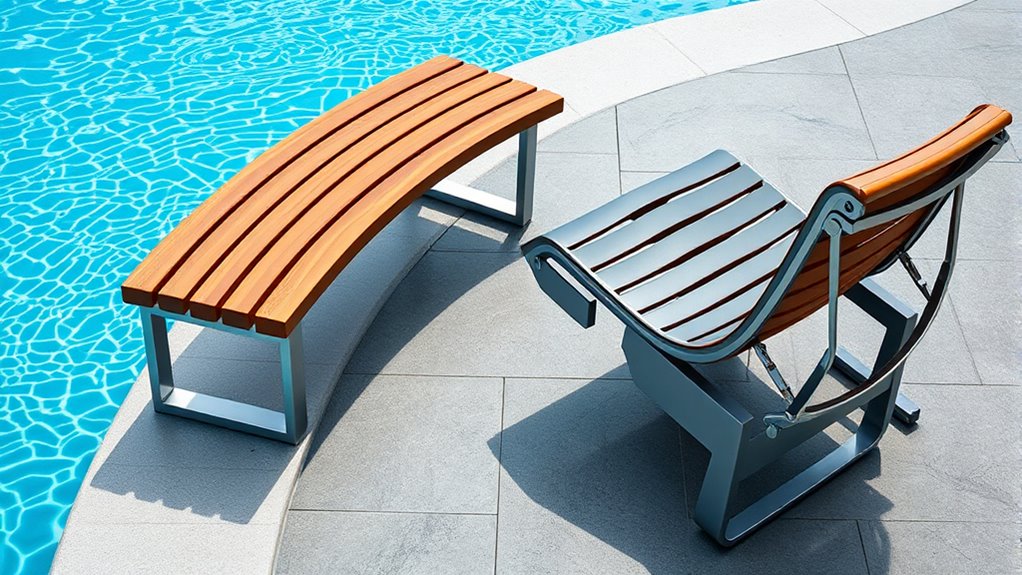
Proper maintenance is essential to guarantee seating fixtures remain durable and safe over time. Regular inspections help identify signs of wear, corrosion, or damage early on. Cleaning your seats with gentle, non-abrasive products prevents buildup of dirt and algae, which can degrade materials. Applying protective coatings or sealants can extend their lifespan, especially in humid or chlorinated environments.
To keep your seating in top shape, consider these actions:
- Check for loose bolts or screws and tighten them regularly
- Replace worn or damaged cushions promptly
- Use appropriate cleaning solutions suitable for your seat materials
Consistent upkeep ensures your benches stay sturdy, comfortable, and safe for everyone enjoying the pool area.
Enhancing Aesthetic Appeal Through Thoughtful Placement
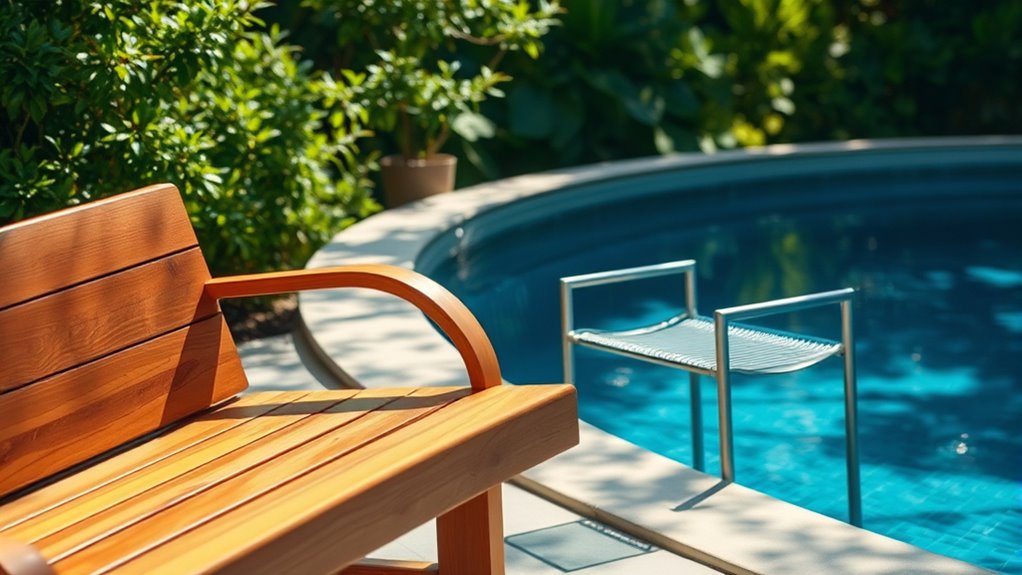
Choosing the right location for your benches and seats can transform the overall look of your space. When you consider visual harmony and balance, your seating becomes both functional and pleasing to the eye. Incorporating complementary design elements helps create a cohesive and inviting environment.
Strategic Location Selection
Selecting the right location for benches and seats is key to creating a visually appealing and inviting outdoor space. You want to place seats where they naturally draw attention and complement the surroundings. Consider positioning seats near focal points like the pool or garden, so they enhance the view. Think about creating cozy nooks for relaxation or socializing. Accessibility is essential; avoid placing seats in high-traffic areas where they might feel crowded. Instead, set them in spots that encourage lingering and enjoyment. Use these tips to guide your choices:
- Position seats to highlight key landscape features
- Place them where they catch natural light and shade
- Arrange for easy access to pathways and amenities
Thoughtful placement transforms your outdoor space into a harmonious, attractive retreat.
Visual Harmony and Balance
Thoughtful placement of benches and seats can considerably enhance the visual harmony of your outdoor space. When arranging seating, consider symmetry and alignment to create a balanced look that feels inviting. Position benches along natural sightlines, such as around the pool or garden, to guide the eye smoothly across the area. Varying heights and shapes can add visual interest, but avoid cluttering the space or creating imbalance. Use focal points like planters or sculptures to anchor seating arrangements and reinforce harmony. Consistent spacing between seats ensures a cohesive appearance, while thoughtful color choices can unify the design. Ultimately, balance and proportion in your placement foster a serene, aesthetically pleasing environment that encourages relaxation and social interaction.
Complementary Design Elements
Integrating complementary design elements into your seating arrangement can considerably boost the overall aesthetic appeal of your outdoor space. Thoughtful placement of accessories and decor creates a cohesive and inviting atmosphere. Consider adding decorative pillows in vibrant colors or patterns that complement your seating and pool area. Incorporate lighting fixtures such as string lights or lanterns to set a warm ambiance during evening swims. Including natural elements like potted plants or small trees nearby enhances visual interest and blends the seating with the environment. These elements not only elevate the style but also create a welcoming space where relaxation feels effortless. By carefully selecting and positioning these accents, you turn a simple seating area into a harmonious and attractive outdoor retreat.
Frequently Asked Questions
How Do Seat Heights Impact Swimmer Safety and Comfort?
Seat heights directly affect your safety and comfort by ensuring proper alignment and support during your swim. When seats are too high or low, you may strain muscles or lose balance, increasing injury risk. Adjusting seat height allows you to maintain a natural posture, reduces fatigue, and enhances stability. Properly positioned seats help you feel secure, enabling a more enjoyable and safe swimming experience.
What Are the Best Practices for Waterproofing Pool Benches?
Waterproofing pool benches is a must to keep them in tip-top shape. You should seal all joints and seams with a high-quality waterproof sealant, ensuring no water seeps in. Apply a durable, water-resistant coating to the surface regularly, and consider using corrosion-resistant materials. Keep an eye on wear and tear, because a stitch in time saves nine, and maintenance now prevents big problems later.
How Can Seating Be Integrated for Multi-Purpose Pool Areas?
You can integrate seating for multi-purpose pool areas by choosing versatile, modular designs that can be rearranged for various activities. Incorporate built-in benches along the perimeter for lounging and movable chairs or stools for flexible use. Use durable, waterproof materials that withstand moisture and chlorine. Consider multi-functional furniture, like storage benches that double as seating, to maximize space and functionality, ensuring everyone’s comfort during different poolside activities.
Are There Eco-Friendly Materials Suitable for Pool Seating?
Yes, eco-friendly materials like recycled plastic, sustainably sourced wood, and composite materials made from recycled content are perfect for pool seating. These options are durable, weather-resistant, and environmentally responsible. You can choose biodegradable cushions made from natural fibers like hemp or cotton for added comfort. By selecting these materials, you guarantee your pool area remains stylish, functional, and eco-conscious, reducing your environmental footprint while providing a comfortable space to relax.
How Does Seat Placement Influence Pool Deck Traffic Flow?
Imagine a busy pool where strategic seat placement guides traffic smoothly. You’ll notice that placing seats along the perimeter encourages flow, preventing congestion near entrances and pools. For example, a community pool positioned seating to create clear walkways, reducing bottlenecks during peak hours. By thoughtfully arranging seats, you facilitate easier movement, enhance safety, and make the space more inviting for everyone.
Conclusion
By thoughtfully placing and designing your pool benches and seats, you create a space that’s both comfortable and safe for all users. Consider their needs, accessibility, and the materials you choose, much like a seasoned architect from the Renaissance carefully crafted a masterpiece. With attention to ergonomic principles and safety guidelines, your pool area becomes a sanctuary of relaxation. Remember, a well-designed seating area transforms your pool into a modern-day sanctuary, blending function with timeless elegance.