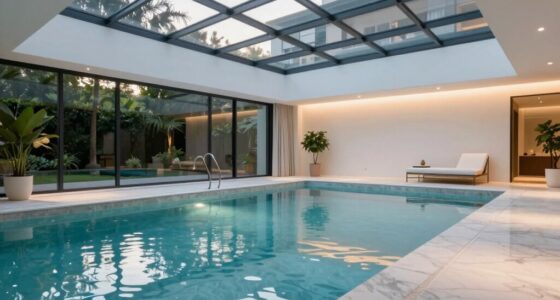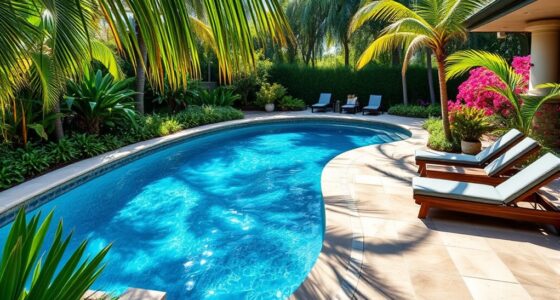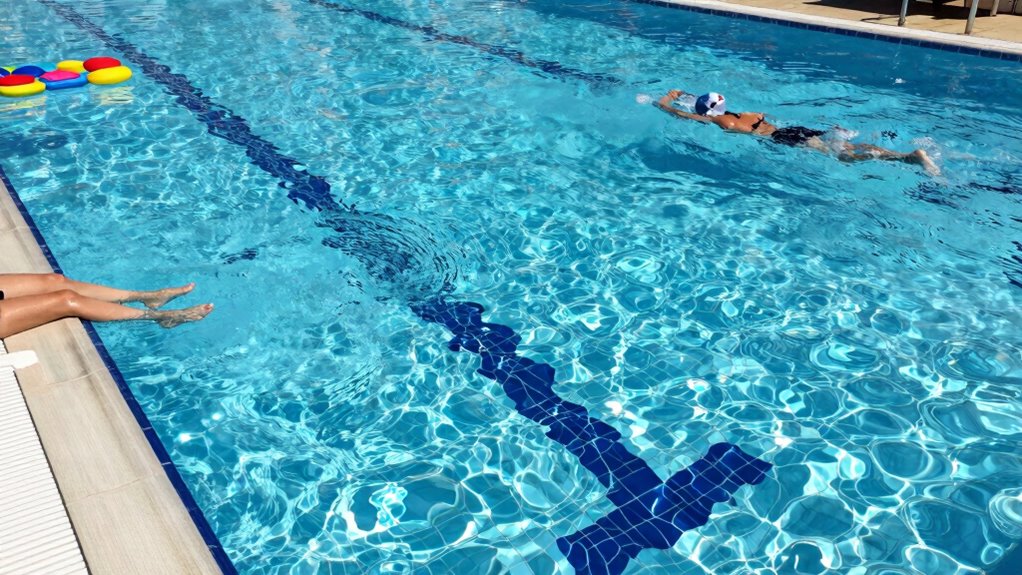
The depth of your pool greatly influences how you and others use it. Shallow areas (3-4 ft) are perfect for lounging, playing, and teaching kids, while deeper zones (over 6 ft) suit serious swimmers, diving, and water sports. You’ll find it safer and more versatile when your pool combines different depths, encouraging various activities for all skill levels. Keep exploring to discover how proper design makes your pool even more enjoyable and safe for everyone.
Key Takeaways
- Shallow areas encourage casual swimming, lounging, and activities suitable for children and beginners.
- Deep zones attract serious swimmers, diving, and water sports, influencing the type of activities performed.
- The pool’s design and safety features vary based on depth, affecting how users interact with different zones.
- Depth variations determine supervision needs and safety measures for different user groups.
- Proper depth regulation enhances versatility, allowing for a range of recreational, training, and competitive uses.
Understanding how pool depth affects usage is fundamental for creating a safe and enjoyable swimming environment. When you consider the depth of your pool, you’re directly influencing how people will use it and how safe they’ll be while they’re in the water. Depth regulation is a key factor here, as it guarantees that swimmers of all skill levels can enjoy the pool without unnecessary risk. For instance, shallow areas promote swimming safety for children and less experienced swimmers, while deeper sections cater to more advanced swimmers and recreational divers. Recognizing these differences helps you design a space that accommodates various activities and skill levels, making the pool more versatile and user-friendly.
Pool depth influences safety and usage, accommodating all skill levels for a versatile, enjoyable swimming environment.
The way a pool is used depends heavily on its depth. Shallow sections, typically around 3 to 4 feet deep, are perfect for lounging, playing, and teaching beginners how to swim. These areas minimize the risk of accidents, especially for children or those who aren’t confident in the water. By adhering to proper depth regulation, you reduce the chances of drowning incidents and make the pool safer for everyone. Conversely, deeper zones—often exceeding 6 feet—are essential for competitive swimming, diving, and water sports. These areas draw in experienced swimmers who seek more challenging conditions, but they also demand strict safety measures, including clear signage and proper supervision, to prevent accidents.
Your choice of pool depth also influences how often and who uses your pool. Shallow zones encourage family fun and casual swimming, making your pool a go-to spot for social gatherings. Meanwhile, deeper sections attract serious swimmers and athletes, expanding the pool’s functionality. The balance between these zones is indispensable, as it impacts overall safety and satisfaction. When you follow depth regulation guidelines, you create a space that’s inclusive and safe, reducing the risk of injuries and ensuring everyone can enjoy the water comfortably. Additionally, proper planning and understanding of pool safety can significantly reduce potential hazards associated with different depths. Implementing effective filtration and ensuring proper pump protection also help maintain water quality and equipment longevity, directly influencing how safe and enjoyable the pool remains over time. Understanding water circulation is crucial for maintaining consistent water quality throughout varying depths, ensuring a safe swimming environment. Moreover, considering the pool environment as a whole—such as the surrounding deck and safety features—further enhances safety and usability across different depth zones.

INTEX Candy Zone Inflatable Kiddie Pool: Inflatable Kids Pool with Water Sprayer and Slide – Splash Pad – 116" x 75" x 51" – Ages 3+
PACKED WITH SWEET ACTIVITES – The Candy Zone Play Center includes a main pool, wading pool, water slide…
As an affiliate, we earn on qualifying purchases.
As an affiliate, we earn on qualifying purchases.
Frequently Asked Questions
How Does Pool Depth Impact Water Temperature Regulation?
Pool depth impacts water temperature regulation through thermal stratification and depth zoning. In deeper areas, the water stays cooler, creating layers where warmer water floats above cooler layers. This zoning prevents even temperature distribution, making shallow zones warmer and suitable for lounging, while deeper zones remain cooler for swimming. You’ll notice this difference, especially during hot days, as the varying depths influence comfort and usage preferences.
Are Deeper Pools More Energy-Efficient to Maintain?
Deeper pools can be more energy-efficient to maintain because they typically require less frequent heating and filtration, leading to energy savings. However, they might have higher initial installation and maintenance costs due to increased water volume and structural demands. You benefit from better temperature stability, reducing heating needs over time. Overall, if you’re willing to invest upfront, deeper pools can lower long-term maintenance costs and energy expenses.
What Safety Features Are Recommended for Varying Pool Depths?
Think of your pool as a playground that needs safety nets. For varying depths, install pool lighting to illuminate shallow areas, preventing accidents, and guarantee a sturdy child-proof fencing surrounds the entire pool. These features act like guardians, keeping everyone safe no matter where they play. Always double-check local safety regulations and consider additional features like alarms or slip-resistant surfaces to further protect your loved ones.
How Does Depth Influence Pool Cleaning and Maintenance?
Deeper pools can make cleaning and maintenance more challenging because algae growth tends to develop in shaded, hard-to-reach areas, and debris accumulation is harder to remove from the bottom. You’ll need specialized equipment like longer poles and robotic cleaners to reach deep sections effectively. Regular skimming, brushing, and chemical treatments become even more essential to prevent algae buildup and keep debris from settling in hard-to-access spots.
Can Shallow Pools Accommodate Diving Boards Safely?
Shallow pools generally can’t safely accommodate diving boards because of safety concerns related to diving safety. When water is shallow, there’s a higher risk of injury from diving into the pool. Most experts recommend a minimum depth of 7 to 9 feet for diving boards. In shallow water, users risk hitting the pool bottom or sides, so it’s best to avoid installing diving boards where water isn’t deep enough.

Intex 18' x 9' x 52" Ultra XTR Rectangular Frame Swimming Pool Set with Pump – Above Ground Backyard Large Rectangle Pool with 45-Inch Deep Water
Experience The Ultra Difference – Uniquely designed frame combines high quality galvanized steel with precision engineered locking system,…
As an affiliate, we earn on qualifying purchases.
As an affiliate, we earn on qualifying purchases.
Conclusion
Understanding how pool depth influences your experience helps you choose the right design, encourages safe swimming, and enhances your enjoyment. Whether you’re diving, lounging, or playing, the depth guides how you interact with the water. By considering depth, you shape your pool’s purpose, your safety, and your fun. So, pick the depth that matches your needs, embrace its benefits, and create a space where every splash, every dive, and every moment is just right for you.

Kichwit Pool Rules Sign, Swim At Your Own Risk, No Diving, No Running, No Peeing, No Lifeguard on Duty, Aluminum Swimming Pool Safety Sign, Weather Resistant, 9.4 x 13.4 Inches, Silver
All metal construction, made of aluminum, weather resistant, good for outdoor use
As an affiliate, we earn on qualifying purchases.
As an affiliate, we earn on qualifying purchases.

Swim Float Kids Back Belt: Pool Safe Dual-Lock Buckle 140lbs Pull-Tested – Zero Slip-Off Risk Trainer Bubble – 4-Layer Adjustable Buoyancy for Swimmers 3-12 Yrs
SAFETY TRUST CUSTOM DUAL BUCKLES CPSIA COMPLIANCE SWIM FLOAT: Kids Floaties For Pool Safety Buckles Are Designed To…
As an affiliate, we earn on qualifying purchases.
As an affiliate, we earn on qualifying purchases.