
When choosing your pool finish, consider your budget, maintenance preferences, and desired look. Plaster is budget-friendly but needs frequent reapplication, while pebble offers durability with lower upkeep over time. Tile provides a customizable, long-lasting surface but comes with higher initial costs. Each option balances style, cost, and durability differently. To make the best choice for your pool’s needs and longevity, explore the details of each finish option below.

Get pool and patio gear delivered free — and shop member deals
- Fast, free delivery on millions of items
- Access to Prime Big Deal Days deals on October 6–7
- Prime Video, Amazon Music and more included
Key Takeaways
- Consider initial costs versus long-term maintenance when choosing between plaster, pebble, and tile finishes.
- Pebble finishes offer durability and lower maintenance but have higher upfront costs compared to plaster.
- Tile provides customizable aesthetics and high durability, but is the most expensive option upfront.
- Plaster is budget-friendly initially but requires more frequent repairs and higher long-term maintenance.
- Match the finish choice to your design goals, budget, desired lifespan, and maintenance willingness.
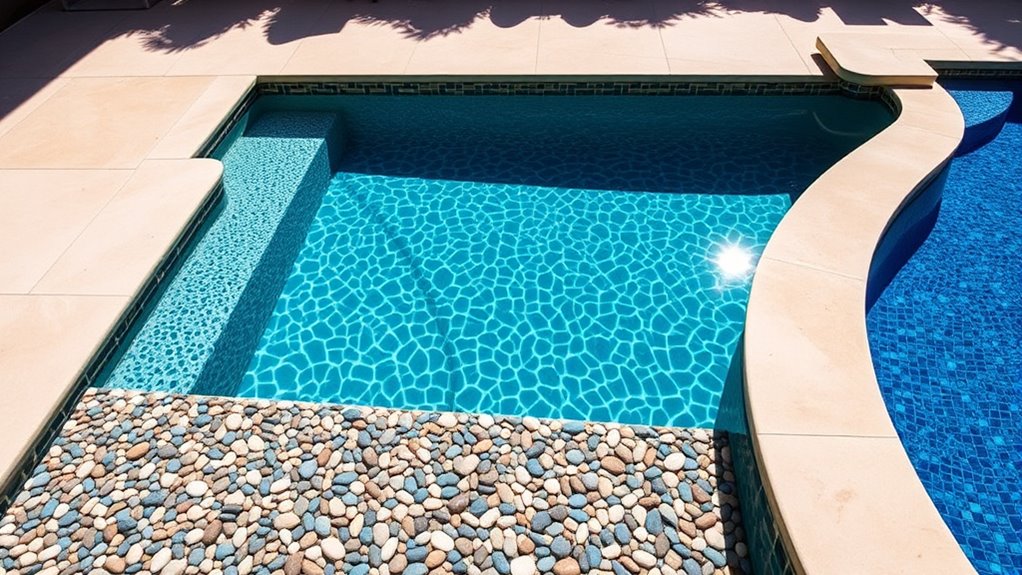
Choosing the right pool finish is a crucial step in designing your ideal swimming environment. The finish you select impacts not only the aesthetics but also the durability, maintenance, and overall cost of your pool. When comparing options like plaster, pebble, and tile, it’s essential to contemplate both the cost comparison and maintenance requirements. Your decision will influence how much time and money you’ll need to invest in upkeep over the years.
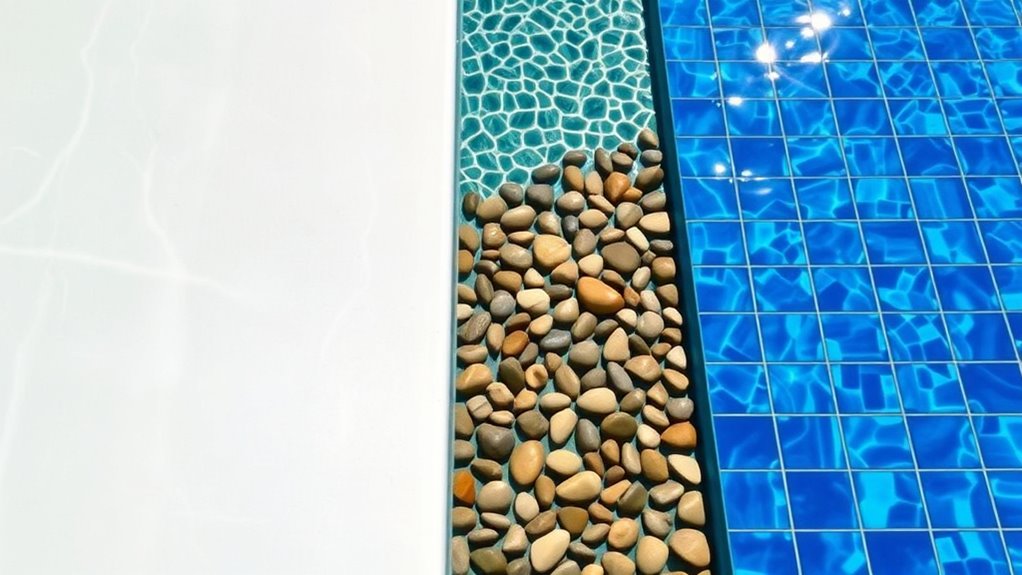
Starting with plaster, it’s often the most budget-friendly choice upfront. It’s a smooth, cohesive surface that can be customized with various colors, giving you flexibility in design. However, plaster isn’t as durable as other finishes. Its porous nature means it’s more prone to staining, scaling, and surface wear over time. As a result, maintenance requirements are higher; you’ll need to regularly clean and acid wash the surface to keep it looking fresh. Replastering a pool can be costly and usually occurs every 7 to 10 years, which adds to the long-term expenses. From a cost comparison standpoint, plaster remains attractive initially but can become more costly over its lifespan due to frequent repairs and resurfacing. Additionally, proper surface preparation is essential to ensure longevity and reduce future maintenance needs.
Plaster is budget-friendly initially but requires frequent repairs and resurfacing over time.
Pebble finishes, on the other hand, offer a more durable and visually appealing alternative. Made from small, smooth stones embedded in a cement base, pebble finishes provide a textured surface that resists staining and wear better than plaster. Although the initial cost is higher than plaster, their longevity balances out the investment. Maintenance requirements are relatively low since the surface resists algae growth and staining more effectively. Regular brushing and occasional acid washing usually suffice to keep a pebble finish in good shape. Over time, their durability results in fewer repairs and longer intervals between resurfacing, making them a cost-effective option in the long run.
Tile finishes provide the most customizable and luxurious look, available in an array of colors, shapes, and patterns. They tend to be the most expensive option upfront, both in materials and installation costs. Tile surfaces are highly durable and stain-resistant, reducing maintenance needs considerably. However, grout lines can accumulate dirt and mold, requiring periodic cleaning and resealing. While the initial investment is high, tile pools are low maintenance when properly cared for and have a very long lifespan. If you prioritize style and longevity, tile finishes can be a smart choice, but you should be prepared for the higher initial cost and ongoing cleaning efforts.
Ultimately, your choice hinges on balancing budget, maintenance preferences, and desired aesthetic. Understanding the cost comparison and maintenance requirements of plaster, pebble, and tile finishes enables you to make an informed decision that fits your lifestyle and vision for your pool.
Frequently Asked Questions
Which Pool Finish Is Most Environmentally Friendly?
You should choose eco-friendly materials like recycled glass tile or sustainably sourced pebble finishes for the most environmentally friendly pool. These sustainable options reduce resource consumption and have a lower environmental impact compared to traditional plaster. By opting for these finishes, you help support sustainable practices while creating a beautiful, eco-conscious pool that minimizes your carbon footprint and promotes environmental responsibility.
How Do Pool Finishes Affect Water Temperature?
A pool finish is like a heart that influences water temperature. Your choice impacts thermal insulation, affecting how warm or cool the water stays. For example, darker finishes absorb more heat, raising pool temperature, while lighter ones reflect it, keeping water cooler. Pebble and tile finishes often offer better thermal insulation than plaster, helping you maintain a comfortable swim environment. So, pick wisely to suit your climate and energy goals.
Can Pool Finishes Be Repaired or Resurfaced Easily?
Yes, pool finishes can be repaired or resurfaced, but it depends on the finish’s durability. You’ll find that plaster, pebble, and tile each have different repair needs and timelines. Resurfacing can be a straightforward process, though it might involve significant renovation costs if damage is extensive. Regular maintenance helps prolong the lifespan of your pool finish, reducing the need for costly repairs and ensuring your pool stays in top condition.
Which Finish Offers the Best Slip Resistance?
You should choose a finish with excellent slip resistance, especially one with a textured surface. Pebble finishes often provide the best slip resistance because their uneven, rough texture enhances grip. Tile can also be slip-resistant if it features a textured surface or matte finish, but smooth plaster tends to be the least slip-resistant. Prioritize finishes with a deliberately rough or textured surface to guarantee safety around your pool.
How Do Finishes Impact Pool Maintenance Frequency?
Your pool finish impacts maintenance frequency by affecting surface durability and aesthetic appeal. A durable finish like pebble or tile resists chipping and staining longer, reducing cleaning needs. Plaster, while attractive, may require more frequent repairs and scrubbing due to surface wear. Choosing a finish that balances durability and beauty helps you maintain your pool with less effort and keeps it looking great over time.
Conclusion
Now, imagine your pool shimmering under the sun, the smooth plaster inviting your touch, the pebble finish adding a textured sparkle, or the sleek tiles reflecting glints of light. Each option paints a different scene, a unique vibe for your backyard oasis. Trust your instinct and picture yourself relaxing in that perfect space. Whatever you choose, your pool will become a stunning centerpiece—an inviting haven where memories will ripple through time.
Fall Picks
fall essentials
As an affiliate, we earn on qualifying purchases.