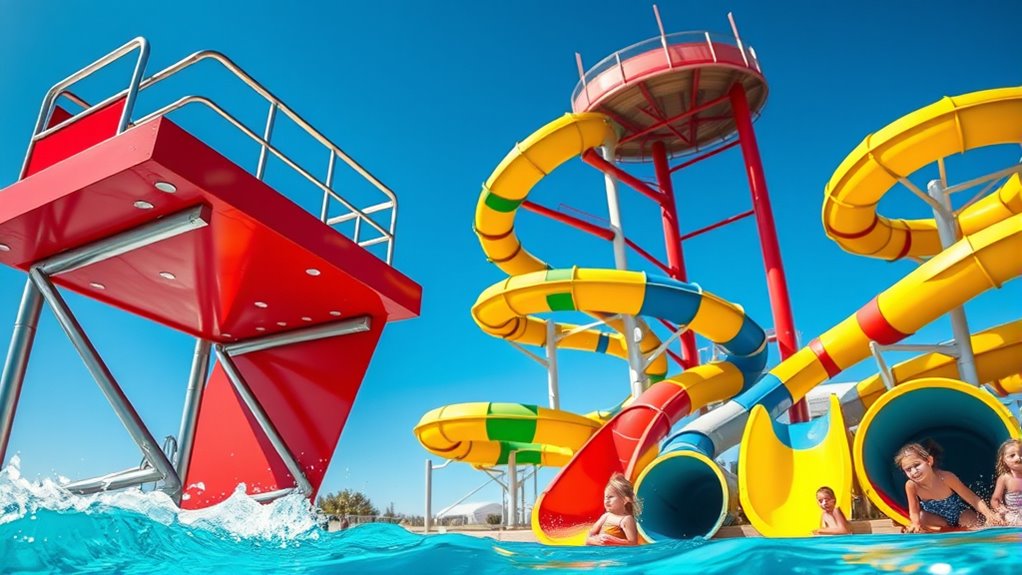

Diving boards and slides both deliver exciting water fun, but they come with different safety priorities. Diving boards require good swimming skills, proper technique, and regular maintenance, especially for tall or spring-loaded types. Slides are generally safer with sturdy handrails, clear depth markers, and non-slip surfaces, but you should still supervise and make certain users follow safety rules. Want to see how to balance fun with safety? Keep exploring to find all the tips you need.
Key Takeaways
- Diving boards require advanced swimming skills and proper technique, posing higher safety risks without supervision.
- Slides are generally safer for all skill levels if equipped with sturdy handrails, non-slip surfaces, and clear depth indicators.
- Regular inspection and maintenance of both features prevent hazards like cracks, loose fittings, or sharp edges.
- Safety rules, such as no diving into shallow water and supervised use, are essential for both diving boards and slides.
- Both features offer fun experiences but must be used responsibly to minimize injuries and ensure enjoyment.
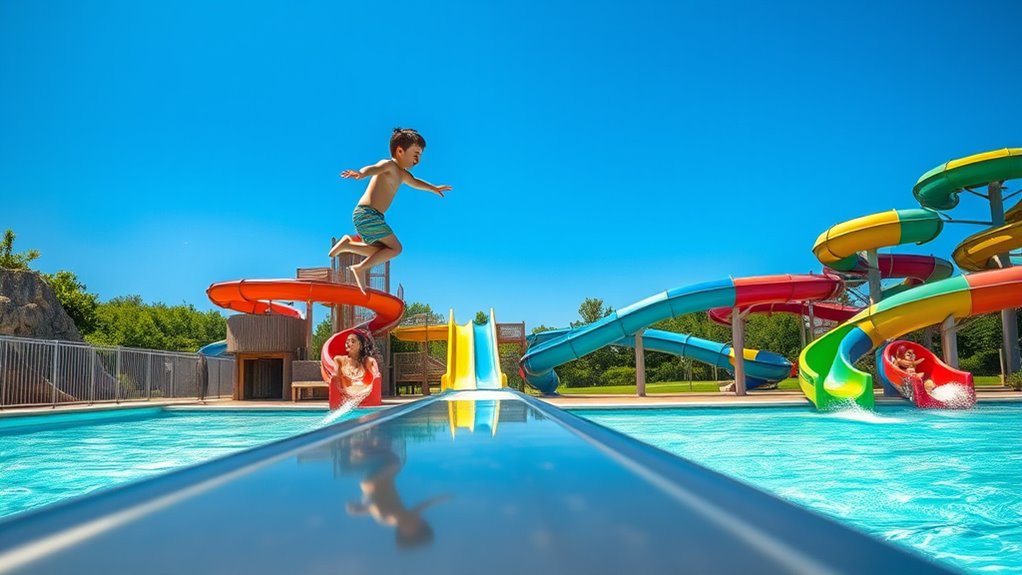
When choosing between diving boards and slides for your pool, each offers a unique experience that appeals to different preferences and ages. Safety should be your top priority, and that begins with understanding lifeguarding techniques and proper equipment maintenance. Lifesaving techniques, such as how to quickly assist a swimmer in distress, are essential whether you have a diving board or a slide. Regularly inspecting and maintaining the equipment ensures that it remains safe to use. For diving boards, check for cracks, rust, or unstable mounting, and ensure the board is firmly anchored. Slides should be free of sharp edges, cracks, or loose fittings that could cause injury. Keeping the equipment well-maintained minimizes risks and prolongs its lifespan.
Prioritize safety with regular maintenance and lifeguarding techniques for a fun, injury-free pool experience.
When it comes to safety, you must also consider the specific risks associated with each feature. Diving boards, especially taller ones, require swimmers to have good swimming skills and proper technique to avoid injuries. You’ll want to educate users on safe diving practices, such as entering the water feet-first when unsure of their abilities. Slides, on the other hand, tend to be less intimidating but can still cause accidents if users aren’t cautious. Ensure the slide has a sturdy handrail, a non-slip surface, and a clear landing zone. Always supervise children and inexperienced swimmers, regardless of the feature, and enforce rules about no running or rough play around these structures.
Proper equipment maintenance is vital for both options. For diving boards, regularly test the spring mechanism and ensure the deck is secure. Replace worn-out parts immediately to prevent accidents. For slides, clean the surface to prevent slipping hazards and check for algae or debris that could cause falls. Both features should have clearly marked depth indicators, and you should never allow diving or sliding into shallow water. Training yourself and your family on lifesaving techniques, like how to perform a rescue or administer CPR, enhances safety. Additionally, keeping a first aid kit nearby ensures you’re prepared for minor injuries.
Ultimately, choosing between a diving board or slide depends on your family’s preferences, swimming skills, and safety awareness. Both can be safe and fun, provided you commit to regular equipment maintenance, enforce safety rules, and stay prepared with lifesaving techniques. By prioritizing these safety measures, you’ll create an enjoyable pool experience that minimizes risks and maximizes fun for everyone.
Frequently Asked Questions
What Safety Measures Should Be in Place Before Installation?
Before installation, you should guarantee the water depth is sufficient to prevent injuries, typically at least 9 feet for diving boards. Check the structural integrity of the equipment, making sure it’s sturdy and properly anchored. You should also inspect the surrounding area for hazards, install safety barriers if needed, and verify compliance with local safety standards. These measures help keep users safe while maximizing fun.
How Do Weather Conditions Affect Equipment Safety?
Weather hazards like strong winds, heavy rain, or intense sun can jeopardize equipment safety. You should regularly check weather forecasts and avoid using equipment during storms or extreme conditions. Harsh weather can weaken equipment durability over time, increasing risk. Proper maintenance, including inspections after adverse weather, helps ensure safety. By staying aware of weather hazards, you protect users and prolong the lifespan of your diving boards and slides.
Are There Age Restrictions for Using Diving Boards and Slides?
Age guidelines typically set clear use restrictions for diving boards and slides, guaranteeing safety for all. Usually, children under a certain age or height aren’t permitted to use the equipment without supervision. You should always check your facility’s specific age restrictions and follow them closely. These use restrictions help prevent accidents and ensure everyone has fun safely, especially when it comes to more challenging equipment like diving boards and high slides.
What Maintenance Routines Ensure Ongoing Safety?
You should regularly check water chemistry, clean surfaces, and inspect equipment to guarantee safety. Keep water balanced to prevent corrosion and skin irritation, and conduct routine equipment inspections for cracks or loose parts. Maintain a clean, dry area around the diving board and slide, and promptly address any wear or damage. These routines help you minimize risks, keep equipment safe, and ensure everyone has fun while staying safe.
How Can Parents Supervise Children Effectively During Use?
You can supervise children effectively during use by actively watching their activities, maintaining close proximity, and using supervision techniques like avoiding distractions. Guarantee safety equipment, such as life vests or floaties, is properly fitted and used when necessary. Set clear rules about safe behavior, and encourage children to follow them. Remember, consistent supervision and safety gear help prevent accidents and ensure everyone has fun safely.
Conclusion
Ultimately, whether you choose a diving board or a slide, prioritize safety to guarantee endless fun. Remember, a diving board can turn your backyard into a splash zone rivaling an Olympic pool, while slides bring out the kid in everyone with every twist and turn. Trust your instincts, follow safety tips, and enjoy the thrill. After all, with the right precautions, you’ll be making memories that last a lifetime—faster than you can say “splash!”