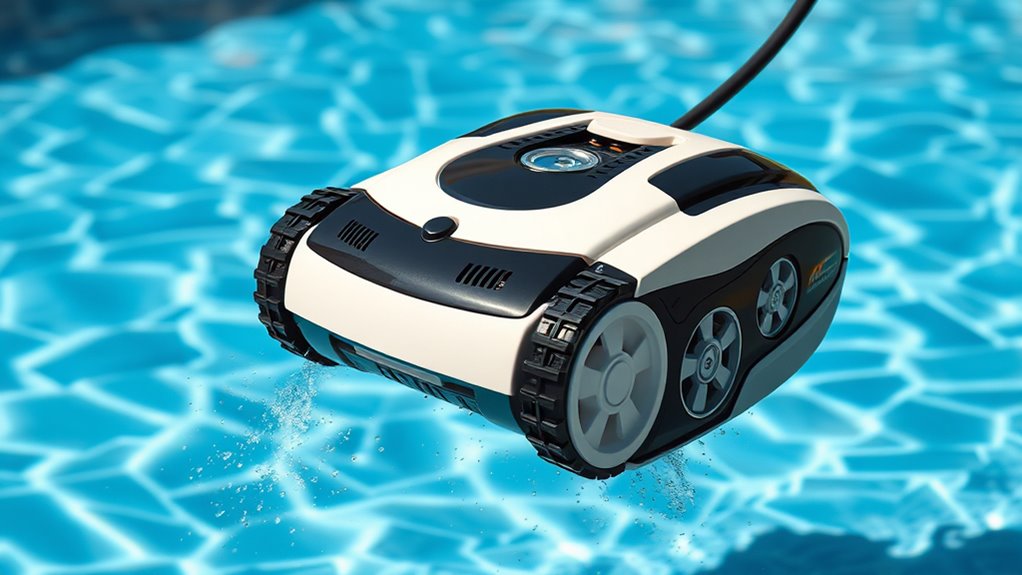

When choosing a robotic pool vacuum, consider features like easy-to-clean filters, energy efficiency with timers and power-saving modes, and advanced navigation for systematic coverage. Look for models with durable parts that handle stubborn dirt and debris, plus support for larger or complex-shaped pools. Regular maintenance, including filter checks and brush inspection, keeps it running smoothly. Curious about how these features can make pool cleaning effortless? Keep exploring to discover more ways to find the perfect fit.
Key Takeaways
- Look for models with advanced navigation and mapping to ensure thorough, systematic cleaning of the entire pool area.
- Prioritize energy-efficient features like programmable timers and automatic shutoff to reduce power consumption.
- Check for easy-to-clean filters and self-cleaning functions to simplify maintenance and upkeep.
- Consider durability and dirt-handling capabilities, especially materials like hydrocolloid for stubborn debris.
- Match the vacuum’s size and cleaning capacity to your pool’s size and shape for optimal performance.

Keeping your pool clean can be a hassle, but robotic pool vacuums make the task much easier. When choosing the right model, it’s important to consider features that support ongoing maintenance tips and energy efficiency. A good robotic cleaner can save you time and effort, but understanding what to look for ensures you get the most out of your investment.
One of the key aspects to consider is how easy it is to maintain the vacuum. Look for models with accessible filters that are simple to remove and clean. Regular maintenance tips include checking and emptying the filter after each use, inspecting brushes for wear, and ensuring the robot’s wheels and sensors are free of debris. Some models even have self-cleaning features that reduce your upkeep chores. Staying on top of maintenance extends the lifespan of the device and keeps it performing at its best, so choose a robot that’s designed for straightforward upkeep.
Choose a robot with easy-to-clean filters and simple maintenance for longer-lasting performance.
Energy efficiency is another essential factor. Robotic pool vacuums vary widely in power consumption, and selecting an energy-efficient model can greatly cut down your electricity bill. Many newer options are equipped with programmable timers or automatic shutoff features, allowing you to set cleaning schedules during off-peak hours. This not only reduces energy usage but also ensures your pool stays consistently clean without you needing to run the vacuum all day. Look for models with low energy consumption ratings and energy-saving modes, which can make a noticeable difference over time.
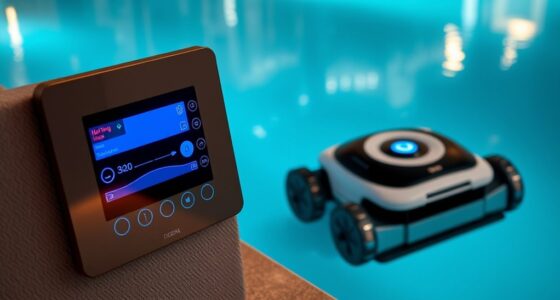
Additionally, consider the vacuum’s navigation system. Models with advanced navigation and mapping capabilities can clean more efficiently, covering your pool systematically rather than aimlessly wandering. This reduces the time it takes to clean, which in turn lowers energy use. A smart navigation system also minimizes unnecessary wear and tear, further supporting maintenance tips for longevity.
Furthermore, choosing a model with hydrocolloid material can enhance its ability to handle stubborn dirt and promote quicker healing of minor damages, ensuring consistent cleaning performance. Finally, think about the size and type of your pool. Larger pools or those with complex shapes may require a more powerful or sophisticated model. Conversely, smaller or standard pools might do well with a basic, budget-friendly option that still offers good energy efficiency and easy maintenance. Always check the manufacturer’s guidelines for recommended pool sizes and cleaning coverage to ensure you pick a model that suits your needs.
Frequently Asked Questions
How Often Should I Run My Robotic Pool Vacuum?
You should run your robotic pool vacuum at least once a week to maintain clean water and prevent debris buildup. Adjust the cleaning schedule based on your pool’s usage and surrounding environment. Keep an eye on the battery life; if it’s running low, recharge it before the next cleaning session. Regular use ensures peak performance and extends the lifespan of your vacuum, making your pool maintenance easier and more efficient.
Can Robotic Vacuums Handle Large Debris Effectively?
Robotic vacuums can handle large debris effectively if they have strong cleaning power and are designed for bigger debris sizes. Look for models with robust suction and larger intake openings, which help pick up leaves, twigs, and other sizable debris. Keep in mind that some models may struggle with very heavy or bulky debris, so check the specifications to make certain your chosen vacuum meets your pool’s debris needs.
Are Robotic Pool Vacuums Suitable for All Pool Types?
Yes, robotic pool vacuums are suitable for most pool types, but you should check their pool surface compatibility and pool size limitations. They work well on concrete, vinyl, and fiberglass surfaces, but some models may struggle with delicate surfaces. Also, consider your pool’s size; larger pools might need a more powerful or larger-capacity vacuum. Always verify these factors to confirm your robotic cleaner fits your specific pool.
What Maintenance Is Required for Robotic Pool Cleaners?
Maintaining your robotic pool cleaner means managing its magic with mindful measures. You’ll want to monitor filter replacement regularly to keep it cleaning efficiently and check the battery life to guarantee it runs smoothly. Clear debris from brushes and baskets, and keep the unit’s components clean. Proper maintenance prolongs your cleaner’s lifespan, ensures peak performance, and keeps your pool pristine and inviting, all while making maintenance simple and satisfying.
Do Robotic Vacuums Come With Warranties?
Yes, robotic vacuums typically come with warranty coverage that protects against defects and malfunctions. You should check the warranty details for repair services included, as some brands offer extended coverage or on-site repairs. Keep your purchase receipt and register your device promptly. Warranties give you peace of mind, ensuring that if something goes wrong, you can rely on the manufacturer’s support to fix or replace your robotic pool vacuum.
Conclusion
When choosing a robotic pool vacuum, consider features like cleaning modes, battery life, and navigation skills. While some believe more advanced models always deliver better results, studies suggest that basic models can be equally effective if well-maintained. Ultimately, matching features to your pool’s size and your cleaning needs guarantees a smarter investment. Remember, a well-chosen vacuum not only keeps your pool pristine but also saves you time—making pool maintenance easier and more efficient.