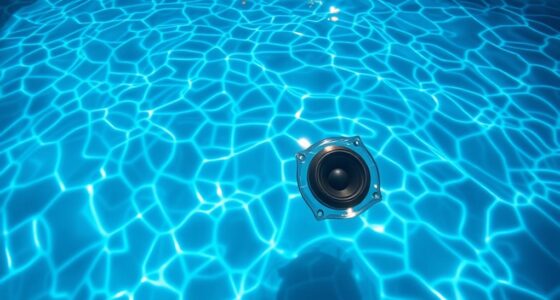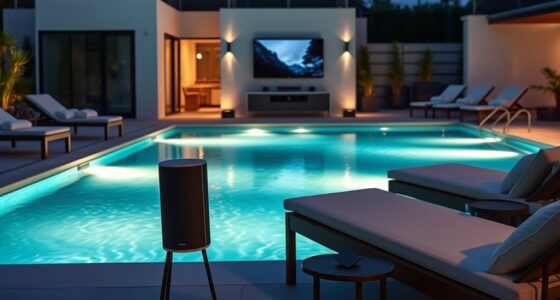

To install underwater speakers for aquatic audio, choose marine-grade speakers designed to resist water and corrosion. Plan your placement to avoid obstructions, and securely mount them using corrosion-resistant brackets. Use waterproof wiring with marine connectors and seal all connections with marine silicone or waterproof tape to prevent water ingress. Make certain your amplifier matches the speakers’ impedance and provides enough power for clear sound. For a durable, high-quality setup, following these steps will help you create an impressive underwater sound experience.
Key Takeaways
- Choose marine-grade speakers designed for underwater use and match them with compatible amplifiers for optimal performance.
- Use waterproof wiring, sealed connectors, and marine-grade silicone to prevent water ingress and corrosion.
- Position speakers strategically to maximize sound coverage while avoiding obstructions and structural interference.
- Secure mounting brackets properly to withstand water currents, vibrations, and environmental conditions.
- Test all connections and system components thoroughly before final installation to ensure reliable, high-quality underwater audio.
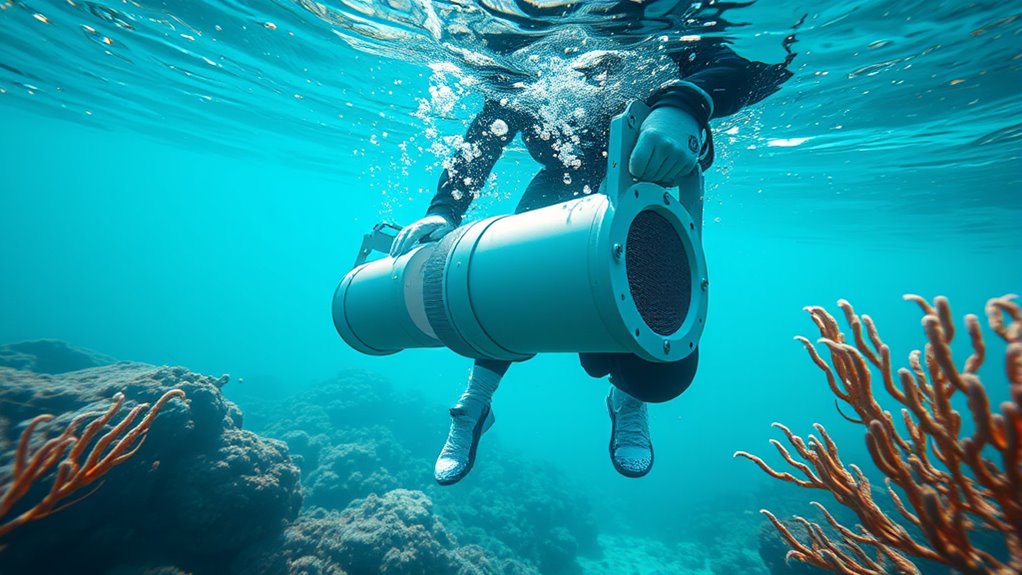
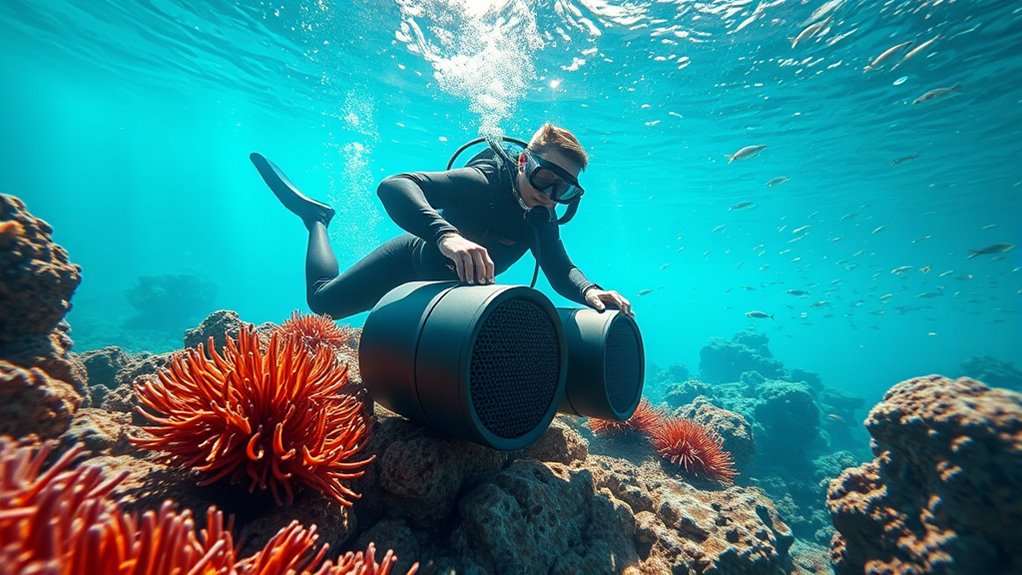
If you want to enjoy high-quality sound beneath the water, installing underwater speakers is a straightforward way to enhance your aquatic experience. The first step involves understanding the different marine speaker types available. These speakers are specially designed to withstand harsh water conditions, so they come in various styles, including coaxial, component, and subwoofer options. Coaxial marine speakers are popular because they combine multiple speaker elements into a single unit, saving space and simplifying installation. Component speakers offer better sound clarity and can be customized for specific setups, making them ideal if you’re seeking premium audio quality. Subwoofers provide deep bass, adding richness to your underwater soundscape. Knowing which marine speaker types suit your needs helps you create an immersive aquatic environment.
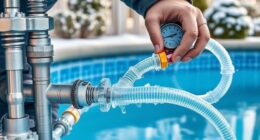
Once you’ve selected the right speakers, the next critical aspect is waterproof wiring. Proper waterproof wiring ensures your audio system remains reliable despite constant water exposure. Ordinary electrical cables won’t cut it; you need marine-grade wiring designed explicitly for underwater use. These cables are coated with waterproof insulation and corrosion-resistant materials, preventing water from seeping in and causing shorts or damage. When installing, make sure to use waterproof connectors and seal all connections thoroughly with marine-grade silicone or waterproof tape. This prevents moisture from entering the wiring, which could compromise your sound system or pose safety risks. Additionally, waterproof wiring and connectors are essential components that help maintain system integrity in aquatic environments.
Use marine-grade waterproof wiring and seal all connections thoroughly for reliable underwater audio.
Installing underwater speakers also requires careful planning of their placement. You want to position them where they can deliver ideal sound without being obstructed by boat hulls or other structures. Mounting brackets should be securely fastened to prevent movement or damage from water currents and vibrations. When running wires, keep them away from sharp edges and potential sources of abrasion, and use conduits or protective tubing for added durability. Always test the wiring and connections before finalizing the installation to guarantee everything functions correctly.
Additionally, it’s important to factor the power source and amplifier compatibility. Underwater speakers often require dedicated amplifiers capable of delivering the necessary power for clear, loud sound without distortion. Match the speaker impedance with the amplifier’s output to avoid overloading or underpowering your system. Properly configuring your audio setup ensures consistent performance and longevity of your underwater speakers.
Frequently Asked Questions
What Is the Best Waterproof Rating for Underwater Speakers?
You should look for underwater speakers with at least an IP68 waterproof rating, ensuring they’re fully protected against water and dust. Marine grade materials enhance durability, while a high waterproof rating guarantees they withstand submersion. This combination preserves sound quality even in harsh aquatic environments. With these features, your speakers stay protected, delivering clear, consistent sound deep underwater, making your aquatic experience more enjoyable and reliable.
How Do I Prevent Corrosion on Underwater Speaker Connections?
To prevent corrosion on underwater speaker connections, you should focus on connection protection and corrosion prevention methods. Use waterproof connectors and dielectric grease to seal connections, which helps keep moisture out. Regularly inspect and clean the connections, applying anti-corrosion sprays if needed. Ensuring tight, secure connections and using corrosion-resistant materials also greatly extend the lifespan of your underwater speakers, keeping sound quality ideal and avoiding costly repairs.
Can Underwater Speakers Be Used in Saltwater and Freshwater?
Yes, underwater speakers can be used in both saltwater and freshwater environments. However, saltwater poses a greater challenge due to its corrosive nature, so you should choose speakers specifically designed for marine life and saltwater conditions to guarantee durability. Proper installation and regular maintenance help maintain acoustic performance, preventing damage from marine life and corrosion. Using the right equipment assures clear sound quality regardless of your aquatic setting.
What Maintenance Is Required for Underwater Audio Systems?
Did you know that properly maintained underwater speakers can last up to 10 years? To guarantee your system’s speaker lifespan, clean the speakers regularly with fresh water to remove salt, grime, and algae. Check for corrosion or damage and tighten any loose fittings. Avoid harsh chemicals, and inspect wiring periodically. Proper maintenance extends the life of your underwater audio system, keeping the sound clear and vibrant for years to come.
Are There Specific Safety Concerns When Installing Underwater Speakers?
Yes, you should be aware of safety concerns when installing underwater speakers. Make sure to properly handle electrical grounding to prevent shocks or short circuits. Also, consider acoustic interference from other devices, which can affect sound quality. Always follow manufacturer instructions carefully, use waterproof wiring, and guarantee all connections are secure and insulated. Taking these precautions helps keep your installation safe and performs at its best underwater.
Conclusion
Installing underwater speakers transforms your aquatic space into a vibrant soundscape. Did you know that underwater speakers can improve the overall ambiance and even boost the value of your property? With proper setup, you’ll enjoy crystal-clear music beneath the surface, creating an immersive experience for everyone. So go ahead, plunge in and bring your aquatic environment to life—your perfect soundtrack is just a speaker away!