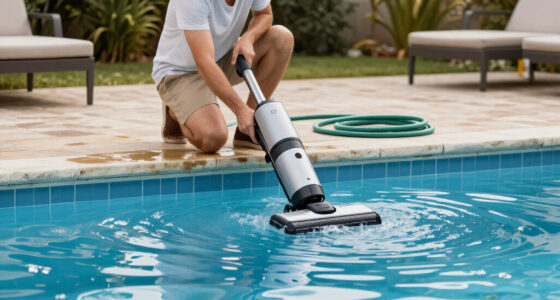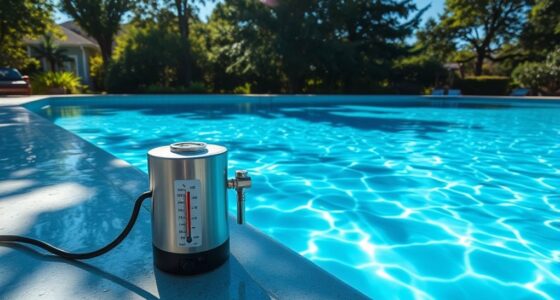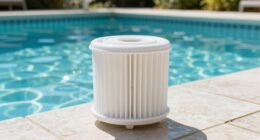
When shopping for an automatic pool vacuum, the main decision is often whether to pay more for a robotic cleaner or save money with a suction-side model. Both can reduce manual vacuuming, but they work differently: a robot has its own motor and debris filter, while a suction-side cleaner connects to the pool’s suction line and relies on the pool pump. That difference affects cleaning independence, debris handling, pump use, setup, and ongoing care.

Get pool and patio gear delivered free — and shop member deals
- Fast, free delivery on millions of items
- Access to Prime Big Deal Days deals on October 6–7
- Prime Video, Amazon Music and more included
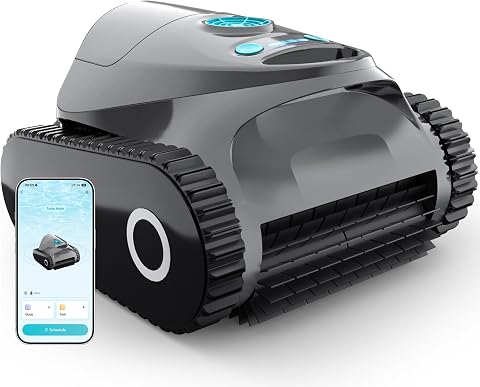
C1 Robotic Pool Cleaner, Deep Gray
- ✔ Cleaning modes: 7
- ✔ Battery life: 180 minutes
- ✔ Charging time: 2.5 hours
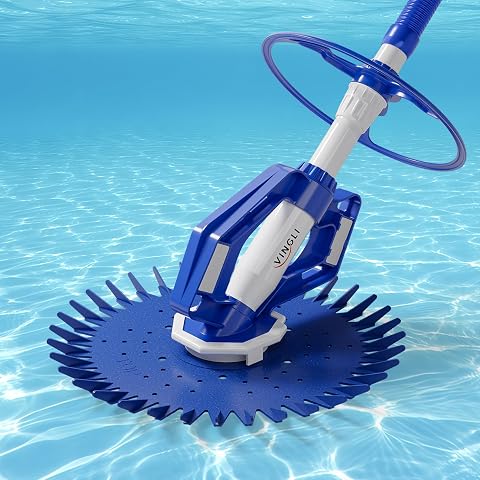
VINGLI Automatic Wall-Climbing Pool Vacuum
- ✔ Power source: Suction powered
- ✔ Pump requirement: At least 3/4 HP or 1,600 GPH
- ✔ Hose length: 33 ft.

XtremepowerUS Automatic Pool Cleaner with 30ft Hose Set
- ✔ Cleaner type: Automatic suction-side
- ✔ Pool type: In-ground
- ✔ Hose length: 30 ft.
Robotic cleaners are usually the stronger choice for owners who want a cleaner that can run without the main circulation pump and handle a range of debris with less involvement from the pool’s filtration system. Suction-side cleaners make more sense when purchase cost matters most, the pool already has suitable suction plumbing, and the pump is scheduled to run long enough for cleaning. The right choice depends less on the label than on your pool, debris, equipment, and how much convenience is worth to you.
At a Glance
| Criteria | Robotic pool vacuum cleaners | Suction-side automatic pool vacuum cleaners | Winner |
|---|---|---|---|
| Purchase cost | Usually higher upfront cost; price varies by size and features | Usually lower upfront cost, particularly for basic models | B |
| Cleaning independence | Runs on its own motor and control system; many models can clean without the circulation pump running | Depends on the pool pump, suction line, and adequate pump runtime | A |
| Debris handling | Collects debris in its own filter; capacity and fine-particle filtration vary by model | Moves debris into the pool’s filtration system; large or heavy debris can challenge some setups | A |
| Pool pump and filtration impact | Does not depend on the pool’s main pump to create suction | Adds suction load and sends collected material to the pump basket and pool filter | A |
| Setup and compatibility | Needs a suitable power connection and pool access; check pool shape, surfaces, and cord or battery design | Requires a compatible skimmer or dedicated suction port and correct hose setup | A |
| Routine maintenance | Remove and rinse the onboard filter after cleaning, plus periodic checks of brushes, tracks, and cable | Clear pump baskets and clean or backwash the filter as debris accumulates; inspect hoses and cleaner parts | Depends |
| Energy use and operating pattern | Uses electricity while cleaning; can be scheduled as a separate cleaning task | Uses the pool pump while cleaning; cleaning schedule is tied to circulation runtime | Depends |
C1 Robotic Pool Cleaner, Deep Gray
The C1 is our most versatile pick for buyers who want an automatic cleaner that does not depend on a pool pump to create suction. Its cordless robotic design combines triple motors, dual rolling brushes, and dual-layer filtration, while seven modes and app control allow more customization than either suction-side model here. It is also the only option in this comparison specified to clean the waterline, making it the better match for owners who want coverage beyond the pool floor and walls.Its 180-minute battery life and stated coverage of up to 1,615 square feet help define where it fits: larger than a small spot-cleaning device, but still subject to a clear maximum area. Compared with the VINGLI and XtremepowerUS, the C1 avoids a hose connection and the need to meet a minimum pump rating. In exchange, we need to charge it, set it up before use, and stay within its stated coverage. The listing also provides no warranty information, a significant point to confirm before buying. Choose it for cordless control and broader specified cleaning; skip it if we want a simple cleaner that uses existing pool equipment or need a documented warranty.
Pros:
- Cordless operation avoids managing a pool-cleaner hose.
- Seven cleaning modes and smart app control allow customized operation.
- Wall-climbing and waterline cleaning are specified.
- 180-minute battery life with a stated 2.5-hour charging time.
Cons:
- Coverage is specified only up to 1,615 square feet.
- Requires charging and setup before entering the water.
- No warranty information is provided.
Best for: In-ground pool owners who want cordless operation, app-based mode selection, and stated waterline cleaning within the 1,615-square-foot coverage limit.
Not ideal for: Buyers with above-ground pools, pools larger than the stated coverage area, or anyone who prioritizes a clearly stated warranty and minimal charging setup.
Bottom line: We rank the C1 first for its cordless operation and waterline reach, provided our pool fits the coverage limit and we accept the missing warranty details.
“We rank the C1 first for its cordless operation and waterline reach, provided our pool fits the coverage limit and we accept the missing warranty details.”
VINGLI Automatic Wall-Climbing Pool Vacuum
The VINGLI makes the most sense for buyers who already have a compatible in-ground pool pump and want a straightforward suction-side cleaner. Its defining advantage over the XtremepowerUS is the 33-foot hose, three feet longer than that model’s included set. That extra reach may make it a better fit for pools where a shorter hose is awkward, although pool shape and equipment placement still determine whether the length is sufficient. Wheel deflectors are intended to help it navigate corners, and the cleaner is specified to climb walls.We should pay close attention to the pump requirement before choosing it. The listing calls for at least 3/4 HP or 1,600 GPH; if our pump cannot meet that threshold, the cleaner may not perform as intended. This stated minimum is lower in horsepower than the XtremepowerUS’s 1 HP requirement, which makes VINGLI the more flexible of the two suction models on that measure. It does not offer the C1’s independent battery, app modes, or stated waterline cleaning, and it is restricted to in-ground pools. Its quiet-operation design and quick assembly are useful conveniences, but they do not remove the need to verify pump compatibility.
Pros:
- Includes a 33-foot set of scuff-resistant hoses.
- Wall-climbing design and wheel deflectors support movement around corners.
- Published pump threshold is lower in horsepower than the XtremepowerUS requirement.
- Designed for quiet operation and quick assembly.
Cons:
- Requires at least a 3/4 HP or 1,600 GPH pump for optimal performance.
- Specified for in-ground pools only.
- Uses the pool’s filtration system rather than providing cordless, independent cleaning.
Best for: Owners of in-ground pools with a pump that meets the stated requirement who want a suction cleaner with a 33-foot hose and wall-climbing capability.
Not ideal for: Above-ground pool owners, people with an underpowered pump, or buyers seeking cordless control, app-selected modes, or specified waterline cleaning.
Bottom line: We choose VINGLI over the XtremepowerUS when its longer hose and lower stated horsepower threshold better match our pool equipment.
“We choose VINGLI over the XtremepowerUS when its longer hose and lower stated horsepower threshold better match our pool equipment.”
XtremepowerUS Automatic Pool Cleaner with 30ft Hose Set
The XtremepowerUS is a conventional suction-side option for in-ground pool owners who want an automatic cleaner using their existing filtration system. It includes a 30-foot hose set in ten sections, plus wall-climbing features and wheel deflectors for corner navigation. Compared with the VINGLI, its hose is shorter and its stated minimum pump requirement is higher: 1 HP or 1,600 gallons per hour. That makes the VINGLI the more appealing choice when hose reach or the published horsepower threshold is the deciding factor.There is still a reason to consider this model if our pool equipment meets its specification and the 30-foot reach suits our layout. It shares the quiet-operation positioning and wall-climbing approach of the VINGLI, without asking us to charge a battery or choose an app mode as we would with the C1. But this simpler setup has boundaries: the listing says it is not suitable for cleaning stairs, and it remains dependent on the pool pump. Buyers should check pump capacity and hose reach rather than assuming that a suction-side design will fit every pool. It is a focused choice, not the most feature-rich one in this group.
Pros:
- Includes a 30-foot hose set made up of ten sections.
- Wall-climbing features and wheel deflectors support corner navigation.
- Quiet-operation design and straightforward attachment to existing filtration equipment.
- Does not require a separate battery-charging routine.
Cons:
- Specifies a 1 HP minimum pump, higher in horsepower than the VINGLI requirement.
- Not designed to clean pool stairs.
- In-ground pools only and dependent on the existing filtration system.
Best for: In-ground pool owners with a pump rated at least 1 HP or 1,600 GPH who want a suction-side cleaner and do not need stair cleaning.
Not ideal for: Owners whose pump falls short of the stated requirement, pools where stairs need regular automated cleaning, or buyers seeking cordless operation and waterline coverage.
Bottom line: The XtremepowerUS is a sensible suction-side pick when our pump meets its higher stated threshold and stair cleaning is not a priority.
“The XtremepowerUS is a sensible suction-side pick when our pump meets its higher stated threshold and stair cleaning is not a priority.”
As an Amazon Associate we earn from qualifying purchases.
Key Differences
The biggest practical difference is independence. A robotic cleaner is a separate cleaning appliance: it moves through the pool, gathers debris into its own filter, and does not need the pool’s pump to generate suction. A suction-side cleaner is part of the circulation system. It can be an economical way to automate floor cleaning, but it needs compatible plumbing and pump operation. If your pump is off, a suction-side cleaner cannot work; a robot can run on its own schedule, subject to its power design and operating instructions.
That independence can justify the robot’s higher purchase price for owners who clean frequently, have varied debris, or want to keep vacuumed material out of the main filter. It does not make every robot the better buy: suction-side models can provide good value in a straightforward pool when a basic cleaner is enough and the pump already runs for long periods. Compare the full routine, not just the sticker price: a suction cleaner may mean more debris passes through pool filtration, while a robot asks you to empty and rinse its separate filter. Check compatibility and the manufacturer’s specifications before deciding, since pool surfaces, plumbing, debris size, and model features differ.
Detailed Comparison
Purchase cost (Suction-side automatic pool vacuum cleaners wins — moderate)
Suction-side cleaners win on upfront affordability, a moderate difference for many buyers. Basic models tend to cost less because they use the pool’s pump and filtration rather than including a separate drive and onboard filtering system. Robotic cleaners usually cost more, particularly models with added controls or specialized cleaning features. The tradeoff is that the initial saving does not settle the full-value question: pump runtime, filter care, and how often you clean also matter. Choose suction-side if the lower initial outlay is the priority; pay more for a robot only if its independent operation or debris handling solves a real problem for you.
Cleaning independence (Robotic pool vacuum cleaners wins — major)
Robotic cleaners win by a major margin. They have their own cleaning motor and do not rely on the pool pump to create suction, so cleaning can be scheduled separately from circulation in many setups. A suction-side cleaner depends on the pump being on and producing suitable suction. In practice, a robot offers more freedom to clean when needed without extending pump operation just to vacuum. If you already run the pump for ample hours, the difference may matter less; if you want cleaning independent of pump schedules, the robot is the clear fit.
Debris handling (Robotic pool vacuum cleaners wins — moderate)
Robotic cleaners generally have the advantage, but model capability matters. A robot catches debris in its own removable filter, keeping that material separate from the pool’s main circulation filter. Suction-side cleaners draw debris through the plumbing and into the pump basket and pool filter, which can increase cleaning or backwashing needs. This is a moderate difference for pools that collect leaves, grit, or frequent debris. However, filter size and particle capture vary among robotic models, and some suction cleaners are better suited to particular debris than others. Match the cleaner to the debris you actually get rather than assuming every robot handles everything.
Pool pump and filtration impact (Robotic pool vacuum cleaners wins — moderate)
Robotic cleaners win for keeping vacuuming separate from the circulation system; the gap is moderate. A robot collects debris in its own filter and does not use the pool pump to pull dirt through the plumbing. A suction-side cleaner sends debris into the pool’s existing filtration route and must run while the pump operates. That can be convenient if the pump is already running, but it means vacuuming contributes to filter loading and is tied to pump operation. Owners who want to reduce reliance on the pool’s main system for cleaning have a stronger reason to choose a robot.
Setup and compatibility (Robotic pool vacuum cleaners wins — moderate)
Robotic cleaners are often easier to fit into a pool without suitable suction plumbing, but the result depends on the pool and model. A suction-side cleaner needs a compatible skimmer connection or dedicated suction port, adequate flow, and a hose arrangement that suits the pool. Robotic models avoid that suction connection, yet still require a suitable power source and must be rated for the pool’s shape and surface. This is a moderate advantage for robots when plumbing compatibility is uncertain, not a guarantee that every model will work everywhere. Check the manual and pool specifications before purchase.
Routine maintenance (minor difference)
Neither option wins for every owner; the difference is minor and depends on which task you prefer. With a robot, you typically remove and rinse its filter after use and periodically inspect moving parts such as brushes or tracks. With a suction-side cleaner, debris reaches the pump basket and pool filter, so those may need more frequent attention; hoses and cleaner components also need inspection. A robot concentrates cleanup in a dedicated filter, while a suction cleaner uses equipment many owners already maintain. Consider where you would rather deal with debris, and follow the care schedule for the specific model.
Energy use and operating pattern (moderate difference)
The winner depends on how you run the pool pump and the cleaner, so the difference is moderate but highly situational. A robotic cleaner uses electricity while it cleans, but can operate separately from the circulation pump. A suction-side cleaner draws on the pump’s operation; if cleaning requires additional pump runtime, that adds to the system’s operating time. If the pump would already be running, a suction cleaner may fit efficiently into that schedule. There is no universal cost winner without knowing the equipment, electricity rates, and runtime. Compare your actual pump schedule and the cleaner’s specifications rather than assuming either type always uses less energy.
Robotic pool vacuum cleaners: Pros and Cons
Pros:
- Operates independently of the pool’s main circulation pump.
- Collects debris in a separate onboard filter.
- Can be scheduled separately from pump circulation in many setups.
- Avoids the need for a suction-line connection.
Cons:
- Usually costs more upfront than a basic suction-side cleaner.
- Requires regular cleaning of its own filter.
- Needs a suitable power connection and model compatibility with the pool.
- Features, debris capacity, and performance differ considerably by model.
Suction-side automatic pool vacuum cleaners: Pros and Cons
Pros:
- Usually offers a lower initial purchase price.
- Can suit pools with compatible suction plumbing and a pump that already runs regularly.
- Uses the pool’s existing filtration route rather than a separate debris filter.
- A practical choice for buyers who need basic automated cleaning.
Cons:
- Cannot clean unless the pool pump is running with suitable suction.
- Sends collected debris into the pump basket and pool filter.
- Requires compatible plumbing, flow, and hose setup.
- Cleaning may add pump runtime if it does not fit the existing schedule.
Who Should Choose What
Choose Robotic pool vacuum cleaners if:
- You want to run cleaning separately from the pool pump’s circulation schedule.
- You prefer debris to collect in a separate filter rather than pass into the pool’s main filtration system.
- Your pool lacks a suitable suction connection or you want to avoid relying on one.
- You clean often enough that convenience and independence justify a higher upfront cost.
Choose Suction-side automatic pool vacuum cleaners if:
- Keeping the initial purchase price low is your main priority.
- Your pool has compatible suction plumbing and adequate pump flow.
- The pump already runs for enough time to accommodate cleaning.
- Your pool needs straightforward automated vacuuming and you are comfortable maintaining the pump basket and filter.
Skip both if: Neither suits your setup if your pool lacks compatible suction plumbing for a suction cleaner and you cannot provide a suitable power arrangement for a robot. Check the pool’s equipment and cleaner specifications first, or look at another cleaning method.
Value for Money
Suction-side cleaners are usually the better value when purchase price is the deciding factor, the pool has compatible plumbing, and the pump already runs long enough to support cleaning. In that situation, paying more for a robot may buy independence you do not need. The lower-cost option is not automatically cheaper to own, though: consider whether additional pump runtime or more frequent attention to the circulation filter will affect your routine.
A robotic cleaner is worth paying more for when separate operation, onboard debris collection, or freedom from suction-line compatibility makes a meaningful difference. Its value is strongest for frequent cleaning and for owners who want to keep vacuumed material out of the pool’s main filter. If those advantages do not matter to you, the premium is hard to justify. Compare model specifications, pool fit, and likely maintenance rather than treating price alone as the value measure.
Final Verdict
For most owners who can afford the upfront premium and value independent cleaning, choose a robotic pool vacuum. It does not depend on the circulation pump to create suction, and its separate debris filter makes the cleaning routine more self-contained. Those are practical advantages, not just extra features.
Choose a suction-side cleaner if low initial cost matters most, your pool has a suitable suction connection, and the pump already runs on a schedule that accommodates cleaning. In that case, it can be a sensible, lower-cost solution for basic vacuuming. The deciding factor is whether you want an affordable cleaner integrated with the pool’s circulation system or an independent appliance that costs more. Pay for the robot when that independence earns its keep; otherwise, the suction-side model is the better buy.
Frequently Asked Questions
Is a robotic pool cleaner better than a suction-side cleaner?
For independence from the pool pump and separate debris collection, usually yes. A suction-side cleaner can be the better choice when upfront cost is the priority and the pool already has compatible plumbing and pump runtime. The better option depends on which tradeoff matters more in your setup.
Can a suction-side pool vacuum run when the pump is off?
No. A suction-side cleaner depends on the pool pump to create suction and move debris through the plumbing. A robotic cleaner can often run separately, subject to its power design and operating instructions.
Does a robotic pool vacuum replace the pool filter?
No. A robot’s onboard filter collects debris during its cleaning cycle, but it does not replace the pool’s circulation and filtration system. The pool still needs its normal filtration and water-care routine.
Which type is cheaper to own?
There is no universal winner. Suction-side cleaners usually cost less to buy, while their cleaning depends on pump operation and sends debris through the pool’s filtration system. Robots generally cost more upfront but clean independently and collect debris in their own filter. Pump schedule, electricity rates, filter care, and purchase price all affect ownership cost.
What should I check before buying an automatic pool vacuum?
Check the pool’s surface and shape, the cleaner’s rated compatibility, the available suction connection or power arrangement, the type and amount of debris, and the model’s maintenance requirements. For a suction-side cleaner, confirm adequate flow and suitable plumbing. For a robot, check power and filter specifications.
Halloween Picks
halloween
As an affiliate, we earn on qualifying purchases.