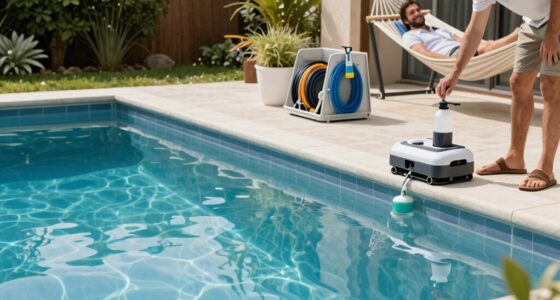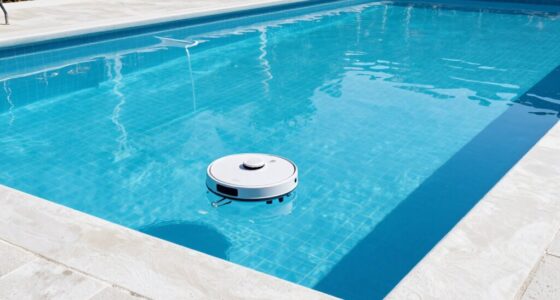

To address cloudy pool water, first check your chemical levels, especially chlorine and pH, and balance them as needed. Make sure your filter runs efficiently and clean or backwash it regularly to remove dirt and algae particles. Brushing walls and floors helps dislodge algae and debris before filtering them out. If problems persist, shocking the pool with high chlorine doses can kill algae spores. Keep these steps in mind to restore clarity and enjoy your pool again.

Get pool and patio gear delivered free with Prime
- Fast, free delivery on millions of items
- Prime Video, Amazon Music and more included
- Member-only deals all year
Key Takeaways
- Regularly test and balance chlorine and pH levels to prevent algae growth and particle buildup.
- Clean or backwash filters frequently to remove trapped debris and maintain proper circulation.
- Shock the pool with high chlorine doses to eliminate algae spores and contaminants.
- Brush pool walls and floors regularly to dislodge algae and dirt, reducing cloudiness.
- Maintain proper chemical balance and consistent filtration to ensure clear, inviting water.
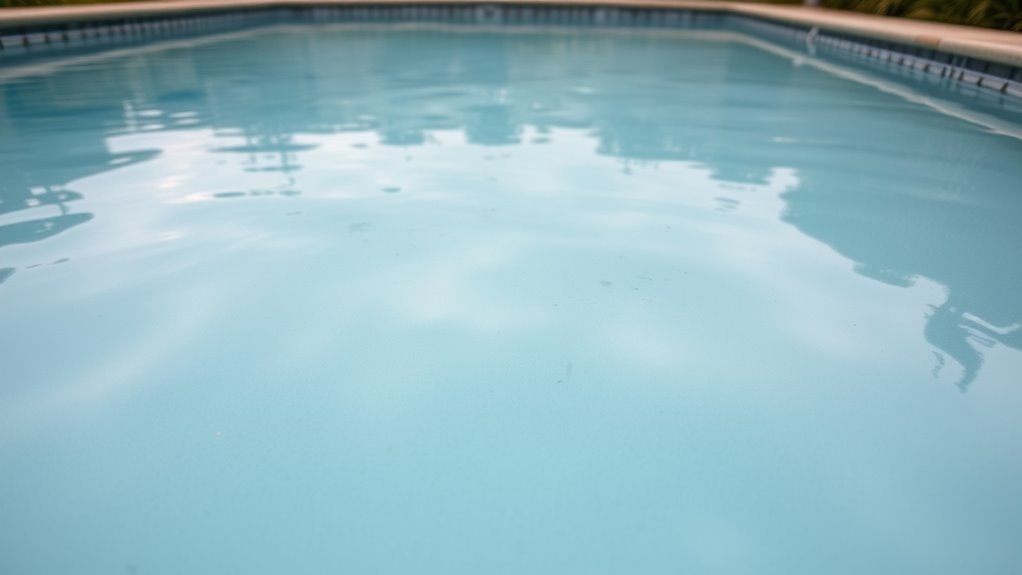
Maintaining clean and healthy pool water can be challenging because various factors can cause water quality issues. One common problem you might face is cloudy water, which can make your pool look uninviting and even unsafe. Often, the presence of pool algae plays a significant role in this cloudiness. Algae thrive when water isn’t properly sanitized, especially if chlorine levels drop or if there’s a lack of circulation. When algae start to grow, they release particles into the water, which scatter light and cause that dull, murky appearance. The good news is that controlling algae is manageable if you stay on top of your pool’s chemical balance and routine maintenance. Regularly testing your chlorine and pH levels helps prevent algae from taking hold in the first place. If you notice algae growth, shocking your pool with a high dose of chlorine can kill it off, followed by brushing the walls and floor to remove stubborn spores.
Another key factor in maintaining clear water is filter maintenance. Your pool’s filter acts as the primary defense against dirt, debris, and algae particles that can cause cloudiness. Over time, filters become clogged with contaminants, which reduces their efficiency and allows particles to circulate freely in your pool water. This not only contributes to cloudiness but also strains your filtration system. To keep your water crystal clear, you need to regularly clean or backwash your filter according to the manufacturer’s instructions. For cartridge filters, rinsing out the filter elements with a hose helps remove trapped debris. Sand and DE filters may need backwashing to flush out accumulated dirt. When your filter is properly maintained, it effectively traps particles, ensuring that your pool water remains transparent and inviting. Additionally, consider replacing filter media when necessary, especially if you notice persistent cloudiness despite proper cleaning. Proper filter maintenance is essential for optimal air quality in your pool environment, preventing contaminants from recirculating.
Beyond algae control and filter upkeep, maintaining proper chemical balance is essential. Imbalanced pH levels can reduce chlorine’s effectiveness, allowing algae to flourish and particles to accumulate. Ensuring your pH stays within the ideal range (around 7.2 to 7.6) helps maintain sanitizer efficiency and prevents cloudiness. Regular brushing of pool walls and floors also dislodges algae and dirt, preventing buildup that can cloud the water. Combining these steps—proper chemical balancing, vigilant algae control, and consistent filter maintenance—gives you the best chance of keeping your pool water clear and sparkling. Remember, staying proactive and attentive to these factors ensures your pool remains a safe, attractive haven for swimming and relaxation.
As an affiliate, we earn on qualifying purchases.
Frequently Asked Questions
Can Cloudy Water Indicate a Dangerous Chemical Imbalance?
Yes, cloudy water can indicate a dangerous chemical imbalance in your pool. When chemicals like chlorine or pH levels are off, water clarity suffers, making the water appear murky. This imbalance can lead to bacteria growth and health risks. To guarantee your pool is safe and clear, regularly test your water and adjust chemicals as needed. Addressing chemical imbalances promptly keeps your water clean and safe for swimming.
How Often Should I Test My Pool Water for Clarity?
You should test your pool water for clarity at least once a week, but if you love swimming in a murky mystery, go wild. Regular water testing keeps your chemical balance in check, preventing cloudiness and ensuring safe, crystal-clear water. Don’t wait until it looks like swamp water—stay proactive. Proper chemical balance depends on consistent testing, so make it a weekly habit to keep your pool inviting and healthy.
Are There Natural Remedies to Clear Cloudy Pool Water?
Yes, you can try natural remedies like herbal clarifiers and natural filtration to clear cloudy pool water. Herbal clarifiers, made from plant extracts, help coagulate particles, making them easier to filter out naturally. Additionally, enhancing natural filtration by adding beneficial enzymes or using biological filters can improve water clarity without harsh chemicals. Regular maintenance, combined with these natural methods, can effectively keep your pool clear and inviting.
How Long Does It Take to Clear up Cloudy Pool Water?
It usually takes 24 to 48 hours to clear cloudy pool water once you optimize your pool filtration and chemical balancing. You should run your filter continuously and regularly check the water’s pH, chlorine, and alkalinity levels. Adjust chemicals as needed, and consider using a clarifier to speed up the process. Consistent maintenance and proper filtration are key to achieving crystal-clear water quickly.
Is Cloudy Pool Water Safe to Swim In?
Think of cloudy pool water like fog on a mirror—it’s hard to see clearly. In most cases, it’s safe to swim if the water looks cloudy but isn’t contaminated, as long as your pool safety measures are in place. However, poor water clarity can hide bacteria or algae, so it’s best to guarantee proper chemical balance before swimming. When in doubt, test the water and consult a pool professional.
automatic pool chemical tester kit
As an affiliate, we earn on qualifying purchases.
As an affiliate, we earn on qualifying purchases.
Conclusion
Think of your pool as a clear mirror reflecting your summer days. When it turns cloudy, it’s like a fog settling over your sunny sky—obscuring the view and dampening the mood. But with the right attention, you can clear away the haze and restore that sparkling clarity. Just as a gardener tends to their plants, you nurture your pool with care and solutions, ensuring it remains a pristine oasis where you can relax and enjoy every splash.
As an affiliate, we earn on qualifying purchases.
As an affiliate, we earn on qualifying purchases.
Columbus Day / Indigenous Peoples' Day Picks
long weekend sales
As an affiliate, we earn on qualifying purchases.