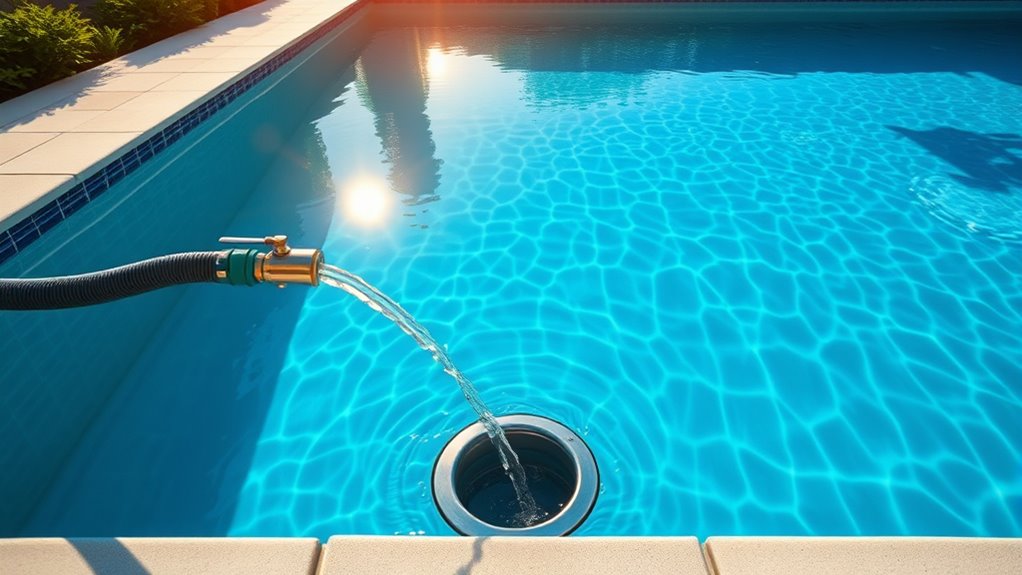

You should drain and refill your pool when water quality declines, chemicals become unbalanced, or routine maintenance is needed. Start by turning off your pump and testing local weather conditions to choose a dry, warm day. Use a sump pump or garden hose to carefully drain the water, then inspect and clean the surfaces. Refill with filtered water, constantly monitoring and adjusting water chemistry. Continuing with proper care helps keep your pool safe, clean, and in great shape.

Get pool and patio gear delivered free with Prime
- Fast, free delivery on millions of items
- Prime Video, Amazon Music and more included
- Member-only deals all year
Key Takeaways
- Drain the pool on a dry, warm day, turning off the pump beforehand to prevent damage.
- Use a sump pump or garden hose to safely remove water, monitoring levels to avoid structural issues.
- Inspect the pool for cracks or damage during draining and clean surfaces thoroughly.
- Refill with filtered or treated water, ensuring proper water chemistry adjustments as the level rises.
- Run the pump continuously for 24 hours after refilling, then regularly test and balance water chemistry.
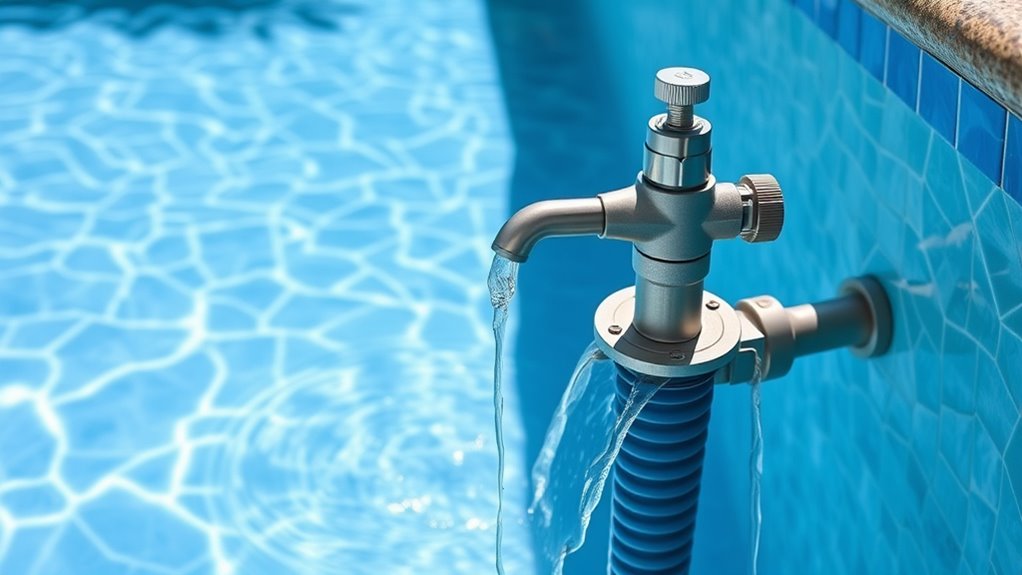
Draining and refilling your pool is a straightforward task that helps maintain water quality and equipment efficiency. Over time, minerals, algae, and other contaminants build up, making the water harder to treat and increasing strain on your pool’s equipment. Regularly refreshing the water ensures your pool remains clean, safe, and enjoyable. Before you start, it’s important to understand the role of water chemistry. Proper water chemistry not only keeps your water balanced but also protects your equipment from corrosion or scale buildup. When you drain and refill, you effectively reset the water chemistry, making it easier to maintain the ideal pH, alkalinity, and sanitizer levels. This reduces the need for excessive chemical adjustments and prolongs the lifespan of your pool equipment.
To begin, check your local regulations and weather forecast. Many areas have restrictions on draining pools, especially during drought conditions or when it might affect local water sources. It’s best to plan to drain your pool on a dry, warm day, so the water evaporates quickly and doesn’t cause runoff issues. Next, turn off your pool’s pump and filtration system. Drain the water using a sump pump or a garden hose attached to a drain spout, depending on your pool type. Be cautious to avoid damaging the pool structure or surrounding landscaping during this process. As the water level drops, inspect the pool for any cracks or issues that may need repair. Once the pool is empty, thoroughly clean the surfaces, removing algae, dirt, and debris that may have accumulated. This cleaning step is essential for effective equipment maintenance and to prevent future issues once you refill. Additionally, understanding water chemistry principles can help you better balance your refill water and prevent problems like scaling or corrosion.
When refilling, pay close attention to the incoming water’s quality. Using a hose filtered or treated with a water conditioner can help prevent mineral and chemical imbalances. As the water level rises, test the water’s chemistry frequently, adjusting chemicals to reach the recommended ranges. Maintaining proper water chemistry during and after refilling is vital for protecting your pool’s equipment from corrosion or scaling. Once filled, run your pump and filtration system continuously for at least 24 hours, and re-test your water to ensure all levels are balanced. Regularly monitor the water chemistry in the following days, making adjustments as necessary to keep everything in check.
As an affiliate, we earn on qualifying purchases.
Frequently Asked Questions
How Often Should I Drain and Refill My Pool?
You should drain and refill your pool every 3 to 5 years or when water quality issues arise, like unbalanced pool water chemistry or persistent algae. Regularly monitoring your water helps determine if draining is necessary. Always prioritize pool draining safety by avoiding complete drainage in freezing weather or unstable ground. Properly balancing chemicals after refilling guarantees your pool stays clean and safe for swimming, extending its lifespan.
Can I Drain My Pool During Winter?
You can drain your pool during winter, but beware of winter hazards that can turn simple tasks into icy headaches. If you plan to remove the pool cover, it’s best to drain only if necessary, avoiding freezing water in pipes or creating a hazard. Use caution and guarantee the pool is properly winterized afterward. Drain carefully, and protect your investment from winter’s icy grip.
What Tools Are Needed for Draining a Pool?
To drain your pool, you’ll need a drainage hose to safely remove the water, and a pool cover to protect the area afterward. Start by attaching the hose to a suitable drainage point, like a sump pump or a hose bib. make certain your pool cover is ready to prevent debris from falling in. Use the drainage hose carefully, and monitor the process to avoid damaging the pool structure or surrounding landscaping.
How to Prevent Algae After Refilling the Pool?
To prevent algae after refilling your pool, focus on algae prevention by maintaining proper chemical balancing. Regularly test and adjust pH, chlorine, and alkalinity levels to keep the water sanitized. Use algaecide as a preventive measure, especially if the pool has been drained and refilled. Keep filtration running consistently, and brush the walls and floor to remove any potential algae spores. Consistent chemical balance is key to a clear, algae-free pool.
Is It Safe to Drain a Saltwater Pool Completely?
Sure, draining a saltwater pool completely seems like a quick fix, but it’s hardly safe or wise. It messes with pool safety and water chemistry, risking damage to your pool’s structure and equipment. Plus, you’ll spend more time balancing chemicals afterward. Instead, consider partial draining or professional advice. Your pool deserves proper care—so think twice before flooding it entirely, or you might end up with more problems than solutions.
As an affiliate, we earn on qualifying purchases.
Conclusion
Remember, giving your pool a gentle refresh when needed keeps it sparkling and inviting. While it might seem like a big task, approaching it with care guarantees everything stays in harmony. Sometimes, a little change can bring new life and brightness, making your swimming experience all the more enjoyable. So, trust the process and embrace these moments as opportunities to nurture your oasis, turning it into a cherished retreat you’ll love for years to come.
As an affiliate, we earn on qualifying purchases.
As an affiliate, we earn on qualifying purchases.
Halloween Picks
halloween
As an affiliate, we earn on qualifying purchases.