To keep your pool water crystal clear, you should check and adjust chemical levels weekly, including pH, alkalinity, and sanitizer. Inspect and clean your filter, skimmer baskets, and pump for debris and proper operation. Brush pool surfaces and walls, skim the surface, and vacuum the bottom to remove dirt and algae. Regular maintenance prevents issues and extends equipment life. Stay ahead with these simple steps, and you’ll discover more tips for a pristine pool if you keep exploring.

Get pool and patio gear delivered free — and shop member deals
- Fast, free delivery on millions of items
- Access to Prime Big Deal Days deals on October 6–7
- Prime Video, Amazon Music and more included
Key Takeaways
- Regularly test and adjust pH, alkalinity, and sanitizer levels to maintain proper chemical balance.
- Inspect and clean filtration system, pump, and skimmer baskets to ensure efficient water circulation.
- Brush pool surfaces and walls, skim debris, and vacuum the pool bottom weekly.
- Check for leaks, wear, and proper equipment operation to prevent costly repairs.
- Consistently remove debris and maintain chemical levels for clear, safe, inviting water.
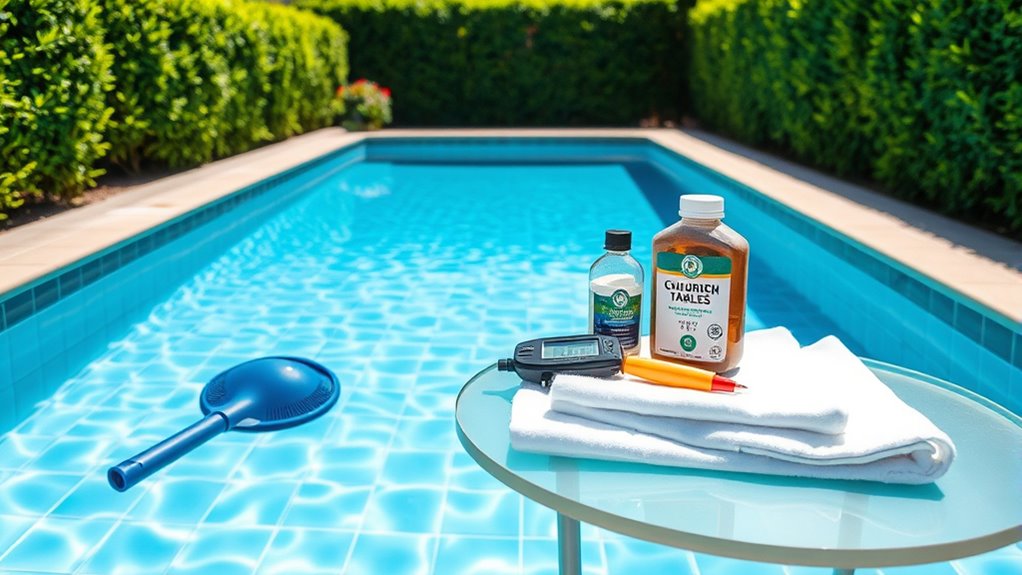
Keeping your pool clean and safe requires regular maintenance, and a weekly checklist makes the process manageable. One of the most important steps is guaranteeing proper chemical balancing. You want your pool water to have the right pH, alkalinity, and sanitizer levels to keep it safe for swimming and prevent algae growth. Use a reliable test kit to check these levels at least once a week. If the pH is too high or low, adjust it with pH increasers or decreasers. Maintaining proper alkalinity helps stabilize pH levels, so don’t overlook that. Additionally, check the chlorine or other sanitizer levels to ensure they’re within the recommended range. If your sanitizer levels are low, add the appropriate chemicals to restore balance. Proper chemical balancing not only keeps your water safe but also extends the lifespan of your pool equipment and minimizes the need for costly repairs. Incorporating equipment inspection into your routine ensures all components operate efficiently and prevents unexpected breakdowns.
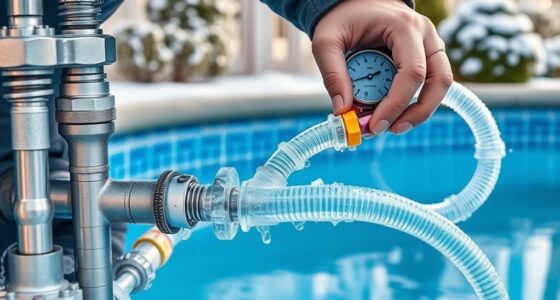
Alongside chemical adjustments, equipment inspection is equally crucial. Regularly examine your pool’s filtration system, pump, and skimmer baskets to guarantee everything functions correctly. Clear out debris from skimmer baskets and the pump strainer to promote good water flow and prevent clogging. Check for any leaks, unusual noises, or signs of wear on your equipment. If you notice any issues, address them promptly to avoid larger problems down the line. Inspect hoses, seals, and fittings for cracks or leaks, and tighten any loose connections. Proper equipment inspection helps maintain ideal circulation and filtration, which are essential for clear, healthy water. It also reduces the likelihood of equipment failure during peak swimming season.
In addition to chemical balancing and equipment inspection, don’t forget to clean your pool’s surface and walls. Brushing off algae and dirt prevents buildup that can affect water quality. Skim the surface for leaves and debris, and vacuums can help remove debris from the bottom. Regular cleaning supports your chemical and equipment efforts, ensuring your pool remains inviting and safe. By sticking to this weekly maintenance routine, you’ll prevent many common issues and save money on repairs or chemical overuse. Consistency is key; your pool will thank you with sparkling, crystal-clear water that’s always ready for a swim. Keeping up with these simple tasks each week guarantees your pool stays inviting, safe, and in excellent condition all season long.
Frequently Asked Questions
How Often Should I Replace My Pool’s Filter Cartridges?
You should replace your filter cartridge every 1 to 2 years, depending on usage and water quality. Follow the recommended replacement schedule from the manufacturer to guarantee your pool’s filter stays effective. Regularly inspect your filter cartridge for signs of wear or clogging, and replace it promptly when needed. Proper maintenance helps keep your pool water crystal clear and extends the life of your filter system.
What’s the Ideal Ph Level for Pool Water?
Think of your pool’s pH level like a fine-tuned instrument—perfectly balanced. The ideal pH for pool water is between 7.2 and 7.6. You should perform pH adjustment if it falls outside this range, using pH increasers or acid neutralization products to correct it. Keeping the pH balanced prevents skin irritation, protects your pool’s equipment, and ensures clear, sparkling water. Regular testing helps maintain this perfect balance.
How Can I Prevent Algae Growth in My Pool?
To prevent algae growth, you should regularly clean your pool and maintain proper chemical treatments. Use algaecide as a preventative measure and guarantee your chlorine levels stay consistent to inhibit algae buildup. Keep the pH balanced and shock the pool weekly, especially after heavy use or rain. By staying proactive with algae prevention and chemical treatments, you’ll keep your pool water clear, safe, and inviting all season long.
What Type of Pool Cover Is Best for Winter?
You should choose a sturdy, durable pool cover designed for winter protection, like a solid safety cover or a winter mesh cover. These options withstand harsh weather conditions and prevent debris from entering your pool. Look for covers made from high-quality materials, ensuring long-lasting durability. Proper installation and secure anchoring are essential for effective winter protection, keeping your pool clean and safe until you’re ready to swim again.
How Do I Balance Chlorine Levels Effectively?
You test your chlorine levels weekly, ensuring the water isn’t too cloudy or too harsh. Using a reliable chlorine testing kit, you check the sanitizer efficiency, aiming for 1-3 ppm. When levels dip, you add sanitizer promptly, watching the water shimmer with clarity. Keeping a steady hand and attentive eye, you balance chlorine effortlessly, transforming your pool into a sparkling oasis where every dip feels invigorating and safe.
Conclusion
Keeping your pool pristine takes just a bit of effort each week. Did you know that neglecting regular maintenance can increase your chemical costs by up to 30%? By sticking to this simple weekly checklist, you’ll enjoy crystal-clear water and save money in the long run. Consistency is key—spend a few minutes now to ensure your pool stays inviting all season. Immerse yourself in maintenance and make every swim a perfect one!
Fall Picks
fall essentials
As an affiliate, we earn on qualifying purchases.