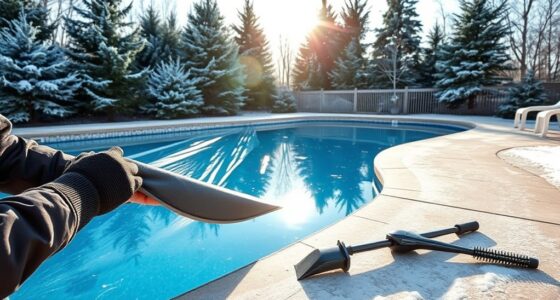

If your pool heater isn’t working, start by checking your solar panels for debris, shading, or discoloration that can reduce efficiency. Make sure your pool cover isn’t damaged or improperly positioned, as it helps retain heat. Inspect your filtration system for blockages and ensure the pump is working well for proper circulation. Verify your thermostat and sensors are accurate and functioning. For persistent issues, explore these tips further to get your heater back in shape.

Get pool and patio gear delivered free with Prime
- Fast, free delivery on millions of items
- Prime Video, Amazon Music and more included
- Member-only deals all year
Key Takeaways
- Check solar panels for debris, shading, or discoloration to ensure optimal heat absorption.
- Inspect and clean pool filters and circulation system to maintain proper water flow and heat distribution.
- Verify thermostat settings and sensor connections for accurate temperature regulation.
- Ensure the pool cover is well-fitted, undamaged, and correctly positioned to retain heat effectively.
- Confirm solar valves are properly set and functioning to optimize water flow through heating panels.
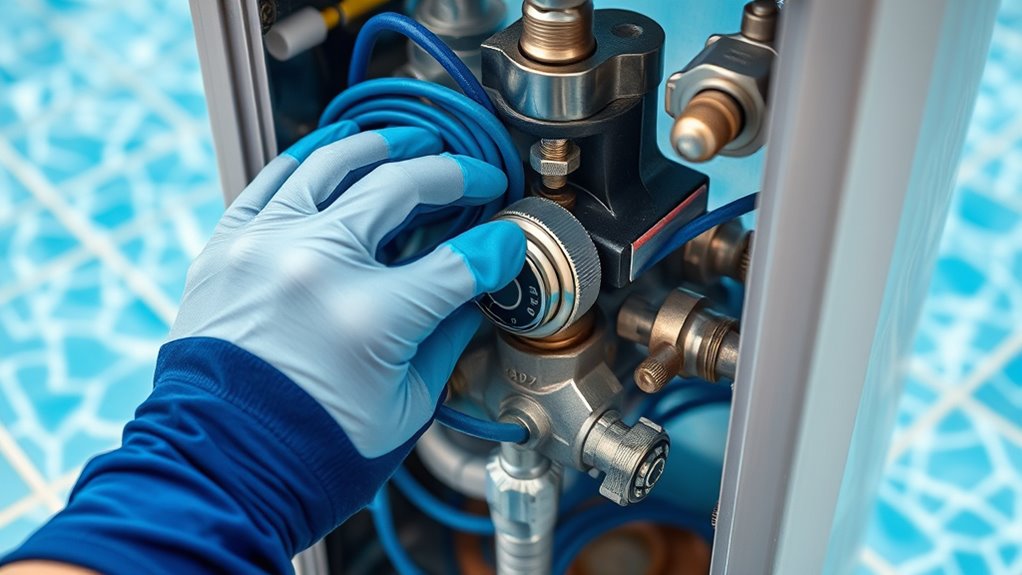
If your pool heater isn’t working properly, troubleshooting the issue quickly can save you time and money. One common cause of heating problems is inadequate solar heating, especially if you’re relying on the sun to warm your pool. Solar heating systems depend on sunlight to generate heat, so if your pool isn’t warming up, check the solar panels for debris or shading. Dirt, leaves, or algae buildup on the panels can substantially reduce their efficiency, preventing your pool from reaching your desired temperature. Also, verify that the solar valves are properly set to allow water to flow through the panels. Sometimes, a simple adjustment can restore proper circulation and improve heating performance. Additionally, ensure that the panels are free of mold or discoloration, which can indicate damage or reduced effectiveness.
Check solar panels for debris or shading to improve your pool’s heating efficiency.
Pool cover impacts play an essential role in maintaining the temperature, especially when troubleshooting heating problems. If you’re using a pool cover, make sure it’s appropriate for your heating setup. A thick, insulated cover can trap heat effectively, but if it’s too heavy or poorly fitted, it might restrict evaporation and heat transfer. Conversely, if you’re not using a cover at all, your pool will lose heat rapidly, making it seem like your heater isn’t working. Check that your cover is in good condition—holes, tears, or improper placement can reduce its effectiveness. Removing or adjusting the cover can often improve heat retention and help you determine whether the heater is functioning properly.
Another common issue relates to the pool’s filtration and circulation system. If the water isn’t circulating well, your heater may turn off or fail to heat the water efficiently. Inspect your pump and filter for clogs or blockages. Dirty filters or broken impellers can hinder water flow, reducing the heater’s ability to warm the pool evenly. Make sure your pump is operating at the right pressure and that the filter is clean. Proper circulation ensures that heated water is distributed throughout the pool, preventing cold spots and helping the heater work as intended. Regularly checking the filtration system can help maintain optimal water flow and heat distribution.
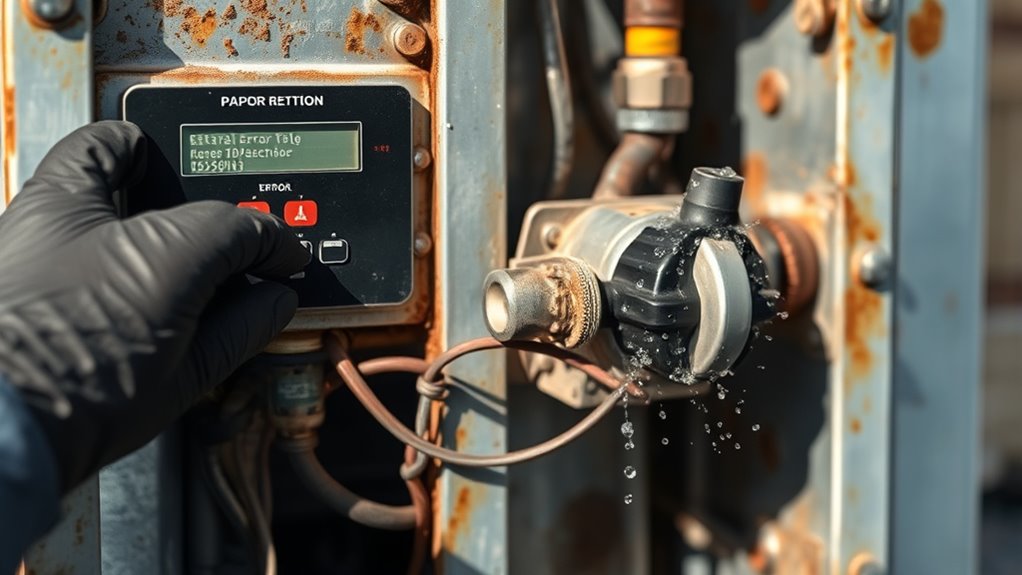
Finally, check the thermostat and control settings. Sometimes, the problem isn’t with the heater itself but with the settings or sensors. Confirm that your thermostat is set to the desired temperature and that any sensors are clean and properly connected. Faulty sensors might send incorrect signals, causing the heater to shut down prematurely. If all else seems fine, but the pool isn’t heating, consider consulting the manufacturer’s troubleshooting guide or calling a professional. Often, simple adjustments related to solar heating efficiency or pool cover impacts can resolve the issue without costly repairs.
As an affiliate, we earn on qualifying purchases.
Frequently Asked Questions
How Often Should I Service My Pool Heater?
You should service your pool heater at least once a year as part of your regular pool heater maintenance. A proper servicing schedule helps prevent issues, extends the heater’s lifespan, and guarantees efficient operation. During servicing, you’ll check for corrosion, clean filters, and inspect for leaks. If you use your pool frequently or experience problems, consider more frequent maintenance to keep everything running smoothly and avoid costly repairs down the line.
Can I Repair My Pool Heater Myself?
You can attempt DIY fixes if you have experience and understand your pool heater’s components, but for safety and effective repairs, it’s best to call in professional repairs. Handling electrical parts or gas connections can be risky, so if you’re unsure, leave it to the experts. Regular maintenance can prevent issues, but complex problems should always be addressed by qualified technicians to guarantee your heater runs efficiently and safely.
What Safety Precautions Are Necessary During Troubleshooting?
You should prioritize electrical safety and always disconnect power before troubleshooting your pool heater. Wear personal protective equipment like insulated gloves and eye protection to prevent shocks and injuries. Keep the area dry and avoid working near water sources. Use insulated tools and follow manufacturer instructions carefully. If you’re unsure or uncomfortable, it’s best to consult a professional to guarantee safety and proper handling of electrical components.
How Do I Determine if My Heater Needs Replacing?
You can determine if your pool heater needs replacing by checking its lifespan, which is typically 8-12 years. Look for signs of replacement like frequent breakdowns, reduced heating efficiency, strange noises, or corrosion. If your heater is older and these issues persist despite repairs, it’s time to contemplate a new unit. Trust your judgment and consult a professional if you’re unsure, ensuring safe and efficient pool heating.
Are There Energy-Efficient Pool Heater Options?
Yes, you can choose energy-efficient pool heaters like solar heating systems and heat pumps. Solar heaters use sunlight to warm your pool, reducing energy costs and environmental impact. Heat pumps extract heat from the air, providing efficient heating even in cooler weather. Both options save energy compared to traditional gas heaters, so you’ll enjoy a warmer pool while lowering your utility bills. Consider your climate and pool size to select the best fit.
As an affiliate, we earn on qualifying purchases.
Conclusion
So, you’ve checked the basics and the heater still isn’t cooperating. The next step could reveal hidden issues or tricky malfunctions. Will you discover a simple fix or face a more complex problem? Don’t give up now—sometimes, the solution is just around the corner. Keep troubleshooting, stay patient, and stay tuned. Your pool’s perfect temperature might be closer than you think, but only if you keep pushing forward. The answer could be waiting just beneath the surface.
pool filter and pump cleaning kit
As an affiliate, we earn on qualifying purchases.
As an affiliate, we earn on qualifying purchases.
pool thermostat sensor replacement
As an affiliate, we earn on qualifying purchases.
As an affiliate, we earn on qualifying purchases.
Fall Picks
fall essentials
As an affiliate, we earn on qualifying purchases.