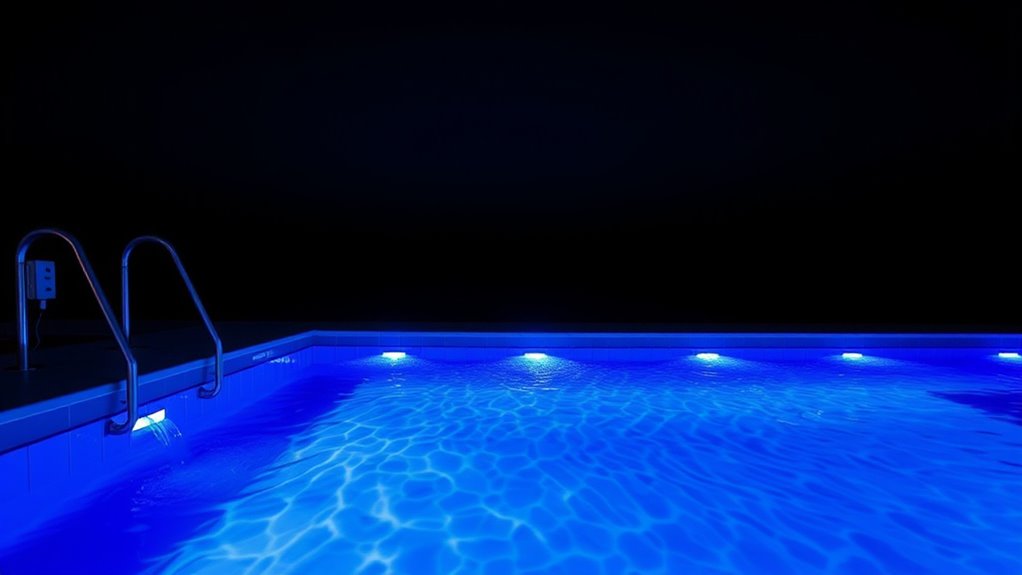

To maintain your pool lighting system, regularly clean your LED bulbs with a soft cloth and check for corrosion or damage. Inspect wiring for wear, fraying, or loose connections, and turn off power before working on electrical components. Test the lights frequently to identify flickering or dimming and address issues promptly to prevent hazards. Establish a consistent maintenance schedule to keep your pool lights shining brightly and safely, and discover more tips on longevity and safety along the way.
Key Takeaways
- Regularly clean LED bulbs with a soft cloth and mild detergent to prevent dirt buildup and maintain brightness.
- Inspect wiring for wear, corrosion, or damage, and ensure connections are secure before testing system performance.
- Turn off power before inspecting or repairing electrical components to prevent shocks and ensure safety.
- Schedule routine maintenance checks to identify flickering, dimming, or wiring issues early and prevent system failures.
- Replace worn or faulty LEDs promptly to extend the lifespan of pool lighting and ensure consistent illumination.
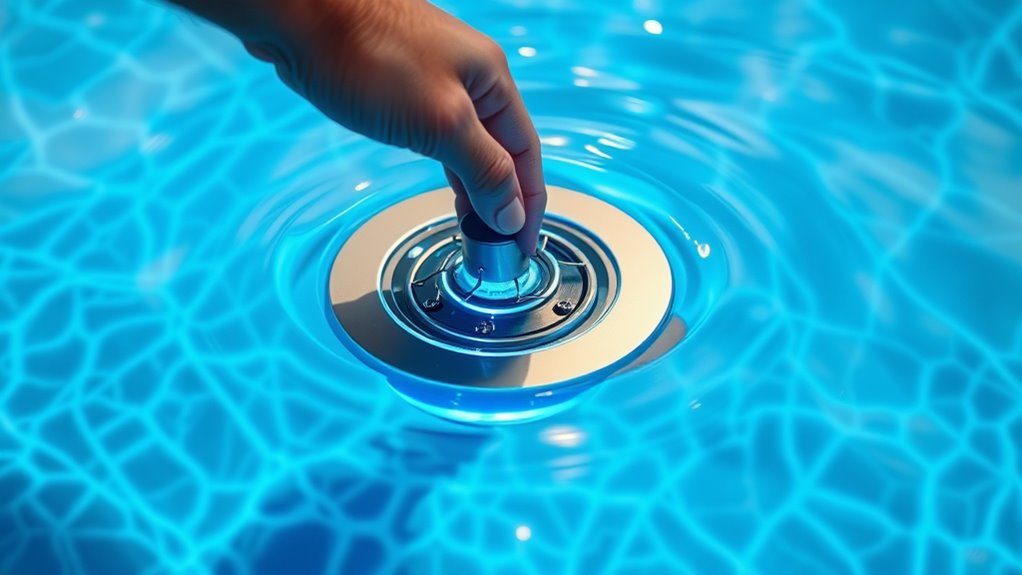
Have you ever wondered how to transform your pool into a stunning nighttime oasis? The secret lies in maintaining your pool lighting system properly. When it’s done right, your pool can become a captivating centerpiece after dark, inviting relaxation and enjoyment. One of the most important aspects of this maintenance involves caring for your LED bulbs and ensuring that your wiring stays in top condition. Regular attention to these elements guarantees your lights shine brightly and safely, extending their lifespan and enhancing your pool’s ambiance.
LED bulb maintenance is straightforward but essential. Over time, even the most durable LEDs can accumulate dirt, algae, or mineral deposits that diminish their brightness. To keep your lights vibrant, you should periodically clean the LED bulbs with a soft cloth and mild detergent, avoiding abrasive materials that could scratch the lens. Inspect the bulbs for any signs of corrosion or damage, especially around the bases, because moisture can cause electrical issues. Replacing worn or faulty LEDs promptly ensures your pool remains beautifully illuminated and reduces the risk of electrical failures. Remember, LED bulbs are energy-efficient and long-lasting, but they still require routine upkeep to perform at their best.
Regularly clean and inspect LED bulbs to ensure bright, safe, and efficient pool lighting.
Wiring inspection is equally critical in maintaining a safe and functional lighting system. Over time, wiring can degrade due to exposure to water, sunlight, and temperature fluctuations. Regularly check all accessible wiring for signs of wear, fraying, or corrosion. If you notice any damaged insulation or loose connections, it’s essential to address these issues immediately. Proper wiring not only ensures your lights work reliably but also prevents potential electrical hazards. When inspecting wiring, turn off the power supply to avoid shocks and use a flashlight to see into tight spaces. If you aren’t comfortable handling electrical components, hiring a professional electrician is always the safest choice. They can perform thorough wiring inspections, identify hidden issues, and replace faulty wiring or connectors as needed. Using proper maintenance techniques can significantly extend the lifespan of your pool lighting system.
In addition to these tasks, consider testing your pool’s lighting system periodically by turning on all lights and observing their performance. Look for flickering, dimming, or uneven lighting, which can indicate underlying problems. Maintaining a regular schedule for LED bulb cleaning and wiring inspections keeps your pool lighting system operating smoothly and safely. When you stay proactive, you’ll enjoy a stunning, well-lit pool every night without the worry of unexpected failures or hazards. Ultimately, consistent maintenance is your best tool for creating a mesmerizing nighttime retreat that’s both beautiful and secure.

HYMIOR LED Pool Light for Inground Pool 120V 65W PRO, White Light 6500K with 6500lm High Brightness, Replace 300-800W Halogen Light
Energy-Efficient Performance: The HYMIOR 120V 65W PRO LED pool light bulb offers effortless upgrades, designed as a direct…
As an affiliate, we earn on qualifying purchases.
As an affiliate, we earn on qualifying purchases.
Frequently Asked Questions
How Often Should Pool Lights Be Inspected for Safety?
You should inspect your pool lights for safety at least once a month. Check the pool light timers to make sure they’re functioning correctly and look for any signs of electrical safety issues, like flickering or corrosion. Regular inspections help prevent electrical hazards and keep your pool area safe. If you notice any problems, address them promptly to avoid potential accidents or damage. Proper maintenance ensures your pool lights stay safe and reliable.
Can Pool Lighting Systems Be Installed Underwater?
Imagine you’re stepping into the future—yes, underwater! You can install pool lighting systems underwater using waterproof fixtures designed for submersion. These fixtures are specifically made to withstand water pressure and prevent short circuits. Underwater wiring connects these lights safely, ensuring durability and safety. So, go ahead and enhance your pool’s ambiance by installing underwater lighting that’s built to perform beneath the surface, creating a stunning aquatic glow.
What Are the Energy-Efficient Options for Pool Lighting?
You should consider LED upgrades and solar options for energy-efficient pool lighting. LED lights use less energy and last longer than traditional bulbs, saving you money over time. Solar-powered lights are eco-friendly, require no wiring, and rely on sunlight to illuminate your pool at night. Both options reduce your energy consumption, lower utility bills, and help you enjoy a beautifully lit pool while being environmentally conscious.
How Do I Troubleshoot Flickering Pool Lights?
Did you know flickering pool lights are often caused by wiring issues or worn-out bulbs? To troubleshoot, first check if the bulb needs replacement—flickering can signal it’s nearing the end of its lifespan. If the bulb’s fine, inspect wiring connections for corrosion or loose wires. Turn off the power before handling any wiring, and consider consulting an electrician if you’re unsure, ensuring safety and proper repairs.
Are There Remote Controls Available for Pool Lighting Systems?
Yes, remote controls are available for pool lighting systems. You should check the remote control compatibility with your current lighting setup before purchasing. Many modern systems support remote operation, making it easy to change colors or turn lights on and off from a distance. If you’re considering lighting system upgrades, look for options that include remote controls for added convenience and enhanced control over your pool ambiance.

31-1/2 inch Pool Cover Tool, Extra Long Pool Cover Installation Tool, Swimming Pool Safety Cover Installation and Removal Rod Tool, Suitable for All Standard Pool Cover Anchors
【Wide Compatibility】Our pool cover installation tool are suitable for most major brand pool safety covers anchors
As an affiliate, we earn on qualifying purchases.
As an affiliate, we earn on qualifying purchases.
Conclusion
Maintaining your pool lighting system isn’t just about safety—it’s about creating a magical oasis under the stars. Think of it as tending to a shining jewel, ensuring every glow remains brilliant and inviting. With regular checks and proper care, you keep your pool enchanting and safe for every swim. Don’t let darkness dull your paradise—embrace the sparkle and keep your pool lighting system in top shape. After all, isn’t a lit-up pool worth the effort?

LOXP Electric Air Duster – 150000RPM Powerful Compressed Air Duster with LED Light, 3 Gears, 7500mAh Battery & Fast Charging, Rechargeable Air Blower for Computer, Keyboard, PC, Car, House & Outdoor
✅150,000 RPM Brushless Motor: This electric air duster delivers 10x the power of traditional canned air with consistent…
As an affiliate, we earn on qualifying purchases.
As an affiliate, we earn on qualifying purchases.

DESIGNERS FOUNTAIN Preston Outdoor Light Fixture, 8 Inch Exterior Wall Lantern Sconce for Front Door, Patio and Porch, Black, 1161-BK
BRIGHTEN YOUR OUTDOOR AREAS: The clear glass works with the sharp lines and rounded back plate to provide…
As an affiliate, we earn on qualifying purchases.
As an affiliate, we earn on qualifying purchases.