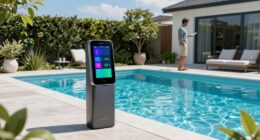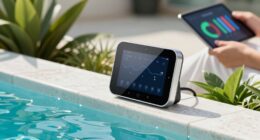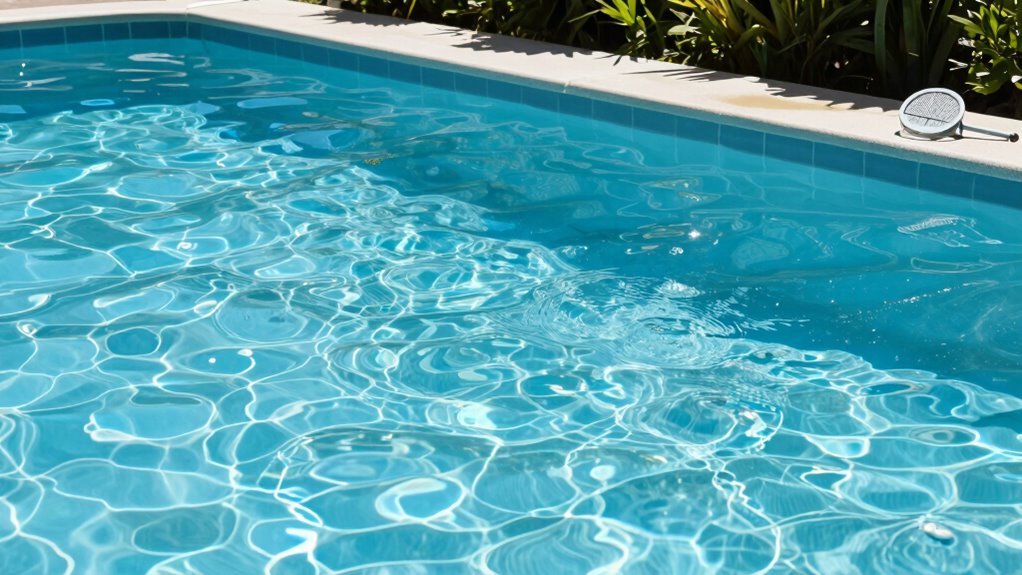
Before panicking over water loss, understand that some evaporation is normal, especially on hot, windy days. Using a pool cover can minimize this loss, but drops in water levels might also indicate leaks or chemical imbalances. Signs like wet spots or cloudy water suggest issues needing attention. Monitoring weather and water chemistry helps you tell if the loss is usual or a problem. Keep going to discover more ways to keep your pool in top shape.
Key Takeaways
- Normal evaporation occurs naturally, especially on hot, windy days, and isn’t usually a cause for concern.
- Sudden or rapid water level drops may indicate leaks or equipment issues needing inspection.
- Using a pool cover reduces evaporation and debris, helping conserve water and maintain chemistry.
- Regularly testing and balancing water chemistry prevents excessive evaporation and cloudiness.
- Observing weather patterns and signs like wet spots or cracks helps distinguish normal loss from problems.
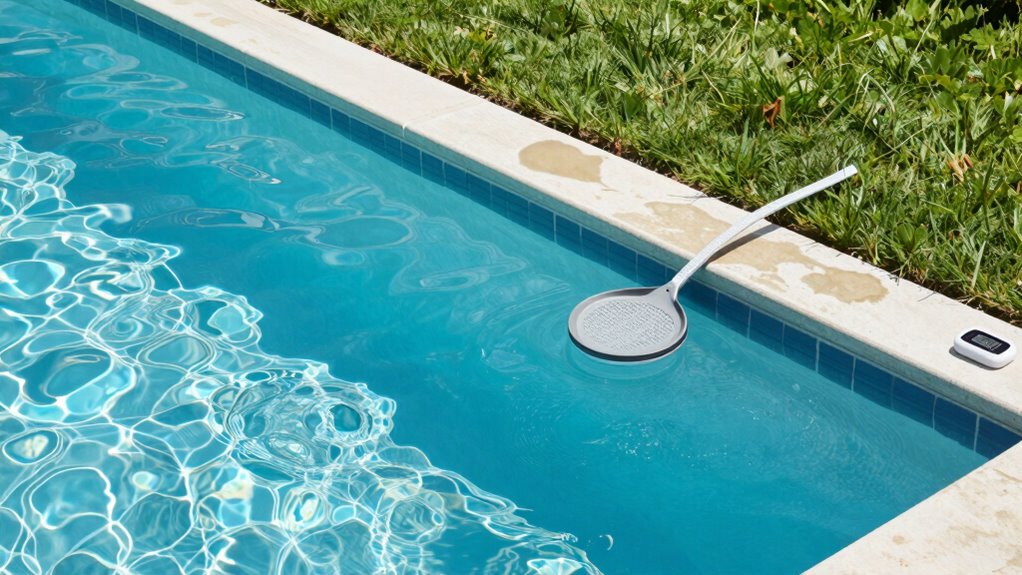
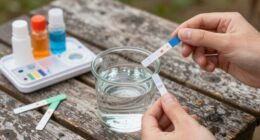
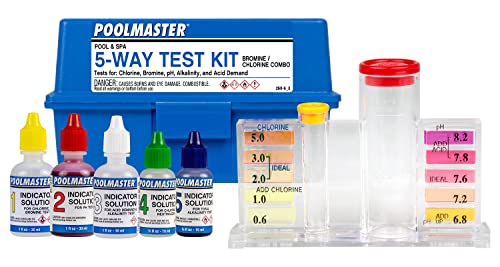
Have you ever noticed your pool losing water unexpectedly? It can be alarming, but before you panic, it’s important to understand what might be causing it. Sometimes, water loss is normal, and other times, it signals an issue that needs attention. One of the simplest ways to manage water loss and protect your pool is by using a pool cover. The benefits of a pool cover extend beyond just keeping debris out; it also helps reduce evaporation, which is a common cause of water loss. When you cover your pool, you minimize exposure to wind and sun, which can accelerate evaporation, especially on hot, windy days. This not only conserves water but also helps maintain better pool water chemistry, making it easier to keep your pool balanced and clean. Regularly checking and maintaining your pool’s water chemistry can also prevent issues like algae growth or equipment damage caused by imbalances. Understanding pool water chemistry is crucial in diagnosing water loss. If you notice your water level dropping rapidly, it’s a good idea to check the water chemistry. Imbalanced water can lead to more rapid evaporation or even cause issues like algae growth or equipment damage. Maintaining proper pH, alkalinity, and calcium hardness helps prevent water from evaporating too quickly and keeps your pool in the best condition. If you notice your water is cloudy or developing a film, it might be a sign of chemical imbalance or contamination, which can also contribute to unexplained water loss. Regular testing and adjusting your pool chemicals ensure your water remains balanced and less prone to loss through evaporation or other factors. Additionally, pool maintenance routines like cleaning filters and inspecting equipment can help identify potential sources of water loss early on.
Another aspect to think about is that some water loss is perfectly normal and expected, especially during hot weather or windy days. Even with a cover, some evaporation occurs, but it’s usually minimal and manageable. However, if your pool’s water level drops considerably more than usual, it could indicate a leak. Common signs include wet spots around the pool, a drop in water level despite frequent refilling, or visible cracks in the pool structure. Detecting leaks early can save you money and prevent further damage. Using dye tests or hiring a professional can help pinpoint leaks quickly, so you can address them before they worsen. It’s also helpful to understand the effects of weather conditions on water loss to better anticipate changes and take preventive steps. Being aware of normal versus abnormal water loss can help you determine whether you need professional assistance or simple adjustments to your pool maintenance routine.

LO-CHLOR Aqua Blanket – The Liquid Solar Blanket for Pools and Energy Saving Liquid Pool Cover, Non-Toxic and Safe Pool Evaporation Prevention, Greatly Reduces Heat and Chemical Loss AB009-12 (32 Oz)
Hassle-Free: Just one small weekly dose of this liquid pool cover offers an invisible solar pill for pool…
As an affiliate, we earn on qualifying purchases.
As an affiliate, we earn on qualifying purchases.
Frequently Asked Questions
How Do I Prevent Evaporation From My Pool?
To prevent evaporation from your pool, you can use a pool cover when it’s not in use, which reduces water loss and helps maintain chemical balance. Keep the water level consistent by regularly replenishing water as needed. Additionally, maintaining proper chemical balance minimizes evaporation caused by imbalance. Using a solar blanket not only conserves water but also retains heat, making your swimming experience more enjoyable while protecting your investment.
Can Plants Around the Pool Cause Water Loss?
Surprisingly, your lush poolside plants can contribute to water loss through pool plant interference and surrounding vegetation effects. While they provide beauty and shade, they also increase evaporation, especially if they block wind or shade the pool surface. So, instead of marveling at your greenery, consider trimming back some plants. This way, you reduce unnecessary water loss and keep your pool water levels more stable, without sacrificing your garden’s charm.
Does Water Loss Indicate a Leak or Just Evaporation?
Water loss in your pool usually indicates evaporation, especially if levels drop gradually and consistently, which is normal with proper pool maintenance. However, a sudden or significant drop might suggest a leak. To conserve water, regularly check for leaks and maintain proper chemical balance. Understanding the difference helps you avoid unnecessary repairs and promotes water conservation, ensuring your pool stays enjoyable without wasting resources.
How Often Should I Check My Pool’s Water Level?
You should check your pool’s water level weekly to catch any leaks early and maintain proper water chemistry. Regular checks help you identify drops that aren’t just evaporation, which also affects pool chemicals and water filtration efficiency. If you notice a significant decline, inspect for leaks or other issues. Keeping an eye on water levels guarantees your pool stays balanced, clean, and safe for swimming.
Are There Specific Seasons When Water Loss Is Higher?
Yes, water loss tends to be higher during hot, dry seasons like summer because of increased evaporation. During these times, you should pay extra attention to your pool maintenance and regularly check water levels. To conserve water, consider using a pool cover when not in use, which reduces evaporation. Staying proactive helps prevent unnecessary water loss and supports your water conservation efforts, keeping your pool balanced and efficient.
B00107039U
As an affiliate, we earn on qualifying purchases.
As an affiliate, we earn on qualifying purchases.
Conclusion
So, before you panic over a drop in your pool’s water level, remember it’s often just part of normal evaporation or minor leaks. Think of it like a sponge slowly releasing water—it’s natural and manageable. Regular checks and simple fixes can keep your pool in top shape. Don’t let water loss turn your relaxing oasis into a source of stress. Stay calm, stay informed, and enjoy your pool without worry, just like a calm lake after a gentle rain.

Wireless Automatic Pool Water Level Control System with Three Modes and 500ft Range Ideal for Pools Spas and Water Tanks
AUTOMATIC WATER REFILL FUNCTION: The water level sensor monitors the water level and triggers the valve controller to…
As an affiliate, we earn on qualifying purchases.
As an affiliate, we earn on qualifying purchases.

Pool Leak Detection Dye Kit – with 2 Precision Applicators – 75+ Tests – Superior Long Lasting UV Pool Dye Easily Locates Leaks – for All Pool, Spa, & Hot Tub Types – 8 OZ (Fluorescent Yellow)
Easily Identify & Locate Leaks – 75+ tests per kit! This pool leak detection kit delivers a High-Contrast…
As an affiliate, we earn on qualifying purchases.
As an affiliate, we earn on qualifying purchases.