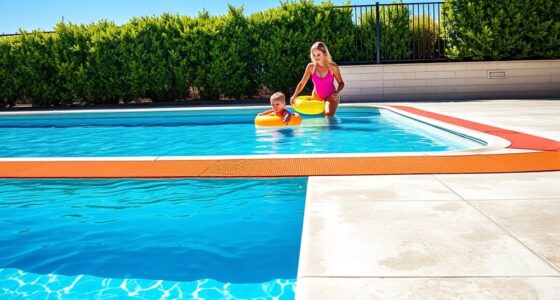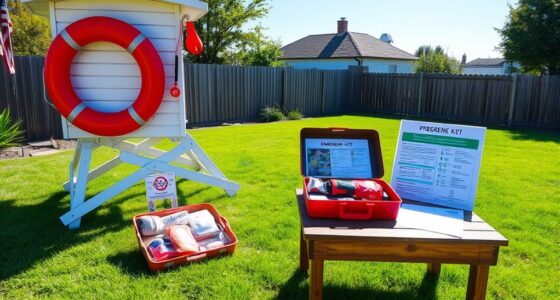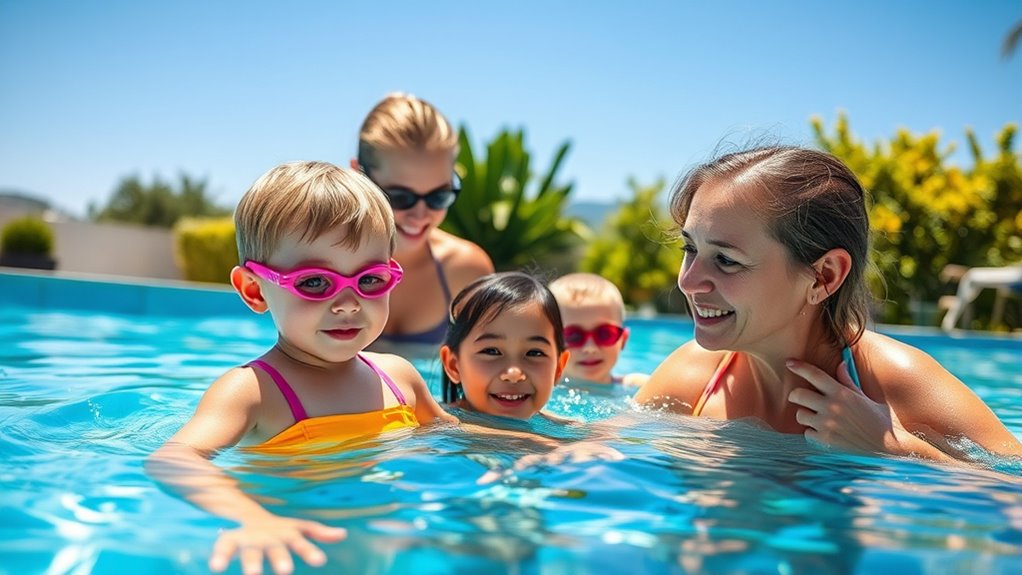

To prevent drownings, always actively supervise children near water, avoiding distractions like phones, and assign a dedicated water watcher. Enroll in swimming lessons to build essential water skills and boost confidence. Use properly fitted safety gear, such as life jackets, whenever necessary. Combining vigilant supervision with formal swim instruction creates a strong safety plan. Keep these tips in mind to protect loved ones; discovering more ways to stay safe is just ahead.
Key Takeaways
- Always maintain active, attentive supervision when children are near water; avoid distractions like phones or conversations.
- Designate a dedicated water watcher responsible for constant supervision during water activities.
- Enroll children in swimming lessons to develop essential water skills and confidence early on.
- Use properly fitted, Coast Guard-approved life jackets and flotation devices for added safety.
- Implement a comprehensive safety plan combining supervision, swim lessons, and safety equipment for maximum drowning prevention.
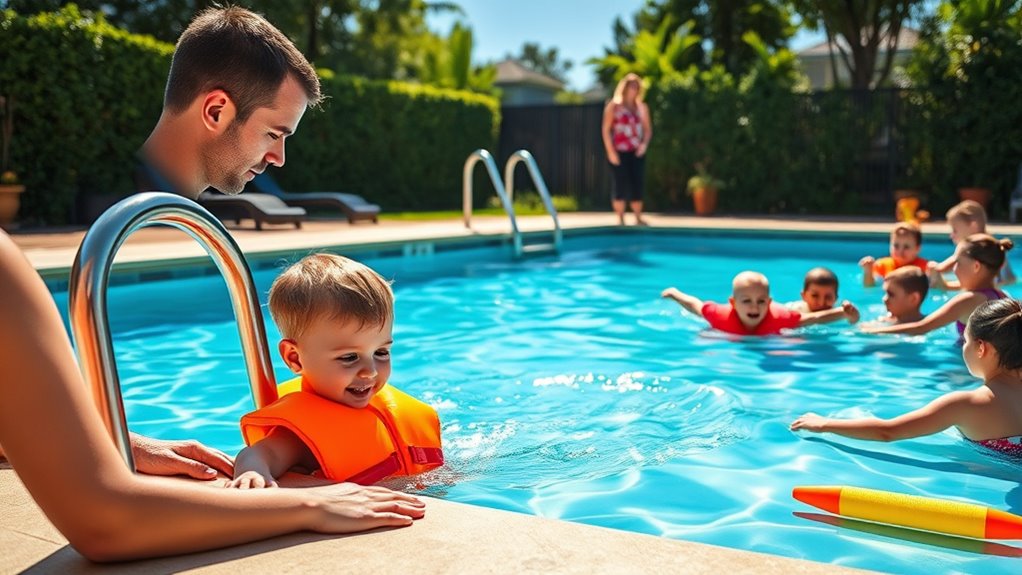
Did you know that most drownings are preventable? It’s true, and one of the most effective ways to protect yourself and your loved ones is by practicing proper water safety. Whether you’re at a pool, lake, or beach, staying vigilant is essential. Always keep an eye on children near water, even if they know how to swim. Supervision isn’t just about watching; it’s about staying attentive, avoiding distractions, and being ready to react if needed. Designate a responsible adult as a water watcher when kids are in the water, and never assume someone else will keep an eye out. It’s a simple step that can make a huge difference.
Most drownings are preventable; stay vigilant, supervise children, and be prepared to react around water.
In addition to supervision, investing in the right swim equipment can substantially reduce drowning risks. Life jackets and personal flotation devices are vital for non-swimmers or those still developing their swimming skills. Make sure these devices fit properly and are Coast Guard-approved. Using appropriate swim equipment not only provides extra safety but also boosts confidence in the water. For children, always choose well-fitting gear to prevent slips or gaps that could lead to accidents. For adults, especially weak or inexperienced swimmers, wearing a life jacket adds an extra layer of security.
Learning to swim is another essential component of drowning prevention. Enrolling in swimming lessons helps you and your family develop vital water skills, giving you the confidence needed to navigate water safely. Professional instruction teaches proper techniques, water awareness, and safety protocols that you might not learn on your own. It’s recommended that children start swimming lessons early, ideally before they turn five, but even older kids and adults benefit from formal training. Regular practice reinforces skills and helps prevent panic in unexpected situations. Additionally, understanding essential oils for water-related health issues can support relaxation and comfort during water activities, enhancing overall safety.
Supervision and swimming lessons go hand-in-hand. While supervision keeps immediate dangers at bay, swimming lessons empower you to handle water confidently. This dual approach creates a safer environment and reduces the chances of accidents. Remember, even the strongest swimmers need supervision around water—overconfidence can be dangerous. Combine vigilant supervision, proper use of swim equipment, and ongoing swimming education to create a complete safety plan. By doing so, you’re actively taking steps to prevent tragedies and ensure everyone enjoys water activities responsibly. Prevention is always better than dealing with the aftermath, so prioritize these safety measures every time you or your family are near water.
Frequently Asked Questions
How Can I Identify if a Child Is at Risk of Drowning?
You can identify if a child is at risk of drowning by monitoring their water safety awareness and recognizing risk factors like lack of supervision, inability to swim, or unfamiliarity with water environments. Watch for behaviors such as avoiding water or panic when submerged. Children with certain health conditions or who are unsupervised near water also have higher risks. Staying attentive and understanding these signs helps you keep your child safe.
What Are the Best Practices for Supervising Children Around Water?
Think of water safety as a dance—you lead with vigilance. Always keep a close eye on children around water, never leave them unattended, and stay within arm’s reach. Use designated safety zones and guarantee proper supervision, especially in pools or open water. Child supervision means actively watching and avoiding distractions like phones. By staying alert and consistent, you create a safer environment where children can enjoy water responsibly.
When Should Children Start Swimming Lessons?
You should start swimming lessons as early as age one to promote water safety and support childhood development. Early lessons help children become comfortable in the water, build confidence, and learn basic skills. Look for programs designed for young children, and guarantee lessons are age-appropriate and led by qualified instructors. Starting early instills lifelong water safety habits, making swimming a safe and enjoyable activity for your child.
Are There Specific Swimming Techniques That Prevent Drowning?
Think of swimming techniques as your child’s armor against drowning. Mastering breath control, like a steady heartbeat, keeps them calm and prepared. Floating techniques act as a safety raft, providing stability and confidence in the water. These specific skills help children stay afloat and breathe easily, reducing risks. Encourage consistent practice of breath control and floating so they can navigate water safely and confidently, turning potential danger into a manageable challenge.
How Can I Ensure Safety During Swimming Lessons?
You can guarantee safety during swimming lessons by actively supervising your child and staying attentive at all times. Make sure they wear appropriate flotation devices and follow water safety guidelines. Verify that the instructor is certified and follows emergency preparedness protocols. Stay within arm’s reach, especially for beginners, and learn basic rescue techniques. Being vigilant and prepared helps prevent accidents and keeps your child safe while enjoying the water.
Conclusion
Remember, keeping a close eye on kids around water and ensuring they learn to swim can make all the difference. Don’t let safety fall by the wayside—it’s better to be safe than sorry. By staying vigilant and encouraging swimming lessons, you’re giving your children a fighting chance should they find themselves in water. Think of it as planting seeds for a safer future; the effort today pays off tomorrow. Stay alert and prioritize their safety at all times.