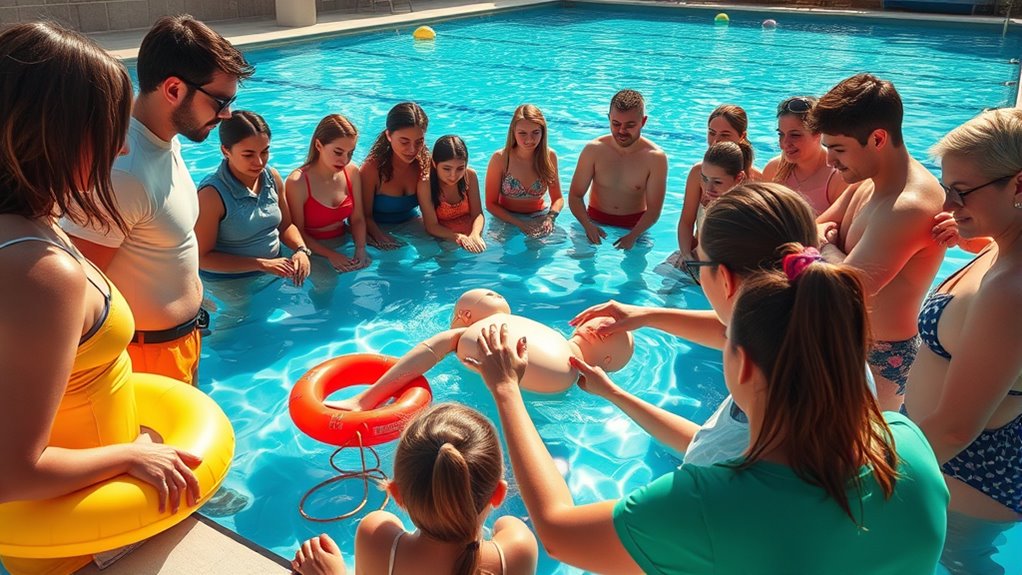

To be prepared for pool emergencies, you need to understand basic first aid and CPR techniques. Always prioritize scene safety and recognize signs of distress, like unresponsiveness or difficulty breathing. Use reaching or throwing rescue tools rather than jumping in headfirst. If someone isn’t breathing, start chest compressions at 100-120 per minute and give rescue breaths if trained. Staying calm and confident helps save lives—continue ahead to learn essential skills for effective emergency response.
Key Takeaways
- Recognize signs of distress and unresponsiveness in pool emergencies to initiate prompt action.
- Prioritize scene safety and use appropriate rescue techniques like reaching or throwing aids before entering the water.
- Perform CPR immediately if the victim is unresponsive and not breathing, following the correct compression and breathing ratios.
- Use hands-only CPR if untrained in rescue breaths, ensuring continuous chest compressions until help arrives.
- Maintain scene control, keep the victim warm, and ensure emergency services are contacted promptly for effective rescue.
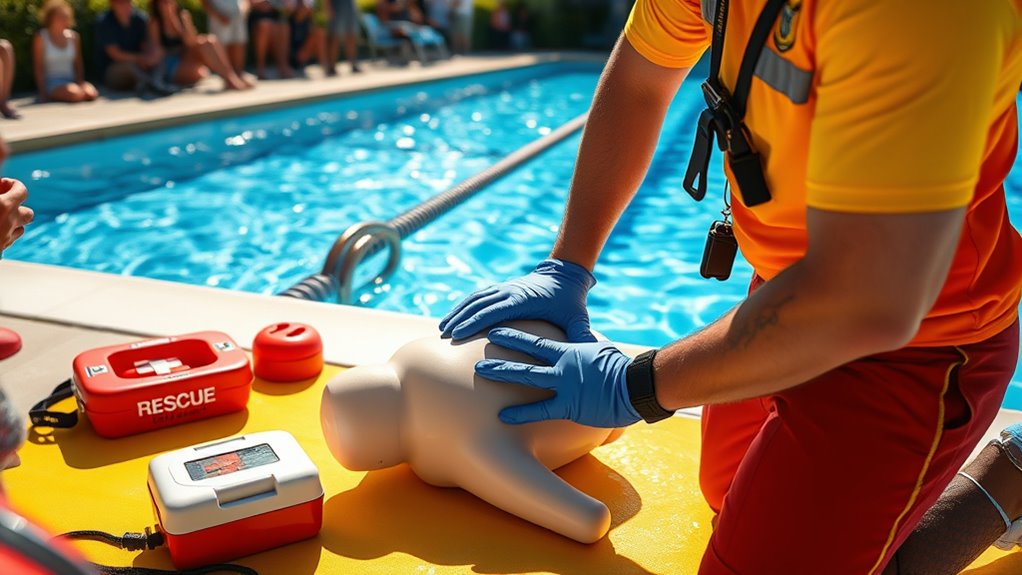
Accidents in and around pools can happen unexpectedly, making quick and effective first aid and CPR essential. Whether you’re supervising children, hosting a pool party, or simply enjoying a swim, knowing how to respond promptly can mean the difference between life and tragedy. The foundation of effective emergency response is understanding water safety and mastering rescue techniques. These skills empower you to act confidently when seconds count, ensuring you can provide the necessary aid until professional help arrives.
Water safety is the cornerstone of preventing accidents, but it also involves knowing what to do when incidents occur. Recognizing the signs of distress, such as a person struggling to breathe or appearing unresponsive, is critical. When you spot someone in trouble, your first step is to assess the situation carefully and ensure your own safety before attempting a rescue. Using appropriate rescue techniques, like reaching with a pole or throwing a flotation device rather than jumping in blindly, minimizes risk to both you and the victim. Proper rescue techniques are designed to support the person without causing further injury or exhaustion.
Recognize distress signs, assess safety, and use proper rescue techniques to minimize risk and support the victim effectively.
Once you’ve successfully reached the individual, check their responsiveness. If they’re unresponsive and not breathing, immediate CPR is indispensable. Start with chest compressions, pressing hard and fast at a rate of about 100 to 120 compressions per minute, allowing the chest to fully recoil between pushes. If you’re trained in rescue breaths, deliver two breaths after every 30 compressions to supply oxygen to the lungs. If not, continuous hands-only CPR is still highly effective in maintaining blood circulation until emergency services arrive. Remember, prompt action is essential—delays can drastically reduce survival chances.
In addition to performing CPR, controlling the scene to prevent further accidents is fundamental. Clear the area of bystanders if necessary and ensure that professional responders are on their way. Keep the victim warm and comfortable if possible, but avoid moving them unless absolutely necessary, especially if a spinal injury is suspected. Your quick response, combined with sound rescue techniques and a clear understanding of water safety principles, maximizes the chances of a positive outcome. Knowing proper rescue techniques is crucial for effective intervention and ensuring safety for both the rescuer and the victim.
Practicing these skills regularly and staying informed about pool safety guidelines prepares you to act confidently during emergencies. The right knowledge and quick reactions are your best tools for safeguarding lives around pools. Remember, being prepared isn’t just about knowing what to do—it’s about doing it swiftly, correctly, and with confidence when every second counts.
Frequently Asked Questions
How Often Should CPR Training Be Refreshed?
You should refresh your CPR certification and First Aid every two years to stay current with skills and guidelines. Regular training ensures you’re prepared to respond effectively in emergencies. Even if you haven’t used your skills recently, taking a refresher course helps you maintain confidence and competence. Stay proactive by scheduling your CPR and First Aid refreshers on a routine basis, so you’re always ready to act decisively when needed.
What Equipment Is Essential for Pool First Aid?
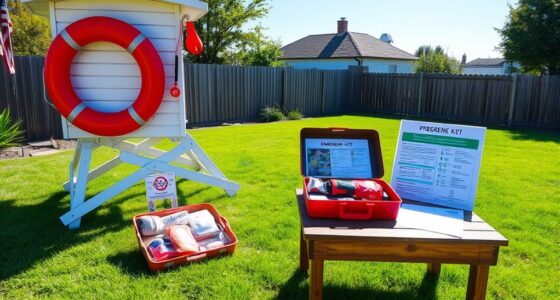
You need essential lifesaving equipment like a rescue hook, life rings, and a first aid kit with emergency supplies. An emergency kit should include gloves, a CPR mask, and splints. These tools help you respond effectively during emergencies, ensuring safety until professional help arrives. Always keep this equipment accessible and well-maintained to act swiftly when faced with a pool emergency.
How Can I Prevent Pool Accidents?
You can prevent pool accidents by installing a sturdy pool barrier to restrict access, especially for children. Always supervise swimmers actively, and guarantee at least one person is a certified lifeguard with proper certification. Regularly inspect safety equipment, enforce rules, and educate everyone about pool safety. These measures create a safer environment, reducing the risk of accidents and ensuring quick response if an emergency occurs.
Who Should Perform CPR in a Pool Emergency?
In a pool emergency, you should perform CPR if you’re trained and confident in your skills. Remember, over 80% of drowning victims could be saved with prompt CPR. Use water rescue techniques to safely reach the person, and guarantee pool safety barriers are in place to prevent accidents. Your quick action can make all the difference, so stay prepared and confident in your ability to respond effectively.
Are There Specific Risks for Children Around Pools?
Yes, children face specific risks around pools, such as drowning, which makes drowning prevention vital. You should always supervise children closely, use pool safety measures like barriers and alarms, and guarantee they learn to swim. Keep rescue equipment nearby and know CPR. Staying vigilant and implementing these precautions helps protect children and reduces pool-related accidents, creating a safer environment for everyone around the water.
Conclusion
Knowing basic pool first aid and CPR can make all the difference during an emergency. Statistically, over 70% of drowning incidents happen when bystanders are present but unprepared to help. By learning these essential skills, you’re not only protecting yourself but also potentially saving someone’s life. Stay alert, act quickly, and keep your training current—because in a pool emergency, your response can be the difference between tragedy and rescue.