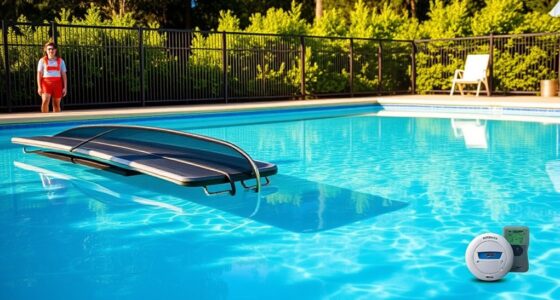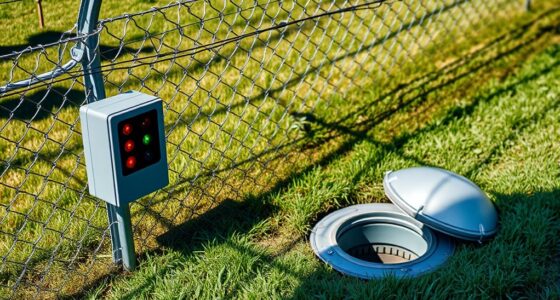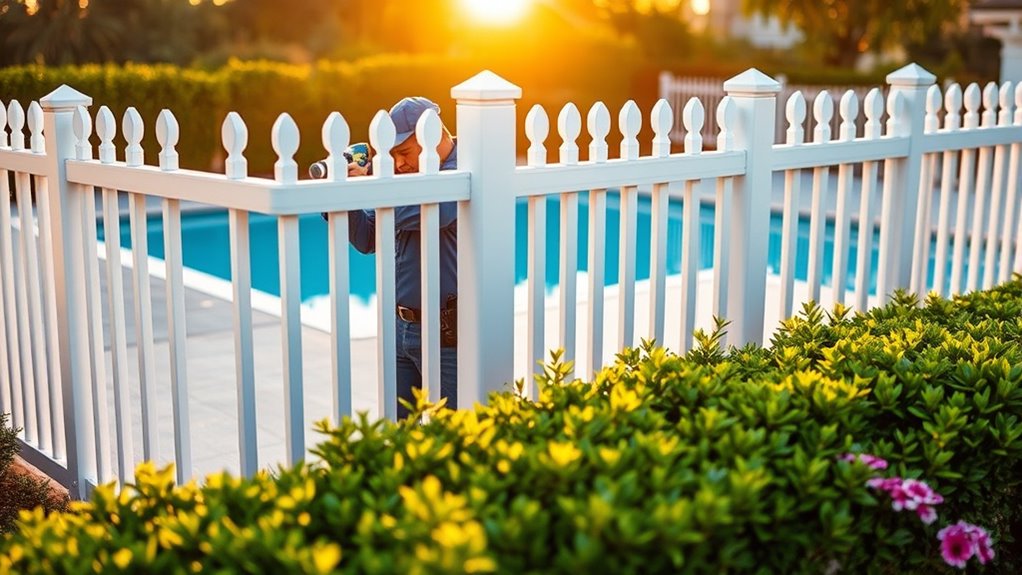

When choosing and installing a pool fence, focus on safety regulations like height requirements and self-closing, self-latching gates that are out of children’s reach. Pick durable materials such as vinyl or aluminum that resist rust and weather damage for long-lasting protection. Opt for a design that prevents climbing, with smooth, picket-style fences and secure anchoring. Proper installation and regular inspections are key to safety. Keep exploring to learn how to create an effective, secure pool barrier that keeps your loved ones safe.
Key Takeaways
- Ensure the fence height meets local safety codes, typically around 4 feet, to prevent climbing.
- Select durable, weather-resistant materials like vinyl or aluminum for longevity and low maintenance.
- Install self-closing, self-latching gates with latches out of children’s reach for added safety.
- Minimize footholds and gaps in the design to prevent children from climbing or squeezing through.
- Properly anchor and inspect the fence regularly to maintain stability, safety, and compliance.
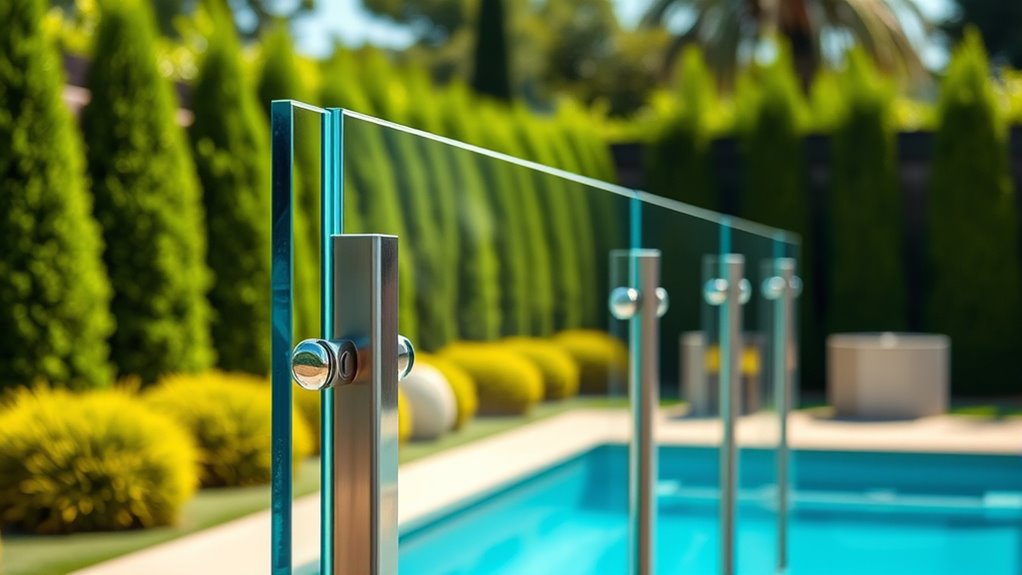
Installing a pool fence is a essential step in guaranteeing safety around your backyard oasis. When you choose a fence, it’s fundamental to prioritize safety regulations that govern pool enclosures in your area. These rules are designed to prevent accidents, especially involving children and pets. Familiarize yourself with local codes before you begin, so you know the minimum height, gate requirements, and latch mechanisms needed for compliance. Ignoring safety regulations can lead to costly fines and, more importantly, increased risks for your loved ones. By adhering to these standards, you can confidently create a secure environment where everyone can enjoy the water without worry. Incorporating load‑planning tools and clear safety checklists can further help you design an effective safety barrier. Material durability is a key factor when selecting your pool fence. You want a fence that withstands weather elements, resists rust and corrosion, and maintains its appearance over time. Common options like vinyl, aluminum, and wrought iron each offer different benefits in terms of durability. Vinyl fences, for example, are low-maintenance, resistant to rot, and won’t chip or crack easily, making them a popular choice. Aluminum fences are lightweight yet sturdy, offering excellent resistance against the elements without the weight of traditional metal. Wrought iron, while highly durable, requires regular maintenance to prevent rust, especially in humid or coastal environments. Consider your local climate and how much upkeep you’re willing to perform. Investing in high-quality materials means your fence will stay secure and look good for years, providing peace of mind and protecting your investment. When you’re choosing a fence, pay close attention to the height and design. Most safety regulations specify a minimum height—often around 4 feet—to prevent children from climbing over. The design should also minimize footholds and handholds that make climbing easier. A smooth, picket-style fence can eliminate these climbing points, enhancing safety. Additionally, make sure your gate is self-closing and self-latching with a latch placed out of reach of children. These features are essential for maintaining a secure barrier and preventing accidental access. When you install your fence, ensure it’s anchored properly into the ground, with no gaps or weak spots where a child might squeeze through or climb over. Ultimately, choosing the right pool fence involves balancing safety regulations with material durability and thoughtful design. When you do this carefully, you create a safe, attractive environment that protects your family while enhancing your backyard’s appeal. Remember, investing in quality materials and following safety standards isn’t just about compliance—it’s about peace of mind, knowing your loved ones are safe while they enjoy your pool.
Frequently Asked Questions
What Are the Latest Safety Standards for Pool Fences?
The latest safety standards prioritize pool gate safety and fence material durability. You should make certain your pool gate self-closes and latches securely, preventing unsupervised access. Opt for durable materials like vinyl, aluminum, or corrosion-resistant steel to withstand weather and wear. Regularly check the gate and fence for damage or gaps, maintaining the safety features. Following these standards helps protect children and pets, reducing the risk of accidents around your pool.
How Do I Maintain and Clean My Pool Fence?
Did you know that regular cleaning can extend your pool fence’s lifespan by up to 50%? To maintain and clean your pool fence, regularly remove dirt and debris with a mild soap solution and soft brush. For garden landscaping, make sure plants don’t touch the fence to prevent damage. Keep fence aesthetics in mind by avoiding harsh chemicals that could discolor or corrode your fence, and inspect for rust or damage frequently.
Can I Install a Pool Fence Myself or Should I Hire a Professional?
You can certainly try DIY installation if you’re comfortable with basic tools and follow safety guidelines. However, professional installation guarantees the fence meets all local safety codes and is properly secured, giving you peace of mind. Consider your experience level, the fence type, and local regulations. If you’re unsure or the job is complex, hiring a professional is a smart choice to guarantee a safe, compliant, and durable pool fence.
Are There Eco-Friendly or Sustainable Fencing Options Available?
Yes, eco-friendly fencing options are available and can be a breath of fresh air for your pool area. You can opt for fences made from recyclable materials like recycled plastic or metal, or choose those from renewable sources such as bamboo. These options not only reduce environmental impact but also add natural beauty. By selecting sustainable fencing, you’re helping to protect the planet while creating a safe, stylish barrier around your pool.
How Do I Ensure My Pool Fence Complies With Local Regulations?
To guarantee your pool fence complies with local regulations, start by checking local permit requirements and specific fence height regulations. Contact your city or county building department to confirm permit needs and guidelines. Measure your fence height accurately, making sure it meets the minimum height standards. Regularly review local codes, as they can change. Following these steps helps you avoid fines and ensures your pool area stays secure and compliant.
Conclusion
Ultimately, selecting and installing the right pool fence isn’t just a task—it’s a commitment to safety and peace of mind. Think of your fence as a silent guardian, standing watch and whispering reassurance. When you choose wisely and install properly, you’re not just meeting regulations—you’re creating a secure haven for loved ones and friends. Remember, a well-chosen fence isn’t just a barrier; it’s a shield that transforms your pool area into a protected paradise.