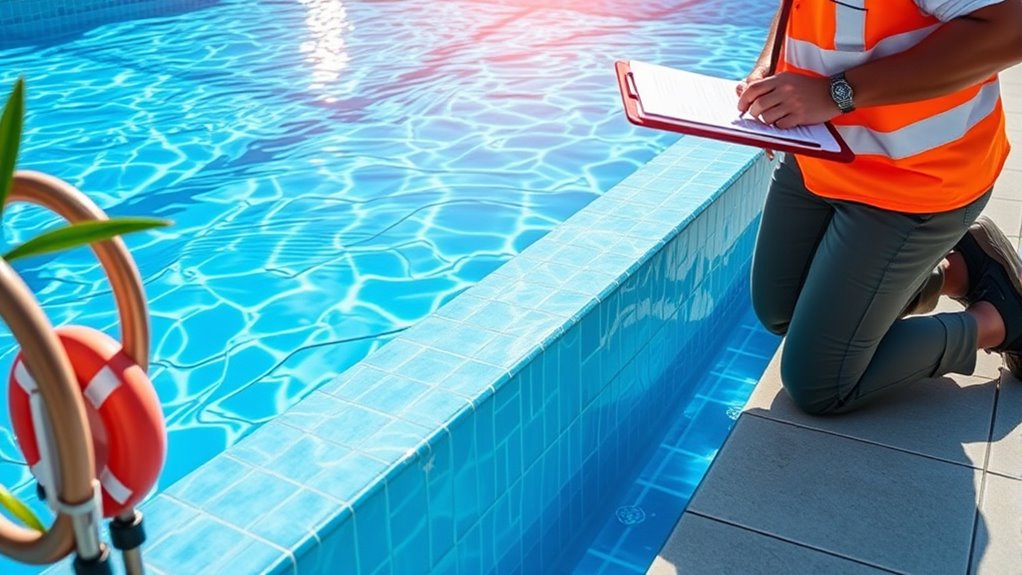

To conduct a pool safety audit, start by checking the fencing for compliance, damage, and proper gating. Evaluate supervision around the pool, ensuring responsible adults are actively watching children at all times. Inspect safety devices like alarms, covers, and signage, making sure they’re functioning well. Review emergency plans and ensure safety equipment is accessible and in good shape. Understanding these steps helps you identify hazards and improve safety—keep exploring to learn how to make your pool safer.
Key Takeaways
- Conduct a comprehensive assessment of fencing, gates, and barriers to ensure compliance with safety standards.
- Evaluate child supervision practices to confirm active, attentive monitoring at all times.
- Inspect safety devices such as alarms, covers, and signage for proper functioning and maintenance.
- Review emergency equipment like life rings and first aid kits for accessibility and condition.
- Document findings, identify hazards, and develop a plan for necessary improvements to enhance safety.

Pool safety audits are essential for guaranteeing your swimming area remains a secure environment for everyone. When you conduct a thorough audit, you’re taking proactive steps to identify potential hazards and implement improvements that protect swimmers, especially children. One of the most critical aspects of pool safety is child supervision. During an audit, you’ll evaluate how effectively children are watched over when in or around the pool. This means checking if there are designated adult supervisors present at all times and whether they are attentive and prepared to respond quickly in case of an emergency. Remember, supervision isn’t just about being physically present; it’s about actively monitoring and engaging with children to prevent accidents before they happen.
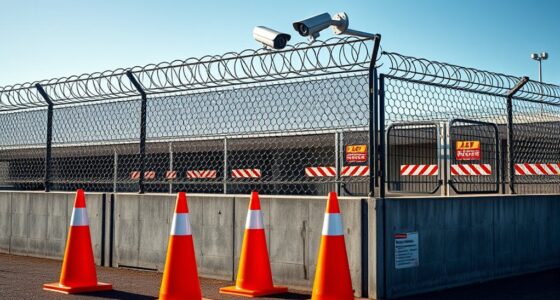
Another crucial component you’ll assess during a safety audit is pool fencing. Proper fencing acts as a physical barrier that keeps children and pets from accessing the pool unsupervised. You need to confirm that the fencing is compliant with local safety standards, which typically specify height requirements, the absence of gaps or openings, and self-closing, self-latching gates. During your inspection, look for signs of wear, damage, or any tampering that could compromise the barrier’s integrity. If you find any weaknesses, plan to repair or replace the fencing promptly. A secure fence is your first line of defense against accidental drownings, especially when children are around.
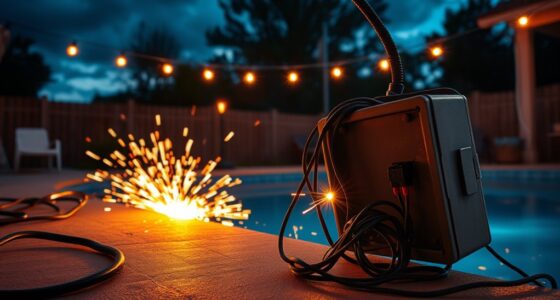
While inspecting the fencing, also check the gate latch to ensure it’s out of reach of small children and that it functions smoothly. Sometimes, simple adjustments or upgrades can considerably improve safety. Beyond fencing, you’ll want to evaluate other safety features like pool covers, alarms, and signage. These elements work together to create a layered safety system that minimizes risks. During your assessment, take note of any missing or malfunctioning safety devices and plan for their maintenance or replacement. Additionally, maintaining proper lighting around the pool area can significantly enhance visibility during nighttime, reducing the risk of accidents.
Finally, expect the audit to include a review of emergency preparedness measures. Confirm that safety equipment such as life rings, reaching poles, and first aid kits are accessible and in good condition. Ensure you and your family or staff know how to use them effectively. Conducting regular pool safety audits might seem tedious, but they’re invaluable for preventing accidents. By actively engaging in these inspections, you demonstrate your commitment to a safe swimming environment and help protect everyone who uses your pool.
Frequently Asked Questions
How Often Should a Pool Safety Audit Be Performed?
You should perform a pool safety audit at least once a year to stay compliant with safety regulations. Additionally, incorporate it into your maintenance schedule, especially after any major repairs or safety incidents. Regular audits help identify potential hazards early, ensuring your pool remains safe for everyone. By staying proactive, you can prevent accidents and maintain a secure environment, meeting all safety regulations consistently.
Who Is Qualified to Conduct a Pool Safety Audit?
Did you know that 80% of pool accidents could be prevented with proper safety measures? To make certain your pool meets safety standards, you need certified inspectors who specialize in pool safety audits. These professionals have the training and experience to assess safety compliance, identify risks, and recommend improvements. Always choose qualified inspectors to guarantee your audit meets industry standards and keeps everyone safe around your pool.
What Are the Costs Associated With a Pool Safety Audit?
The costs for a pool safety audit vary depending on size, location, and complexity. Price factors include the auditor’s experience, thoroughness of inspection, and any additional recommendations or reports needed. Typically, you’ll find fees range from a few hundred to over a thousand dollars. Consider the value of preventing accidents and ensuring compliance when evaluating cost considerations, as investing in a professional audit can save you money and safety concerns long-term.
Can a Pool Safety Audit Be Conducted During the Off-Season?
You can absolutely conduct a pool safety audit during the off-season, and you might find it advantageous. Seasonal considerations mean fewer disruptions, and performing an audit now allows you to address issues before summer. Off-season advantages include more flexible scheduling and a thorough inspection without the rush. By catching potential hazards early, you ensure your pool is safer and ready when the season starts, giving you peace of mind and avoiding costly repairs later.
How Long Does a Typical Pool Safety Audit Take?
A typical pool safety audit takes about 2 to 4 hours, depending on the pool’s size and complexity. During the pool inspection, you’ll review your safety checklist to guarantee compliance with safety standards. You’ll check barriers, alarms, and equipment. Be prepared for thorough assessments, and know that a detailed report will identify areas needing improvement, helping you maintain a safe swimming environment efficiently.
Conclusion
A pool safety audit is your shield, a lighthouse guiding you through potential hazards. It’s the mirror reflecting your commitment to safety, and the key opening peace of mind. By conducting regular checks, you’re planting seeds of vigilance that grow into a secure haven. Remember, safety isn’t a one-time act but a continuous journey—like a steady heartbeat—keeping your loved ones protected and your pool a safe sanctuary for all to enjoy.