To prevent accidents around your pool, always supervise your pets and keep the gates closed when you’re not watching. Use a well-fitting flotation device for dogs that are unsure swimmers or smaller. Install secure fencing with self-closing gates to act as a barrier. Regularly check and maintain safety equipment and fencing. Combining these safety measures helps protect your pets—continue exploring for more tips on keeping them safe around water.
Key Takeaways
- Always supervise pets around the pool, regardless of flotation devices or fencing measures.
- Install secure, self-closing gates and sturdy fencing to prevent unsupervised access.
- Use properly fitted flotation devices to support less confident or small dogs in water.
- Regularly inspect and maintain pool fencing and safety equipment to ensure effectiveness.
- Train pets to stay away from pool areas and establish clear boundaries for water safety.
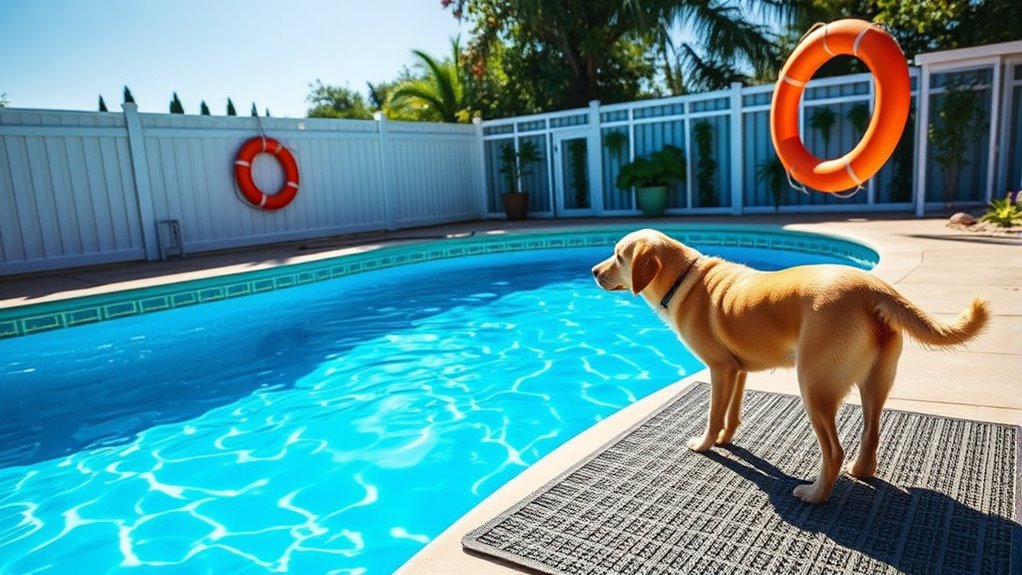
Swimming pools can be a great way for your pets to enjoy the outdoors, but they also pose important safety risks if you’re not careful. One of the most effective ways to keep your furry friends safe is by providing dog flotation devices. These devices are specifically designed to support dogs in the water, helping them stay afloat if they’re inexperienced swimmers or if they accidentally fall in. Investing in a reliable dog flotation device ensures peace of mind, especially for smaller or less confident swimmers. When choosing one, look for options that fit well, are made from durable, non-toxic materials, and have secure, adjustable straps. Keep in mind that even with a flotation device, dogs should never be left unattended around the pool, as accidents can still happen.
Dog flotation devices keep your pets safe in the water—choose well-fitting, durable options for peace of mind.
In addition to flotation devices, pool fencing options are vital for preventing unsupervised access. Installing a sturdy, tall fence around your pool creates a physical barrier that markedly reduces the risk of your pets wandering into the water unsupervised. There are many types of pool fencing options available, from glass and mesh fences to traditional metal barriers. Choose a fence that is high enough to prevent your pets from jumping over and with a self-closing, self-latching gate to prevent accidental openings. Proper fencing acts as a first line of defense and gives you peace of mind, knowing that your pets are less likely to slip into the pool area without your knowledge.
It’s important to establish clear boundaries and training routines to reinforce safety. Teach your pets to stay away from the pool area unless supervised, and always keep the gate closed when you’re not actively watching. Combining physical barriers with behavioral training creates an extensive safety system. Additionally, always supervise your pets when they’re near the pool, even if they’re wearing flotation devices. Remember, no safety measure is foolproof, so vigilance is key.
Regularly inspecting your pool fencing to ensure there are no gaps or damages is essential. Over time, fences can wear out or become compromised, making them ineffective. Also, keep rescue equipment, like a long pole or reaching hook, nearby in case you need to quickly assist a pet in trouble. Properly calibrating your projector setup can also help in creating a clear visual environment for training and supervision. By implementing these safety measures—dog flotation devices, appropriate pool fencing options, and consistent supervision—you greatly reduce the risk of accidents. Protecting your pets requires proactive steps, but the safety and well-being of your furry friends are worth every effort.
Frequently Asked Questions
Can Pets Develop a Fear of Water After an Accident?
Yes, pets can develop a fear of water after an accident, leading to pet water aversion. If they experience aquatic trauma reactions, such as distress or pain during swimming or near water, it can create lasting anxiety. To prevent this, make certain safe, gradual exposure and positive reinforcement. If your pet shows signs of water fear, consult a veterinarian or animal behaviorist to help them overcome their aquatic trauma reactions.
Are There Specific Signs Indicating a Pet Is Struggling in the Pool?
Ever wondered how to tell if your pet is in trouble in the pool? Look for dog drowning signs like frantic paddling, panicked splashing, or trying to climb out. Pet water distress often shows as heavy breathing, whining, or lethargy. If you notice these signs, act immediately. Are you prepared to spot these signals and keep your furry friend safe? Recognizing early signs can save their life.
How Often Should I Test My Pool’s Safety Features for Pets?
You should test your pool’s safety features weekly to verify they’re functioning properly. Regular pool maintenance involves checking safety equipment like fences, covers, and alarms. Follow safety checklists to confirm that barriers are secure, drains are functioning, and rescue tools are accessible. Consistent testing helps you catch potential hazards early, keeping your pets safe. Make it a routine to perform these checks, especially during peak swimming seasons, to prevent accidents effectively.
What Emergency Steps Should I Take if My Pet Falls In?
Oh, the surprise when your pet takes an unexpected swim! First, stay calm and quickly remove your pet from the pool using rescue techniques like reaching with a pole or towel. Call emergency contacts immediately for professional help. Keep your pet warm and monitor their breathing until help arrives. Remember, quick action and knowing rescue techniques can save your pet’s life—don’t forget to have emergency contacts handy!
Are There Pet-Friendly Pool Covers or Barriers Available?
Yes, there are pet-friendly pool cover options and barriers available to keep your pets safe. Look for mesh covers that allow water to drain and prevent trapping animals, or consider sturdy barriers like fencing designed for pet safety. When installing barriers, make certain they’re secure and tall enough to prevent pets from jumping over. Regularly check and maintain these safety measures to keep your furry friends safe around the pool.
Conclusion
Remember, keeping your pets safe around the pool is a real game-changer. Always supervise them, install barriers, and keep rescue gear handy—these steps can prevent a lot of trouble. Don’t let safety fall through the cracks; a little caution goes a long way. After all, better safe than sorry, because nobody wants to learn the hard way. By staying vigilant, you’ll ensure your furry friends enjoy pool days without any worries.