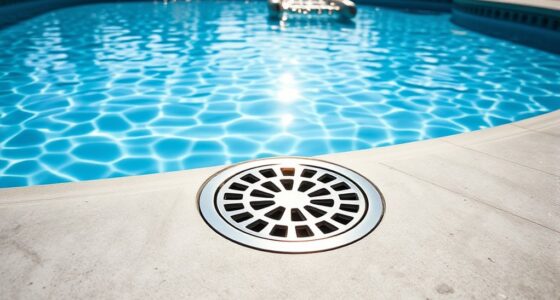
To prevent slip-and-fall accidents around pools, regularly clean the deck and remove debris or algae, and use non-slip mats or textured tiles. Install sturdy handrails and proper lighting to improve visibility, especially at night. Encourage safe behaviors like walking instead of running and wearing appropriate footwear. Routine inspections for cracks or loose tiles help catch hazards early. Staying proactive guarantees a safer environment—continue exploring how you can better protect everyone around your pool.
Key Takeaways
- Regularly clean and dry pool decks to prevent slippery buildup of algae, debris, and water.
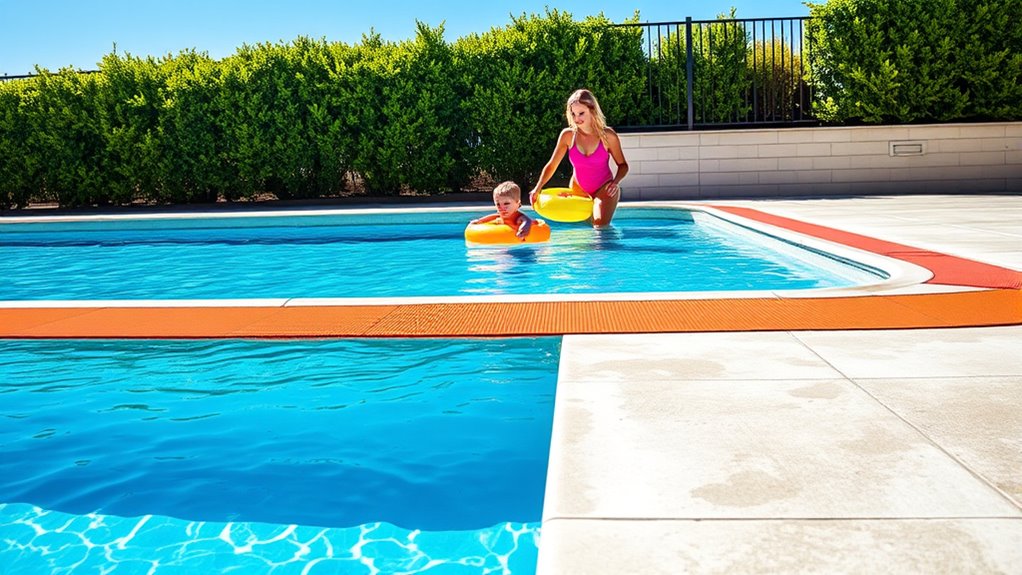
- Install non-slip mats and textured tiles to improve traction on wet surfaces.
- Ensure adequate lighting during evening hours for clear visibility of hazards.
- Maintain sturdy handrails, grab bars, and safety signage to guide and protect swimmers.
- Conduct routine inspections and promptly repair cracks, loose tiles, or other hazards around the pool.

Poolside areas can be surprisingly dangerous if you’re not careful, as slips and falls are common around wet surfaces. To keep everyone safe, you need to pay close attention to proper pool maintenance. Regularly cleaning the deck and ensuring that the surface isn’t slippery can make a substantial difference. Using non-slip mats or textured tiles helps prevent accidents, especially in high-traffic zones. Maintaining the water chemistry is also essential; cloudy or improperly balanced water can cause surfaces to become more hazardous. Skimming debris and cleaning algae or algae buildup keeps the area safe and reduces risk.
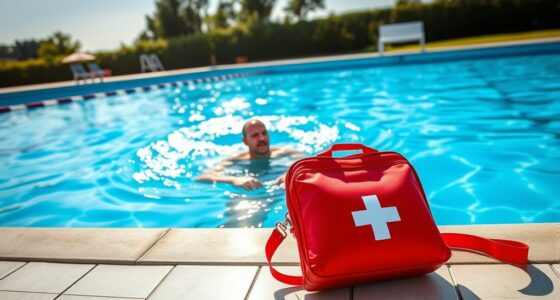
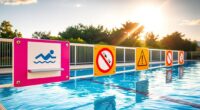
Safety equipment plays a key role in preventing slip-and-fall incidents. Install handrails and grab bars around the pool and steps, giving swimmers something to hold onto if they lose their balance. Make sure these fixtures are sturdy, well-maintained, and easy to access. Keep life-saving equipment nearby, such as life rings and reaching poles, so quick action can be taken if someone slips and falls. Also, consider placing warning signs around the pool to remind swimmers of the dangers of wet surfaces and to encourage cautious behavior.
Installing sturdy handrails, grab bars, and visible safety signs enhances poolside safety and prevents accidents.
Lighting is another important factor in poolside safety. Adequate illumination in the evening or early morning hours helps you see potential hazards clearly. Well-lit areas allow swimmers to navigate safely, reducing the chances of stepping on slick spots or tripping over objects. Regularly inspecting the lighting fixtures and replacing bulbs as needed ensures continuous visibility. Additionally, understanding the cost of safety equipment**** can help you budget for essential items like handrails, life rings, and lighting fixtures.
Educating everyone around the pool about safety practices is equally important. Encourage people to walk rather than run on wet surfaces, and remind them to wear appropriate footwear if necessary. Implement rules that limit roughhousing or pushing, which can increase the risk of falls. If you have children or elderly family members, make sure they understand the importance of caution and safety measures.
Lastly, routine checks and ongoing maintenance are key. Regularly inspect the pool deck for cracks, loose tiles, or other hazards. Address any issues immediately to prevent accidents. Consistent maintenance of safety equipment, proper lighting, and a well-kept environment create a safer poolside experience for everyone. By combining diligent pool maintenance with accessible safety equipment, you can greatly reduce the risk of slip-and-fall accidents and ensure that everyone enjoys the water without worry.
Frequently Asked Questions
What Are the Best Non-Slip Flooring Options for Pool Decks?
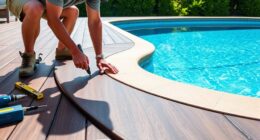
You should choose non-slip flooring options like textured concrete, rubber, or composite decking for pool decks. These deck materials provide better traction and reduce slipping risks. Applying surface treatments, such as non-slip coatings or textured sealants, enhances safety further. Opt for materials specifically designed for wet environments, and regularly maintain the surface to keep it slip-resistant, ensuring a safer poolside experience for everyone.
How Often Should Pool Area Surfaces Be Inspected for Hazards?
You should inspect pool area surfaces at least once a week for hazard assessment and to guarantee safety. After heavy weather, such as rain or storms, perform an additional inspection to catch any slipping hazards. Regular inspection frequency helps you identify worn or damaged non-slip flooring, standing water, or debris that could cause slips. Staying proactive with hazard assessments keeps everyone safe and prevents accidents around your pool.
Are There Specific Signs or Markings to Improve Pool Safety?
Signs and markings act like a lighthouse guiding swimmers safely. You should use clear pool safety signage and warning labels to alert guests about potential hazards, such as slippery surfaces or depth changes. Bright, visible signs placed at strategic spots can prevent accidents before they happen. Make sure these signs are easy to understand and in multiple languages if needed, so everyone knows the rules and stays safe around the pool.
What Footwear Is Safest Around Poolside Areas?
You should wear water-resistant shoes or slip-proof sandals around poolside areas. Water-resistant shoes help keep your feet dry and provide better traction on wet surfaces. Slip-proof sandals with textured soles prevent slipping and offer stability as you walk near the water. Avoid smooth-soled shoes or flip-flops that can easily slide. Choosing the right footwear keeps you safe and reduces the risk of slip-and-fall accidents around pools.
How Can I Educate Children About Poolside Safety?
Think of teaching children about pool safety as planting seeds for a safe swimming garden. You can do this by enrolling them in children’s swimming lessons, emphasizing the importance of following pool safety rules, and practicing safe behaviors. Use simple, clear language and demonstrate proper safety techniques. Reinforce the lessons regularly, and always supervise closely. This hands-on approach helps children understand risks and stay safe around the pool.
Conclusion
By being vigilant and vigilant, you can vastly reduce the risk of slip-and-fall accidents around pools. Prioritize proper placement of non-slip surfaces, promote pool safety protocols, and prepare for unpredictable moments. Remember, prevention is your best protection—protect yourself and loved ones with proactive practices. Stay cautious, stay confident, and keep your poolside moments safe, secure, and slip-free. Your careful commitment creates a safer space where fun floats freely without fear of falls.