To save water, consider sleek, narrow or lap pool designs that use less volume while still looking great. Install eco-friendly pool liners made from recycled materials and use smart covers to trap evaporation when not in use. Incorporate drought-resistant plants around your pool and choose efficient filtration systems like saltwater or ozone-based cleaners. These thoughtful features help conserve water and support sustainability efforts—keep exploring to discover more eco-smart options for your pool.
Key Takeaways
- Use permeable, eco-friendly pool liners to reduce water loss and chemical use.
- Install pool covers to minimize evaporation during non-usage periods.
- Design narrow or lap pools to lower overall water requirements.
- Incorporate drought-tolerant plants around the pool area to reduce irrigation needs.
- Choose energy-efficient, recirculating filtration systems to conserve water and reduce waste.
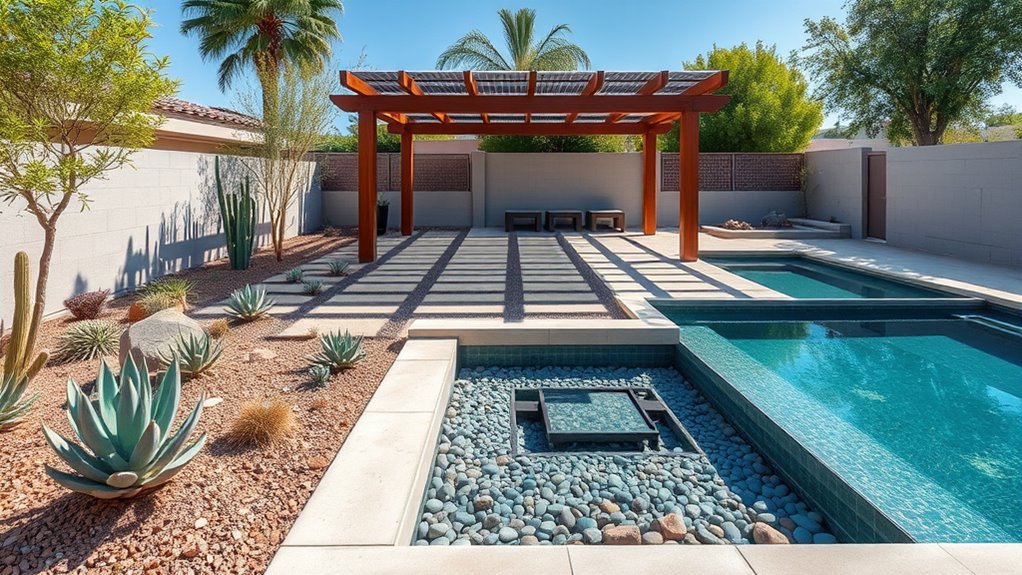
Thinking about adding a pool to your California home? If you’re concerned about water conservation and sustainability, designing a water-saving pool is a smart choice. Modern pool designs now incorporate eco-friendly features that help you reduce water use without sacrificing style or comfort. One of the key elements is selecting innovative materials that enhance water efficiency and durability. For example, using permeable pool liners made from recycled or eco-conscious materials can minimize water loss, while also supporting your commitment to sustainability. These materials often require less chemical treatment and are more resistant to algae growth, which means fewer chemicals are needed to maintain water quality, further reducing environmental impact.
Incorporating eco-friendly features isn’t just about the materials; it’s also about smart design choices. You might consider installing a pool cover that traps evaporation during the off-season or when the pool is not in use. Modern covers are lightweight, easy to operate, and made from sustainable materials, making them an effective way to conserve water. Additionally, a well-designed pool landscaping system can considerably cut down on water waste. By planting native, drought-tolerant plants around your pool area, you minimize the need for frequent watering and create a natural barrier that reduces water runoff.
Innovative filtration systems also play a vital role in water conservation. Traditional filters often require frequent backwashing, which wastes a lot of water. Today, you can opt for saltwater or ozone-based purification systems that use less water and fewer chemicals. These advanced filtration methods help keep your pool clean and safe while conserving resources. Another smart choice is installing a recirculation system that efficiently pumps and filters water, ensuring minimal wastage and peak performance. Pairing this with solar-powered pool pumps can further reduce your energy consumption, making your pool even more eco-friendly.
Lastly, consider the overall design of your pool with water conservation in mind. Shapes that maximize surface area while minimizing volume can help reduce water use without compromising aesthetics. For example, a lap pool or a sleek, narrow design requires less water than traditional larger pools. When combined with innovative materials and eco-conscious features, your pool becomes a sustainable oasis that aligns with California’s water conservation efforts. Additionally, choosing an efficient filtration system can significantly enhance water savings and reduce maintenance requirements. By making thoughtful choices now, you’ll enjoy a beautiful, functional pool that not only enhances your home but also supports environmental responsibility for years to come.
Frequently Asked Questions
What Are the Latest Water-Saving Pool Technologies Available?
You can adopt the latest water-saving pool technologies like smart filtration systems and solar heating. Smart filtration minimizes water waste by optimizing filter cycles and reducing backwash, saving both water and energy. Solar heating harnesses renewable energy to warm your pool efficiently, cutting down on water evaporation and energy costs. Together, these innovations help you enjoy your pool while conserving water and supporting eco-friendly living.
How Can I Retrofit My Existing Pool for Water Conservation?
You can retrofit your existing pool by adding a pool cover to reduce evaporation and save water. Consider installing a water recycling system that filters and reuses pool water, minimizing waste. Check for leaks and repair them promptly to prevent unnecessary water loss. Upgrading to a smart controller can help you optimize filtration cycles and manage water use efficiently. These steps make your pool more water-conscious and eco-friendly.
Are There Government Rebates for Installing Water-Efficient Pool Systems?
Yes, government incentives and rebate programs are available for installing water-efficient pool systems in California. You can often qualify for rebates by upgrading to low-flow pool equipment, such as pumps and filters, or installing smart controls to reduce water use. Check with your local water district or state programs to find current offers. Taking advantage of these rebates can markedly lower your costs while helping conserve water and comply with sustainability goals.
What Maintenance Practices Help Reduce Water Waste in Pools?
You might think maintenance is tedious, but it’s key to reducing water waste. Always use a pool cover to minimize evaporation and keep debris out, which reduces the need for refilling. Regular leak detection helps identify small issues before they waste significant water. These simple practices save water, lower your bills, and extend your pool’s lifespan, making your efforts worthwhile and environmentally responsible.
How Do Pool Size and Shape Impact Water Consumption?
Your pool’s dimensions and shape directly influence water consumption and efficiency. Larger pools with extensive surface areas use more water, while compact, well-designed shapes minimize evaporation and splashing. Choosing a shape that suits your space and reduces water loss enhances water efficiency. Opt for a smaller, custom-designed pool that fits your needs, helping you conserve water while still enjoying your backyard.
Conclusion
By choosing these innovative water-saving pool designs, you’re not just conserving a few gallons—you’re saving enough water to fill an entire ocean! Imagine your backyard transforming into a lush oasis, all while the planet breathes a little easier. With every splash, you’re making a giant leap toward a sustainable future. So go ahead, plunge into these eco-friendly ideas, and turn your pool into a powerful symbol of hope for California’s water future!