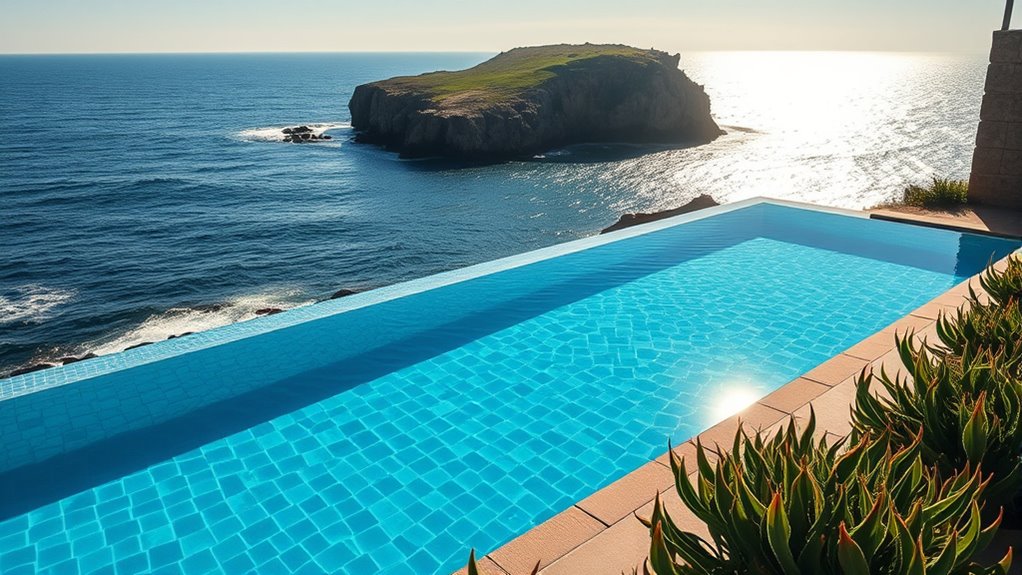

When installing a pool in coastal regions, you should choose corrosion-resistant materials like marine-grade stainless steel and high-quality PVC, and guarantee proper protective coatings. Conduct thorough soil tests and implement reinforcement or deep pilings to handle unstable ground. Proper drainage and higher ground placement help manage water and flood risks. Additionally, plan for wind barriers and regular maintenance to combat humidity and salt damage. Keep these tips in mind to ensure your pool endures; exploring further will reveal even more essential considerations.
Key Takeaways
- Use corrosion-resistant materials like marine-grade stainless steel and UV-resistant coatings for durability.
- Conduct thorough geotechnical assessments and reinforce foundations to accommodate sandy, saline soils.
- Install effective drainage and consider higher ground placement to prevent water damage and flooding risks.
- Incorporate windbreaks, protective covers, and regular maintenance to withstand storms and high humidity.
- Plan for ongoing inspections and choose materials designed specifically for coastal environmental exposure.
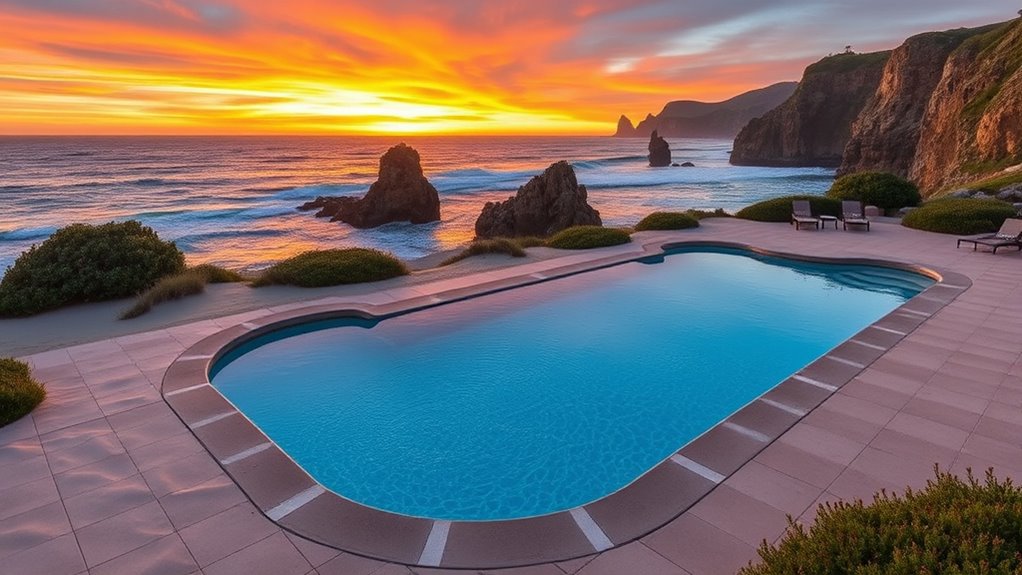
Installing a pool in coastal regions requires careful planning to address unique environmental challenges. One of the most critical considerations is choosing materials with high corrosion resistance. The salty, humid air typical of coastal areas accelerates corrosion of metal components, pumps, and fixtures. To prevent deterioration over time, you should opt for corrosion-resistant materials like stainless steel designed for marine environments or high-quality PVC and composite options. These materials stand up better against the harsh coastal atmosphere, ensuring your pool remains functional and attractive for years to come. Additionally, installing protective coatings or sealants on metal surfaces can further extend their lifespan, reducing maintenance costs and avoiding premature replacements.
Choose corrosion-resistant materials like marine-grade stainless steel and high-quality PVC for coastal pools.
Another essential factor is soil stability. Coastal soils tend to be loose, sandy, or highly saline, which can compromise the structural integrity of your pool. Before construction begins, it’s necessary to conduct a thorough geotechnical assessment to understand the soil’s characteristics. If the soil is unstable, you might need to implement additional measures such as deep pilings, soil stabilization techniques, or the use of a reinforced concrete slab. These steps help prevent shifting, settling, or cracking that could lead to costly repairs or even safety hazards. Properly preparing the site ensures that your pool foundation remains solid despite the challenges posed by the coastal environment.
Beyond these technical considerations, you should also plan for effective drainage and water management. Coastal areas are prone to flooding and high water tables, which can influence the stability of your pool’s foundation. Installing adequate drainage systems around the pool area helps divert excess water away from the structure, reducing pressure on the foundation. This is especially crucial if the soil is sandy or porous, as water can quickly undermine stability. Furthermore, selecting a location on higher ground or adding retaining walls can further safeguard your investment from potential water damage.
Finally, you need to consider the local climate and weather patterns. Coastal regions often experience strong winds, storms, and high humidity, all of which can impact your pool’s longevity. Incorporating windbreaks or barriers, along with a robust cover system, can shield your pool from debris and reduce wear and tear. Regular maintenance, including cleaning salt deposits and inspecting for corrosion, will help preserve the integrity and appearance of your pool over time. By addressing corrosion resistance and soil stability from the outset, you ensure a safe, durable, and enjoyable swimming environment tailored to the unique demands of coastal living.
A helpful addition is proper ventilation, which can help reduce humidity levels around the pool area and minimize corrosion risks for metal fixtures.
Frequently Asked Questions
How Does Saltwater Affect Pool Equipment Longevity in Coastal Areas?
Saltwater can reduce your pool equipment’s longevity due to saltwater effects causing corrosion. To prevent this, you should implement corrosion prevention strategies, like using corrosion-resistant materials and regular maintenance. Keep an eye on your equipment, rinse it often, and consider protective coatings. By proactively addressing saltwater effects, you’ll extend your pool’s lifespan and keep everything functioning smoothly despite the coastal environment.
What Are the Best Materials for Salt-Resistant Pool Construction?
Think of your pool like a ship sailing smoothly through salty waters; choosing the right materials is key. For salt-resistant construction, opt for durable options like fiberglass or composite materials that resist corrosion. Use quality pool finishing that withstands salt exposure, and guarantee water circulation systems are well-maintained to prevent salt buildup. These choices help your pool stay pristine and extend its lifespan despite the coastal environment.
How Can I Prevent Corrosion of Pool Fixtures Near the Ocean?
To prevent corrosion of your pool fixtures near the ocean, focus on corrosion prevention and fixture protection. Use fixtures made from corrosion-resistant materials like stainless steel or PVC. Apply protective coatings or sealants regularly, and ensure proper insulation to reduce moisture contact. Additionally, maintain balanced water chemistry and consider installing sacrificial anodes to divert corrosion away from fixtures. These steps help keep your pool fixtures durable and functioning well over time.
What Permits Are Required for Coastal Pool Installation?
You’ll need to obtain local zoning permits before installing your pool in a coastal area. Check with your city or county planning department to understand specific restrictions and requirements. Expect permit fees that vary depending on your location and pool size. Make sure to submit detailed plans and adhere to coastal regulations to avoid delays. Securing these permits guarantees your pool complies with local laws and is safe for use.
How Does Coastal Weather Impact Pool Maintenance Schedules?
Coastal weather affects your pool maintenance schedules by demanding storm preparedness and seasonal upkeep. You should frequently check weather forecasts and prepare for storms by securing equipment and covering your pool. After storms, inspect for debris and damage, and perform seasonal maintenance like cleaning filters and balancing chemicals. Staying proactive guarantees your pool remains safe and in good condition despite unpredictable coastal weather.
Conclusion
When installing a pool in a coastal region, you’re not just adding a backyard feature—you’re creating a paradise that could rival heaven itself. By considering salt corrosion, proper materials, and local weather, you’ll guarantee your pool withstands the relentless power of the sea. With the right planning, your coastal oasis will remain pristine and inviting for years to come. Immerse yourself with confidence, knowing you’ve tackled the toughest challenges and turned your backyard into a true coastal masterpiece.