You’ll notice rooftop pools are booming in high-density cities, turning unused rooftops into luxurious escape spots. Architects focus on sleek, eco-friendly designs that maximize space while conserving water through smart systems. These pools not only boost building value but also create social hubs, enhancing urban lifestyle. As trends shift toward sustainable and aesthetic solutions, you’ll see innovative features like green lounges and smart maintenance tools. Keep exploring to discover more about how these urban oases are shaping city living.
Key Takeaways
- Rooftop pools maximize limited space, transforming unused rooftops into luxurious urban retreats.
- Innovative design and green elements enhance aesthetic appeal and promote urban biodiversity.
- Eco-friendly water management practices, including recycled water and filtration, ensure sustainability amid drought concerns.
- Rooftop pools serve as social hubs, increasing building value and attracting residents seeking leisure amenities.
- Future trends include AI-driven maintenance, green lounging areas, and seamless integration with building aesthetics.
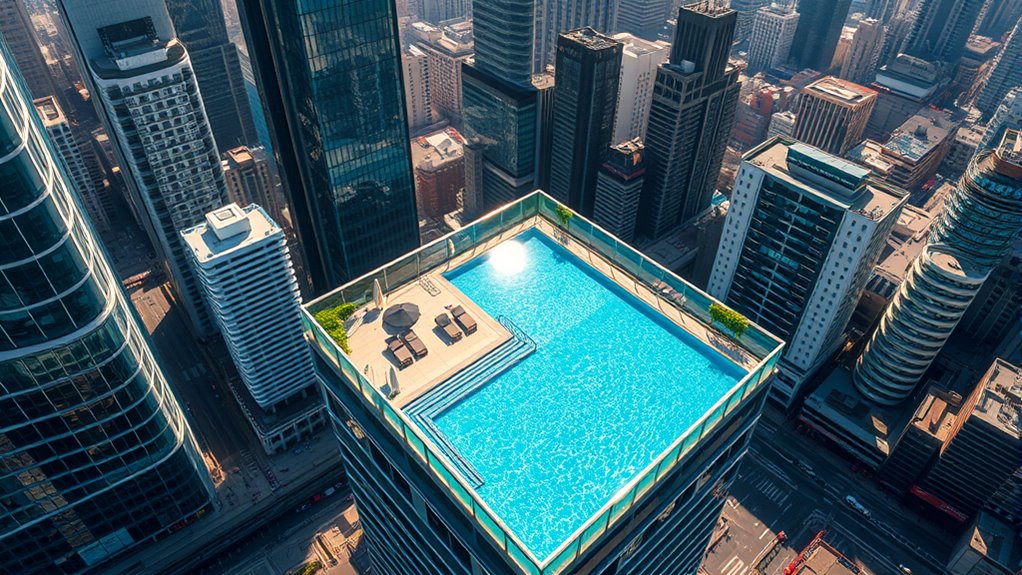
Ever wondered how residents of high-density cities find a moment of escape amid towering skyscrapers? Rooftop pools have become a popular solution, transforming unused roof spaces into luxurious retreats. These pools aren’t just about leisure; they also highlight innovative urban design that maximizes limited space while offering a serene escape from busy city life. As urban areas continue to grow vertically, architects and planners are creatively integrating these pools into the cityscape, making rooftops a focal point of modern living. With space at a premium, designers focus on sleek, efficient layouts that blend seamlessly with building aesthetics, guaranteeing that these pools serve as both functional amenities and visual highlights.
But creating rooftop pools in dense urban environments isn’t without challenges. Water conservation becomes a critical concern, especially in cities facing droughts or limited water resources. Developers and city planners are now adopting eco-friendly practices, such as using recycled water and installing intelligent filtration systems that minimize waste. These innovations help reduce water consumption without sacrificing the comfort and luxury that residents seek. Such measures are essential because rooftop pools can demand significant water use, but responsible water management guarantees they remain sustainable additions to city life. Additionally, AI technologies are increasingly being used to optimize water use and maintenance efficiency in these complex systems.
The rise of rooftop pools also reflects a shift in urban design philosophy, emphasizing quality of life alongside density. Instead of sprawling parks or ground-level amenities, cities are turning rooftops into private oases, offering residents a peaceful retreat just above the hustle and bustle. This vertical approach makes it easier for city dwellers to access leisure spaces without leaving their buildings, fostering a sense of community and well-being. Furthermore, these pools often incorporate green elements, such as rooftop gardens and shaded lounging areas, which enhance urban biodiversity and contribute to better air quality.
In addition to offering a personal escape, rooftop pools are increasingly becoming social hubs. They attract residents looking for a stylish setting to unwind or entertain guests, thereby adding value to the building and attracting new tenants. As cities continue to densify, the integration of these pools into urban design demonstrates a clever way to balance development with the need for natural, calming spaces. With thoughtful planning around water conservation and space optimization, rooftop pools are transforming high-density environments into more livable, attractive places to call home.
Frequently Asked Questions
How Do Rooftop Pools Impact City Skyline Aesthetics?
Rooftop pools enhance your city’s urban skyline by adding sleek, modern elements that catch the eye. They create striking visual contrasts against traditional buildings, elevating architectural aesthetics. As you look up, these pools can make the skyline feel more dynamic and luxurious, blending functionality with beauty. While they may slightly alter the skyline’s silhouette, they ultimately contribute to a more vibrant and appealing cityscape.
What Are the Typical Costs of Installing Rooftop Pools?
Imagine you’re about to build a rooftop pool—cost considerations typically range from $50,000 to over $150,000, depending on size and features. You’ll face design challenges like weight capacity and waterproofing. Installation costs include structural reinforcement, plumbing, and permits. Keep in mind, high-end designs with luxury features can push expenses higher. Planning carefully helps you balance aesthetics with budget, ensuring your rooftop oasis becomes a reality without breaking the bank.
Are Rooftop Pools Environmentally Sustainable?
Rooftop pools can be environmentally sustainable if you prioritize water conservation and eco-friendly materials. You can reduce water use with efficient filtration and cover your pool when not in use. Choosing eco-friendly materials for construction minimizes environmental impact. While they do consume energy, implementing solar heating and energy-efficient pumps makes rooftop pools a more sustainable option, helping you enjoy luxury responsibly.
How Do Rooftop Pools Affect Building Insurance Policies?
You might worry rooftop pools increase insurance costs, but they primarily impact your building insurance policies through potential liability coverage and insurance claims. If accidents happen, your insurer could raise premiums or impose stricter safety requirements. However, with proper safety measures and clear liability coverage, you can manage risks effectively. Always consult your insurer to understand how a rooftop pool might influence your specific policy, reducing surprises later.
What Safety Regulations Govern Rooftop Pool Construction?
You must follow safety regulations like installing pool fencing to prevent accidents and guaranteeing structural integrity to support the weight. Local building codes often require barriers around the pool area, non-slip surfaces, and secure covers. Regular inspections are essential to maintain safety standards. These regulations protect you from liability and ensure the pool is safe for everyone. Always consult local authorities for specific rules applicable to your city.
Conclusion
As you imagine stepping into a rooftop pool above a bustling city, it’s like finding a secret oasis amidst the chaos. With over 30% of new urban developments including rooftop pools, these hidden retreats transform crowded skylines into personal sanctuaries. Just like a rare gem sparkling above the city’s hustle, rooftop pools offer a invigorating escape—showing how innovation turns concrete jungles into luxurious retreats, one splash at a time.