
When wildfire ash contaminates your pool, avoid draining by using targeted chemical treatments like algaecides, clarifiers, and pH adjustments to neutralize harmful residues. Mechanical cleaning, such as brushing and filtering, helps remove ash particles effectively. Regularly check and balance your pool’s pH, alkalinity, and sanitizer levels to restore water clarity and safety. If you want to learn more about safe, effective recovery methods, you’ll find helpful tips in the following details.
Understanding How Wildfire Ash Affects Pool Water Chemistry

When wildfire ash settles into your pool, it can considerably alter the water’s chemistry. Ash contains tiny particles, metals, and organic compounds that can increase the pH level, making the water more alkaline. This shift can reduce chlorine’s effectiveness, allowing bacteria and algae to thrive. Additionally, ash introduces pollutants, including ash-derived nutrients and contaminants, which can upset the balance of your pool’s chemicals. These changes can lead to cloudy water, unpleasant odors, and potential corrosion of pool equipment. The ash’s particles also settle on the bottom, creating a layer that can trap debris and foster bacterial growth if not properly managed. Understanding these impacts helps you recognize the importance of testing and adjusting your pool’s chemistry promptly to maintain a healthy, clean swimming environment. Proper filtration can help remove headphone jacks and fine particles from the water, aiding in restoring water clarity.
Assessing the Extent of Contamination in Your Pool
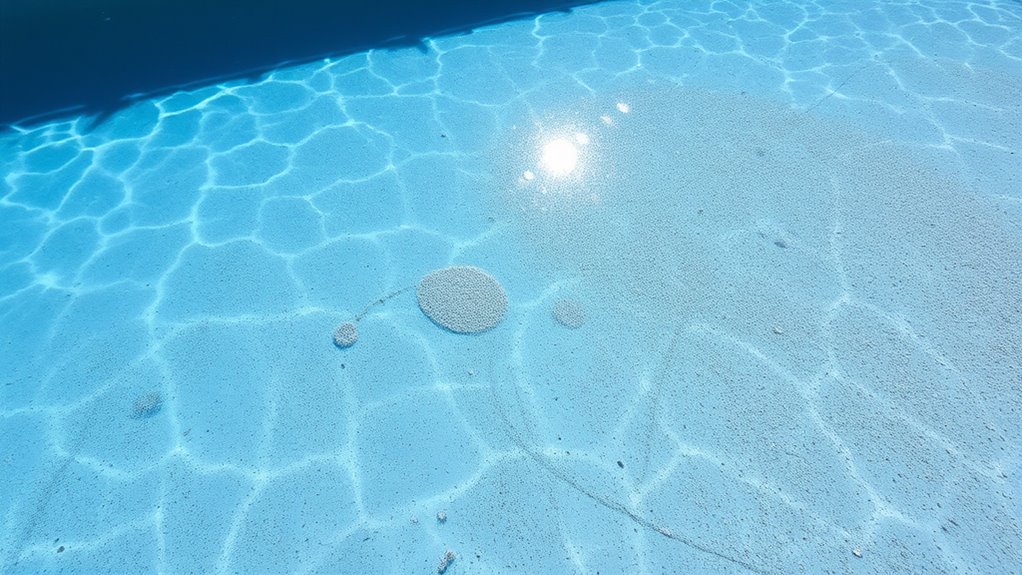
To determine how much wildfire ash has contaminated your pool, start with a visual inspection for visible debris and discoloration. Use chemical testing kits to check for changes in pH, chlorine levels, and other water chemistry parameters. Look for signs like cloudy water or unusual odors that indicate deeper contamination. Additionally, monitoring for water chemistry fluctuations can help identify ongoing issues that may require professional assessment.
Visual Inspection Techniques
Visual inspection is your first step in evaluating how much wildfire ash has contaminated your pool. Begin by observing the water surface for a thin, grayish film or a cloudy appearance. Check the pool walls and floor for visible ash deposits or discoloration. Look for a layer of debris floating on top or settled at the bottom. Notice if the water looks murky or has a dull, matte finish, indicating heavy ash presence. Use a pool skimmer to gently lift floating particles and see how much ash is collected. Inspect the skimmer basket and filter surface for accumulated debris. These visual cues help you gauge the contamination level quickly, guiding your next steps for cleaning and chemical adjustment. Additionally, considering the self-cleaning properties of certain filtration systems can aid in removing residual ash more effectively.
Chemical Testing Methods
Chemical testing methods are essential for accurately determining the level of wildfire ash contamination in your pool. These tests give you precise data, so you know exactly what’s happening beneath the surface. With the right testing, you can avoid guesswork and make informed decisions to protect your pool’s health. Here are three key testing methods to contemplate:
- Test Strips – Quick, easy, and provide immediate results on pH, chlorine, and alkalinity levels, helping you catch problems early.
- Liquid Test Kits – Offer more accuracy for testing multiple chemical parameters, giving you a detailed picture of contamination.
- Electronic Test Meters – Provide precise, real-time readings for critical chemical levels, ensuring your pool’s safety.
Using these methods empowers you to respond swiftly and confidently.
Contamination Indicators
How can you tell if wildfire ash has substantially contaminated your pool? First, look for a noticeable layer of grayish or blackish debris on the surface or settled on the bottom. A sudden increase in cloudiness or murkiness indicates ash particles have dispersed throughout the water. You might also notice a persistent, unusual smell or residue on your skimmer basket and filter system, signaling ash buildup. Test your water for elevated levels of particulate matter or debris using a simple turbidity test. Additionally, if your pool’s pH or chlorine levels become unstable despite regular adjustments, ash contamination could be a factor. Monitoring textile art preservation techniques can help you understand how to protect your pool equipment from ash residue. These indicators help you assess the extent of contamination, guiding your next steps to restore water clarity and safety effectively.
Chemical Treatments to Neutralize Ash Contaminants
When ash from wildfires contaminates your pool, applying targeted chemical treatments can effectively neutralize harmful contaminants. You’ll want to focus on balancing your water chemistry to prevent damage and ensure safety. First, use a strong oxidizer like chlorine or bromine to break down organic ash particles, restoring clarity. Second, add pH adjusters—such as sodium carbonate or muriatic acid—to keep your water within the ideal range, preventing corrosion or scaling. Third, incorporate algaecides if necessary, to inhibit algae growth fueled by ash nutrients. These treatments not only safeguard your pool’s integrity but also give you peace of mind. Remember, proper chemical balancing is your first line of defense in restoring safe, clean water after wildfire ash exposure. Understanding water chemistry is essential for effective treatment and long-term pool health.
Mechanical Cleaning Techniques for Ash Removal

To effectively remove wildfire ash from your pool, mechanical cleaning techniques are essential. Start by using a skimmer net to scoop off surface ash, working gently to avoid stirring up particles. Next, employ a pool brush to scrub the walls and floor, loosening any stubborn ash that’s settled. A pool vacuum, whether manual or robotic, helps extract debris from hard-to-reach areas, ensuring thorough cleaning. For best results, run the pool’s filtration system continuously to trap remaining ash particles. Regularly clean out the skimmer and filter baskets to prevent clogs and maintain circulation. These mechanical methods quickly reduce ash buildup, preparing your pool for chemical treatments and preventing long-term damage. Consistent, careful cleaning restores clarity and minimizes lingering contaminants.
Balancing Ph, Alkalinity, and Sanitizers Post-Wildfire

After wildfire ash enters your pool, you’ll need to adjust the pH levels to prevent corrosion or scaling. Managing alkalinity helps keep the water balanced and reduces the risk of cloudy water. Ensuring your sanitizers work effectively is vital to keep the water safe and clear. Using appropriate filtering methods can aid in removing ash particles and maintaining optimal water quality without draining.
Adjusting Ph Levels
Have wildfire ash in your pool disrupted the delicate balance of pH, alkalinity, and sanitizers? Don’t panic. Restoring proper pH is vital for safe, clear water. Here’s what you need to do:
- Test your water’s pH level precisely—aim for a range of 7.2 to 7.6.
- Add pH increasers or decreasers carefully, following the product instructions to avoid sudden swings.
- Re-test after each adjustment to guarantee stability before adding sanitizers or stabilizers.
- Remember that water chemistry can be affected by environmental factors, so regular testing is essential to maintain optimal balance.
Balancing pH not only improves water comfort but also enhances sanitizer effectiveness. Wildfire ash can throw off your pool’s chemistry, but with careful testing and gradual adjustments, you can restore harmony. Take control now—your pool’s health depends on it.
Managing Alkalinity Balance
Wildfire ash can profoundly disrupt your pool’s alkalinity levels, making it essential to maintain a proper balance for safe and clear water. When ash enters your pool, it can cause alkalinity to rise or fall unexpectedly, affecting pH stability. To manage this, test your water’s alkalinity regularly with a reliable kit. If alkalinity is too high, add a lowering agent like muriatic acid gradually, while monitoring closely. If it’s too low, raise it with sodium bicarbonate. Keep pH within the ideal range (7.2–7.6) to optimize sanitizer effectiveness and prevent corrosion or scaling. Balancing alkalinity helps stabilize pH and prevents fluctuations caused by ash debris. Regular testing and adjustments make certain your pool remains balanced, safe, and inviting after wildfire ash contamination. Proper maintenance of water chemistry can also help mitigate the effects of airborne pollutants, ensuring a healthier swimming environment.
Sanitizer Effectiveness
Balancing pH and alkalinity is essential for maintaining sanitizer effectiveness after wildfire ash contaminates your pool. When pH swings too high or low, sanitizers like chlorine become less effective, risking bacteria growth and cloudy water. To guarantee your sanitizer works properly, focus on:
- Monitoring pH daily to keep it between 7.2 and 7.6—this small window protects your water’s safety.
- Adjusting alkalinity carefully to stabilize pH levels, preventing sudden shifts that can compromise sanitation.
- Regularly testing sanitizer levels and adding chlorine as needed to maintain proper residuals, especially after ash exposure.
- Considering the impact of chlorine demand caused by wildfire ash, which can deplete sanitizer levels more quickly.
Preventative Measures to Protect Your Pool During Wildfires

To protect your pool from wildfire ash, taking proactive steps is essential before fire season begins. First, install a high-quality pool cover to prevent ash from entering the water. Regularly clear debris from surrounding areas to minimize ash settling into your pool. Consider trimming trees and shrubs near your pool to reduce the risk of falling ash and embers. Maintain a strong filtration system by cleaning and backwashing filters frequently, especially during smoky conditions. Keep a supply of extra chlorine, shock, and algaecide on hand for quick treatment if ash does get in. Additionally, close vents and use protective covers on pool equipment to shield them from ash and embers. Regional wildfire activity can influence the level of preparedness needed, so stay informed about local fire conditions. These measures help reduce contamination, making cleanup easier and protecting your pool’s chemical balance during wildfire events.
Frequently Asked Questions
Can Wildfire Ash Cause Long-Term Damage to Pool Equipment?
Wildfire ash can cause long-term damage to your pool equipment if left untreated. The ash’s chemicals and fine particles can clog filters, corrode metal parts, and damage pumps over time. To prevent this, you should promptly remove debris, clean your pool thoroughly, and balance the water chemistry. Regular maintenance and monitoring help protect your equipment and ensure your pool stays in good condition after ash exposure.
Is It Safe to Swim in Ash-Contaminated Pool Water?
Is it safe to swim in ash-contaminated pool water? Generally, it’s not advisable until you’ve properly treated and tested your pool. Ash can carry harmful particles and chemicals that may irritate your skin, eyes, or respiratory system. You should thoroughly clean your pool using appropriate chemicals, filter the water, and test the water chemistry before swimming. When in doubt, consult a pool professional to verify the water is safe for recreation.
How Often Should I Test My Pool Water After a Wildfire?
You should test your pool water at least every 24 to 48 hours after a wildfire. This helps you monitor pH, chlorine levels, and contaminants like ash or debris. Regular testing allows you to adjust chemicals promptly, ensuring safe swimming conditions. If the ash contamination was heavy, consider more frequent tests until you confirm the water’s chemistry is balanced and safe for use.
Are There Eco-Friendly Options for Cleaning Ash From Pools?
Yes, you can use eco-friendly options like a pool skimmer or a gentle brush to remove ash. Adding natural enzymes or enzymes-based clarifiers helps break down organic matter without harsh chemicals. You might also consider using a solar-powered pool cleaner or a biodegradable filter sock to trap ash particles. These methods clean your pool effectively while minimizing environmental impact, keeping your water safe and eco-friendly.
What Signs Indicate That Chemical Balancing Is off After Ash Exposure?
You’ll notice your pool’s water turns murky or cloudy after ash exposure. If the pH levels are off—either too high or too low—you might see scaling or corrosion signs. Chlorine levels could drop unexpectedly, leading to algae growth or odors. Additionally, a metallic or earthy smell, along with visible debris that won’t clear, indicates your chemistry needs balancing. Regular testing helps catch these issues early and restore proper water quality.
Conclusion
Think of your pool as a delicate garden threatened by wildfire ash’s shadow. With the right knowledge and quick action, you can restore its clarity and balance without draining it dry. By understanding the chemistry, using proper treatments, and taking preventative steps, you’re nurturing your pool back to health—like tending a resilient tree that withstands storms. Stay vigilant, and your pool will emerge stronger, shining bright again amid the chaos.