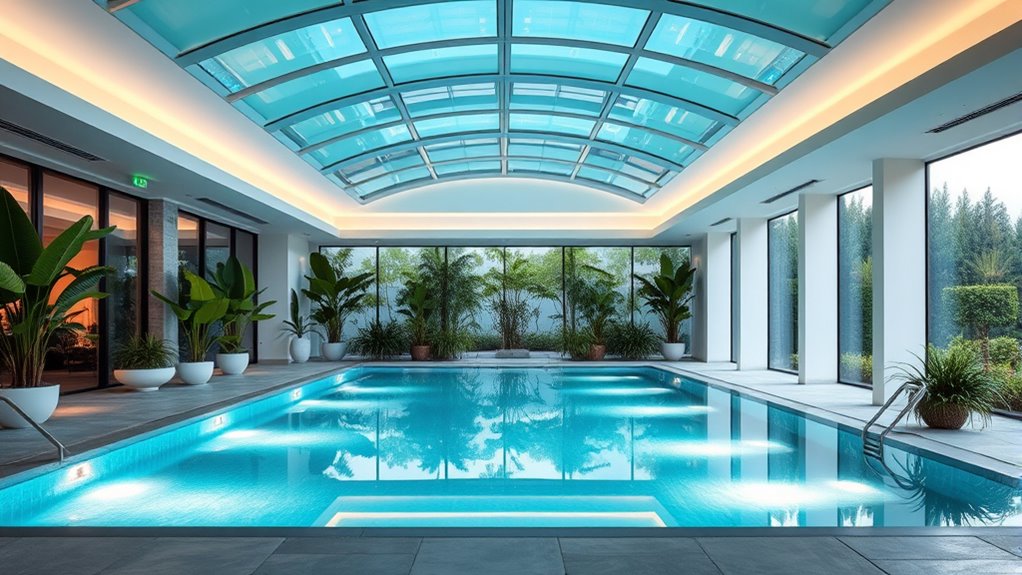
To create a comfortable indoor pool environment, you need effective climate control that balances heating and humidity. Properly managing these factors prevents discomfort, mold, and property damage while maintaining ideal water temperature and air quality. Using energy-efficient systems like heat pumps and advanced dehumidifiers ensures smoother operation and lower costs. If you want to learn more about designing an ideal climate for your indoor pool, there’s plenty of valuable information ahead.
Key Takeaways
- Proper insulation and sealing are essential to minimize heat loss and control humidity effectively.
- Selecting energy-efficient heating systems, like heat pumps, helps maintain consistent water and air temperatures.
- High-quality dehumidification systems prevent mold, structural damage, and maintain comfortable indoor air quality.
- Integrating advanced controls and AI analytics optimizes system performance and enhances energy efficiency.
- Thoughtful design considerations include ventilation, airflow management, and moisture barriers to ensure a comfortable, safe environment.
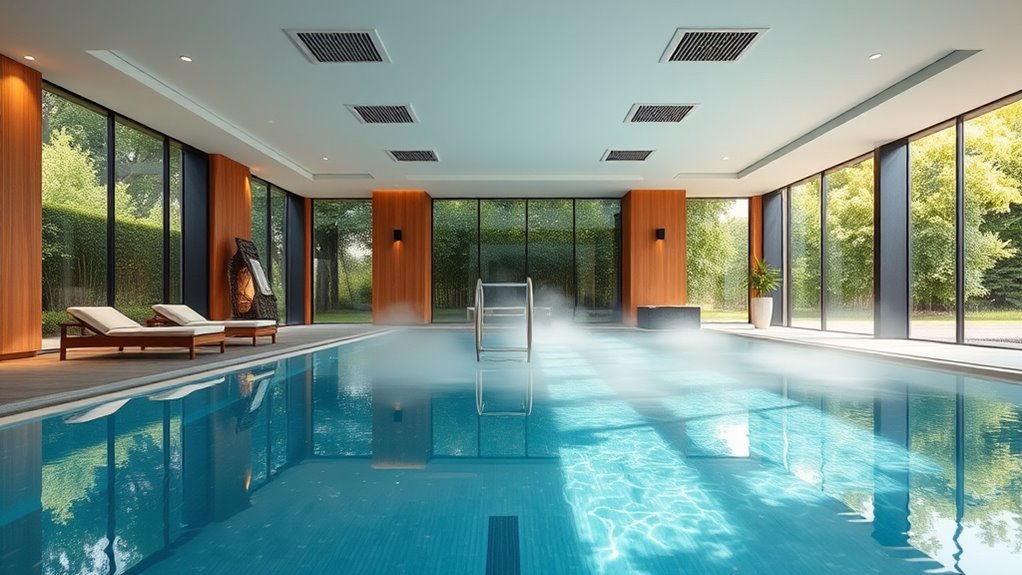
Indoor pools offer a convenient way to enjoy swimming year-round, regardless of weather conditions. When designing or maintaining an indoor pool, one of the most important considerations is climate control. You want to create an environment that’s comfortable, safe, and easy to maintain, which means paying close attention to both pool heating and humidity control. Proper pool heating ensures the water stays at an ideal temperature, whether you prefer a brisk swim or a more relaxed, warm soak. Using efficient pool heating systems, like heat pumps or gas heaters, helps you regulate water temperature precisely, so you won’t have to deal with chilly dips or overly warm water that feels uncomfortable. A well-heated pool also prevents the water from losing heat during colder months, making swimming more enjoyable year-round.
Humidity control, on the other hand, is vital for maintaining a healthy indoor environment. An indoor pool naturally releases moisture into the air, which can lead to high humidity levels inside your space. Without proper ventilation and dehumidification, excess humidity can cause problems like mold growth, peeling paint, and damage to your structure. Installing a high-quality dehumidification system helps keep humidity in check, ensuring the air remains comfortable and your indoor space stays protected. This not only preserves the integrity of your property but also enhances your overall swimming experience. When humidity is properly managed, you’ll notice less fogging on windows and mirrors, reduced musty odors, and a more pleasant atmosphere for lounging or exercising.
Balancing pool heating and humidity control creates a seamless environment that invites you to swim whenever you want. It’s essential to choose the right equipment tailored to your pool size, usage frequency, and local climate. Modern pool heating options offer energy-efficient solutions that save costs while providing consistent warmth. Meanwhile, advanced dehumidification systems are designed to work quietly and effectively, maintaining ideal moisture levels without disrupting your space. Proper insulation and sealing also contribute to a stable climate, reducing heat loss and preventing humidity from escaping into other areas of your home or facility. Additionally, integrating AI-driven analytics can help optimize climate control systems for energy efficiency and performance. Ultimately, integrating effective pool heating and humidity control systems ensures your indoor pool remains a luxurious, accessible retreat all year long, without the worries of discomfort or damage caused by poor climate management.
Frequently Asked Questions
How Does Humidity Control Prevent Mold in Indoor Pools?
Humidity control prevents mold in indoor pools by maintaining ideal moisture levels, which is essential for mold prevention. When you regulate humidity effectively, you reduce excess moisture that mold spores need to thrive. Using dehumidifiers and proper ventilation, you ensure the air stays dry enough to inhibit mold growth. This proactive humidity regulation protects your indoor pool environment, keeping it safe, clean, and free from mold-related issues.
What Are the Most Energy-Efficient Climate Control Systems for Indoor Pools?
You should choose smart climate systems paired with energy-efficient heating to maximize savings. These systems automatically adjust temperature and humidity based on real-time data, reducing energy waste. Unlike traditional systems, smart controls optimize performance, saving you money and energy. By integrating energy-efficient heating with intelligent climate control, you create a comfortable indoor pool environment while minimizing your environmental footprint. This combination guarantees efficient, responsive, and cost-effective climate management for your pool.
How Does Lighting Design Impact Indoor Pool Ambiance and Safety?
Lighting design greatly influences your indoor pool’s ambiance and safety. You can enhance poolside aesthetics with layered lighting, such as underwater LEDs and soft overhead fixtures, creating a welcoming atmosphere. Incorporating lighting automation allows you to adjust brightness and color schemes easily, ensuring maximum visibility and mood. Thoughtful lighting choices help prevent accidents by illuminating walkways and pool edges, so you can enjoy a beautiful, safe environment at any time.
What Are the Best Materials for Indoor Pool Construction to Withstand Moisture?
You should choose moisture-resistant materials like glazed tiles, epoxy paints, and fiber-reinforced concrete for indoor pool construction. These materials guarantee effective pool waterproofing and withstand constant exposure to moisture. Opt for high-quality, durable options that resist mold, corrosion, and water damage, maintaining safety and longevity. Properly installing these moisture-resistant materials helps prevent leaks and structural issues, ensuring your indoor pool remains a beautiful and safe feature in your space.
How Can Ventilation Systems Improve Indoor Air Quality Around Pools?
Imagine a superhero sweeping through your indoor pool area, fighting off foggy, stinky air. That’s your ventilation system, actively improving air quality by boosting air filtration and odor management. It pulls in fresh air, traps moisture and odors, and circulates clean air, making your pool environment healthier and more comfortable. This proactive approach keeps humidity levels in check and guarantees you breathe easy, free from poolside pong.
Conclusion
So, syncing smart systems, securing superior space, and specifying suitable solutions will swiftly simplify your indoor pool project. By balancing brilliant ventilation, beautiful design, and basic safety, you’ll build a breathtaking, budget-friendly, and bug-free basin. Don’t delay—diligently design, diligently decide, and delight in your dazzling, durable indoor pool domain. With careful considerations, you’ll create a mesmerizing, comfortable, and consistently cool aquatic oasis that’ll serve you splendidly for years to come.