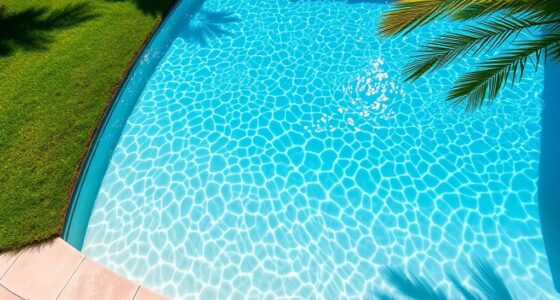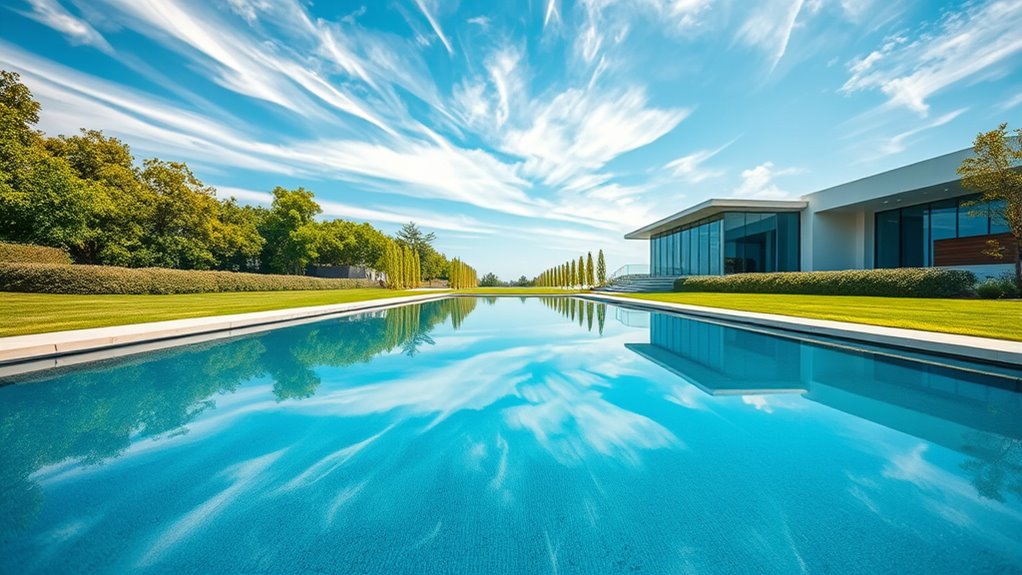

Reflecting pools are stunning landscape features that serve as peaceful mirrors of their surroundings, enhancing beauty with symmetry and harmony. They often become focal points in parks, historic sites, or urban spaces, inspiring tranquility and contemplation. Modern designs focus on sustainability, using recirculation systems and drought-resistant landscaping to conserve water. These pools also carry cultural and historic significance, often symbolizing unity or reflection. Stay with us to explore how these timeless features continue to shape inspiring landscapes.
Key Takeaways
- Reflecting pools enhance landscape aesthetics by creating symmetrical, mirror-like surfaces that highlight architecture and natural surroundings.
- They serve as focal points, fostering visual harmony and encouraging contemplative appreciation of the environment.
- Modern designs incorporate sustainable features like recirculation and drought-resistant landscaping to conserve water.
- Historically, reflecting pools hold cultural significance, symbolizing unity, reflection, and serving as sites for ceremonies and gatherings.
- These pools blend artistry with history, connecting viewers to cultural identity while promoting environmental awareness.
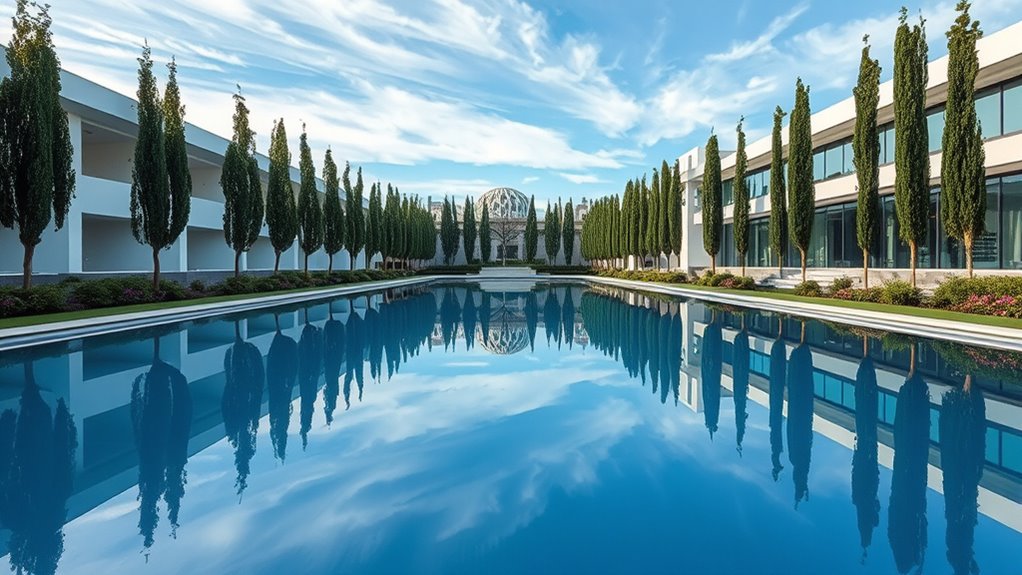
Reflecting pools are tranquil bodies of water designed to mirror their surroundings, often found in historic landmarks and public spaces. Their calm surfaces create a perfect reflection of nearby architecture, trees, and skies, offering a sense of harmony and serenity. When you stand beside a reflecting pool, you’re not just admiring its beauty—you’re experiencing a moment of stillness that connects you to the environment. These pools aren’t merely decorative; they serve as focal points that elevate the aesthetic appeal of a landscape. Their design emphasizes symmetry and balance, drawing your eye and inviting contemplation.
Reflecting pools create serenity, harmony, and aesthetic balance by mirroring their surroundings in tranquil waters.
As you appreciate the visual impact of reflecting pools, it’s important to contemplate their role in water conservation. Historically, many of these pools were built with elaborate features that required significant water, which could seem at odds with modern sustainability efforts. Today, designers and city planners are increasingly mindful of minimizing water usage, incorporating techniques like recirculation systems, drought-resistant landscaping, or even using alternative water sources. The goal is to preserve the visual and cultural value of these pools without wasting precious resources. By doing so, you help ensure that these beautiful features remain part of the landscape without contributing to water scarcity issues.
The historical significance of reflecting pools runs deep. Many are iconic landmarks with stories rooted in history, politics, or cultural identity. For instance, the Lincoln Memorial Reflecting Pool in Washington, D.C., not only enhances the monument’s grandeur but also symbolizes unity and reflection on national ideals. When you visit such sites, you’re walking through history, and the pool becomes a silent witness to countless moments of history unfolding around it. These pools often serve as gathering places for ceremonies, protests, or celebrations, reinforcing their importance beyond aesthetics. Their presence reminds you of the enduring power of design to preserve cultural memory and inspire reflection.
In essence, reflecting pools blend artistry with historical significance, creating landscapes that are both visually stunning and meaningful. They invite you to pause and reflect—literally and figuratively—on the importance of conserving water and respecting the stories embedded in our shared spaces. By appreciating their design and significance, you become part of a tradition that values beauty, history, and sustainability. These pools remind us that thoughtful architecture can enhance our environment while fostering a deeper connection to the past and a commitment to the future.
Frequently Asked Questions
How Do Reflecting Pools Impact Local Ecosystems?
Reflecting pools can impact local ecosystems by affecting wildlife habitats and water quality. You might notice that they attract birds and insects, providing essential habitat. However, if the water isn’t properly maintained, it can lead to poor water quality, harming aquatic life and encouraging algae growth. You should oversee these pools regularly to ensure they support local biodiversity without disrupting the natural balance.
What Are the Maintenance Challenges of Large Reflecting Pools?
You’ll face maintenance challenges like keeping water quality high and controlling algae. Regular cleaning prevents debris buildup, while filtration systems help preserve clarity. You need to monitor chemical levels and add algaecides or UV treatments to prevent algae blooms. Consistent inspection and maintenance are essential to guarantee the pool remains visually striking, safe, and environmentally balanced, especially in large reflecting pools exposed to varying weather conditions.
How Do Reflecting Pools Influence Visitor Experience?
You’ll find that reflecting pools greatly enhance your visitor experience by creating a sense of visual tranquility and aesthetic enhancement. Their calm, mirror-like surface invites contemplation and adds a peaceful ambiance to the landscape. As visitors gaze into the water, they appreciate the harmonious blend of nature and architecture, making the space feel more serene and inviting. Reflecting pools transform ordinary landscapes into inspiring, meditative environments.
What Materials Are Best for Constructing Durable Reflecting Pools?
You should choose materials like reinforced concrete, natural stone, or high-quality stainless steel for constructing durable reflecting pools. Did you know that concrete can last over 100 years with proper maintenance? When considering material selection, focus on durability factors like resistance to weather, corrosion, and freeze-thaw cycles. These materials guarantee your reflecting pool remains beautiful and resilient over time, providing a lasting aesthetic centerpiece for your landscape.
How Can Reflecting Pools Be Integrated Into Sustainable Landscape Design?
You can integrate reflecting pools into sustainable landscape design by using eco-friendly filtration systems that reduce chemical use and energy consumption. Incorporate native plants around the pool to enhance biodiversity and natural filtration. By choosing sustainable materials and designing for water efficiency, you create a harmonious, eco-conscious feature that supports local ecosystems while maintaining the aesthetic appeal of your landscape. This approach promotes environmental responsibility and lasting beauty.
Conclusion
Reflecting pools transform landscapes by blending beauty and serenity, inviting you to pause and appreciate your surroundings. Imagine strolling through a park where a shimmering pool mirrors the sky, creating a peaceful oasis. For instance, at the National World War II Memorial, the pools honor history while enhancing the monument’s grandeur. By incorporating reflecting pools into your landscape, you craft a space that inspires reflection, calm, and aesthetic harmony, making every visit a memorable experience.