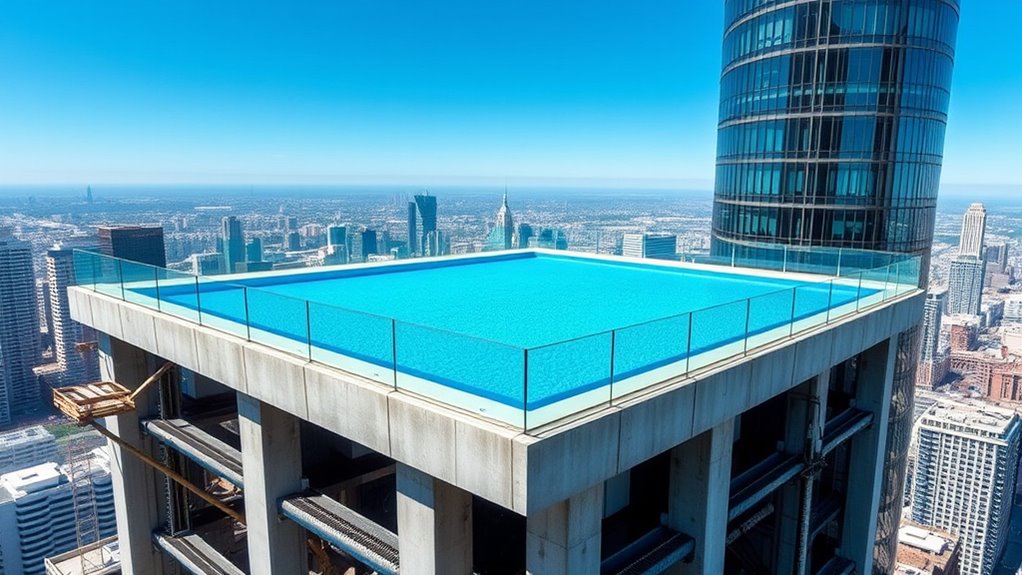

Constructing rooftop pools involves balancing safety, aesthetics, and structural integrity, which can be challenging. You need to reinforce existing building elements to support the heavy weight of water and equipment while ensuring waterproofing prevents leaks that could damage the structure. Proper integration of waterproof membranes and reinforcement methods is essential for durability and safety. If you want to understand how engineers tackle these complex issues, explore the key solutions that make rooftop pools both beautiful and reliable.
Key Takeaways
- Structural reinforcement is essential to support the weight of water, equipment, and occupants on rooftop pools.
- Balancing aesthetic appeal with safety requires careful integration of waterproofing and load-bearing elements.
- Waterproof membranes and coatings prevent water seepage, protecting structural integrity and prolonging lifespan.
- Combining reinforcement and waterproofing minimizes leak risks and ensures long-term durability of the rooftop pool.
- Proper engineering planning addresses safety, load distribution, waterproofing, and drainage to create a resilient, safe pool environment.
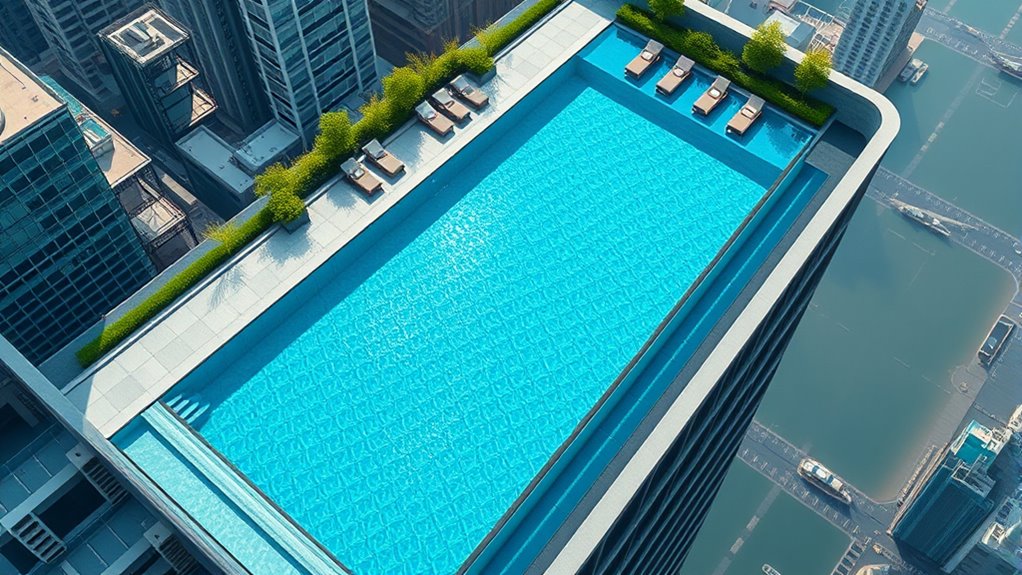
Have you ever wondered why rooftop pools have become such a sought-after luxury? It’s not just about the view or the status symbol—building a pool on top of a building presents unique engineering challenges that demand careful planning and execution. One of the most critical aspects is guarantee the structure can support the additional weight. Structural reinforcement is essential here; the existing building must be assessed and, if necessary, reinforced to handle the substantial load of water, pool equipment, and occupants. This process involves strengthening beams, columns, and the foundation, often with steel supports and additional concrete. Without proper reinforcement, the building could suffer from stress or even structural failure over time, making safety a top priority from the outset. Proper rebar placement and load distribution are key components in ensuring the building’s integrity over the long term.
Structural reinforcement ensures rooftop pools can support the added weight safely and prevent structural failure.
Equally important is waterproofing. A rooftop pool must be sealed meticulously to prevent water from seeping into the building’s structure, which could cause severe damage, including mold, rot, or compromised load-bearing elements. Waterproofing involves applying specialized membranes or coatings that act as barriers against water infiltration. These materials need to be durable, flexible, and able to withstand constant exposure to water, chemicals, and weather conditions. Proper waterproofing isn’t just about preventing leaks; it also protects the building’s envelope, ensuring longevity and reducing maintenance costs. When done correctly, it creates a seamless barrier that keeps the water contained within the pool and away from the building’s structural components.
Designing a rooftop pool also involves integrating waterproofing and structural reinforcement seamlessly. You’ll find that engineers often combine these elements, creating a system where waterproof membranes are installed over reinforced structures, ensuring both stability and water integrity. This integration reduces risks and improves the overall safety of the installation. Additionally, drainage systems are incorporated to manage overflow and prevent standing water, which could compromise waterproofing layers or add unnecessary weight.
In essence, creating a rooftop pool isn’t just about luxury; it’s about engineering precision. Structural reinforcement ensures the building can bear the weight, while waterproofing safeguards against water damage. When these elements are meticulously planned and executed, you get a stunning, safe, and durable rooftop oasis that elevates your building’s appeal—literally and figuratively. So, next time you admire a rooftop pool, remember the complex engineering behind its existence, from reinforcing the building’s structure to waterproofing every surface, all working together to turn a luxury into a lasting feature.
Frequently Asked Questions
How Do Rooftop Pools Impact Building Structural Integrity?
Rooftop pools substantially impact your building’s structural integrity by increasing the building load. To guarantee safety, you might need to implement structural reinforcement, such as stronger beams or foundations. These measures help your building withstand the added weight and prevent potential damage. By carefully evaluating and upgrading the structure, you ensure your rooftop pool remains safe and functional without compromising the building’s stability.
What Are the Best Waterproofing Materials for Rooftop Pools?
Did you know that proper waterproofing is vital for rooftop pools, preventing over 90% of leaks? When choosing pool waterproofing materials, you should consider options like PVC membranes, liquid-applied membranes, or bentonite clay liners. These waterproofing materials offer durability and flexibility, essential for withstanding weather and structural movements. Selecting the right waterproofing material guarantees your rooftop pool stays watertight, safe, and long-lasting.
How Is Water Circulation Maintained in High-Rise Rooftop Pools?
You maintain water circulation in high-rise rooftop pools with reliable water pump systems and circulation pumps. These pumps ensure continuous movement, preventing stagnation and keeping water clean. You install the pumps at strategic locations, often below the pool deck, and connect them to filtration systems. Regular maintenance keeps the pumps functioning efficiently, guaranteeing fresh, clear water while overcoming the challenges of height and space constraints.
What Safety Measures Are Essential for Rooftop Pool Design?
You should install sturdy safety barriers around the rooftop pool to prevent accidental falls and guarantee they meet height and strength standards. Additionally, make sure emergency exits are clearly marked, easily accessible, and unobstructed at all times. Regularly inspect these safety features, and consider adding non-slip surfaces around the pool area. These measures create a safer environment, helping to protect everyone enjoying the rooftop pool.
How Do Weather Conditions Affect Rooftop Pool Maintenance?
Weather variability impacts your rooftop pool maintenance by requiring you to adapt your schedule frequently. Harsh conditions like heavy rain, wind, or extreme temperatures can cause damage or increase debris, so you need to plan maintenance more often during unpredictable weather. Regular inspections and prompt cleaning become essential, ensuring the pool stays safe and functional despite changing weather patterns. Proper planning helps you minimize damage and keep your rooftop pool in top condition.
Conclusion
Building a rooftop pool is like crafting a delicate symphony atop a skyscraper—each challenge requires precise harmony between engineering and design. By addressing structural, waterproofing, and safety concerns head-on, you create a stunning oasis that transforms urban skylines into tranquil retreats. With innovative solutions and careful planning, you turn a complex blueprint into a liquid jewel resting gracefully above the city, proving that even the tallest dreams can be grounded in solid engineering.