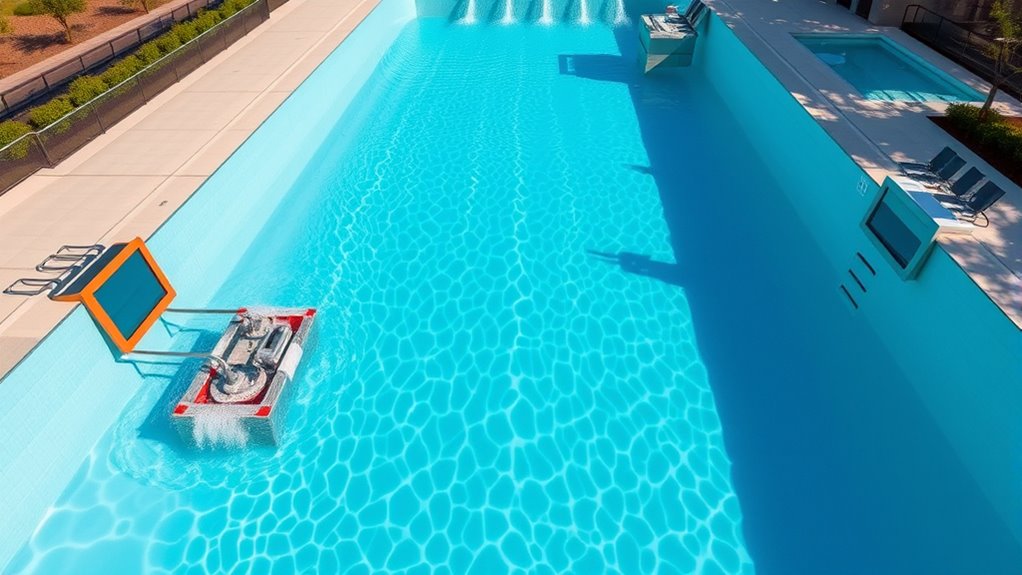

When designing and installing wave pools, you need to choose from technologies like pneumatic, hydraulic, or hybrid systems that suit your desired wave types and maintenance needs. Pay close attention to safety features, water quality, and proper water circulation. Ensuring the pool shape, depth, and safety measures meet regulations helps create a realistic experience while keeping visitors safe. If you want to understand how to balance technology, safety, and realism, explore the key considerations involved.
Key Takeaways
- Select appropriate wave generation technology (pneumatic, hydraulic, hybrid) based on desired wave type and maintenance needs.
- Design pool shape, water depth, and materials to ensure realistic waves, safety, and durability.
- Incorporate advanced control systems for real-time wave adjustments and consistent operation.
- Ensure compliance with safety regulations, including safety features, water quality standards, and emergency protocols.
- Install proper filtration, circulation, and regular maintenance to sustain water quality, safety, and wave performance.

Have you ever wondered how wave pools create natural-looking surf right in the middle of a man-made environment? The secret lies in sophisticated wave pool design, which combines engineering ingenuity with a focus on safety regulations to produce realistic waves while guaranteeing everyone’s well-being. When planning a wave pool, the design process involves carefully selecting the type of waves you want—whether gentle rollers or powerful swells—and then engineering the system to generate them reliably. This includes choosing the right wave generation technology, such as pneumatic, hydraulic, or pneumatic-hydraulic hybrid systems, each with its unique capabilities and maintenance needs.
Creating realistic waves with safety in mind through innovative engineering and precise technology choices.
A well-thought-out wave pool design considers water depth, wave frequency, and wave size to match the intended audience—be it beginners, advanced surfers, or casual swimmers. You’ll need to account for the shape of the pool, ensuring it allows for smooth wave propagation and prevents dangerous currents or turbulence. The materials used in construction also matter; durable, corrosion-resistant surfaces help maintain safety and longevity. Modern wave pools often incorporate advanced control systems that enable operators to adjust wave parameters on the fly, creating a variety of wave types to suit different skill levels and preferences.
Safety regulations are paramount in wave pool design because they directly impact how the facility is built, operated, and maintained. These regulations dictate everything from water quality standards to emergency protocols, ensuring that the environment remains safe for all users. For example, regulations specify minimum water depths in certain areas to prevent injuries, as well as the installation of safety features like handrails, signage, and rescue stations. Additionally, pool designers must incorporate proper filtration and circulation systems to keep water clean and free of bacteria, which is essential for health and safety.
When installing a wave pool, you need to verify compliance with local safety regulations and industry standards. This involves working closely with engineers, safety inspectors, and regulatory bodies to ensure every aspect of the design adheres to legal and safety guidelines. Regular maintenance and safety checks are also crucial to prevent accidents and to keep the waves running smoothly. Training staff on emergency procedures and ensuring clear communication with patrons about safety rules further enhances safety.
Creating a wave pool that mimics the ocean’s power while safeguarding its users is a balancing act. Thoughtful wave pool design, combined with strict adherence to safety regulations, helps deliver an exhilarating yet secure experience. Additionally, understanding the importance of water quality standards ensures that the environment remains healthy and inviting for all visitors. When these elements work together, you end up with a facility that not only impresses with its realism but also prioritizes the safety and enjoyment of everyone who visits.
Frequently Asked Questions
What Safety Features Are Essential for Wave Pool Operation?
You should prioritize essential safety features like clear safety signage and well-defined emergency protocols. Make sure staff are trained to handle emergencies quickly, and install safety barriers to prevent accidents. Regularly inspect equipment for safety compliance, and keep rescue equipment easily accessible. These measures help protect visitors, reduce risks, and promote a safe environment. Communicate safety procedures clearly, so everyone knows what to do in case of an emergency.
How Energy-Efficient Are Modern Wave Pool Systems?
Modern wave pool systems are quite energy-efficient, thanks to advancements in technology and renewable energy sources. You’ll find that they use optimized pumps and wave generators that reduce overall power consumption while maintaining realistic wave patterns. By integrating renewable energy, such as solar or wind, you can further lower operational costs and environmental impact. Overall, these systems balance performance with sustainability, helping you operate a safer and greener wave pool.
Can Wave Pools Be Customized for Different Wave Types?
Yes, you can customize wave pools for different wave types. You’ll find wave pattern customization options that allow you to create various wave shapes and behaviors. Additionally, wave height adjustment features let you control the size of the waves, ensuring the experience suits surfers, swimmers, or thrill-seekers. This flexibility makes wave pools versatile and fun for all users, providing tailored wave conditions to match your preferences or needs.
What Maintenance Is Required for Wave Pool Equipment?
Ever wondered what it takes to keep your wave pool running smoothly? You need to regularly inspect filtration systems and perform chemical treatments to guarantee water quality. Cleaning filters, checking pumps, and balancing chemicals prevent algae and bacteria buildup. Isn’t it satisfying to maintain a pristine, safe environment for swimmers? Staying on top of routine maintenance keeps your wave pool fun, safe, and inviting, all while preventing costly repairs down the line.
Are Wave Pools Suitable for All Age Groups?
Wave pools are suitable for most age groups, but you should prioritize children safety by guaranteeing proper supervision. Accessibility features like shallow areas and gradual slopes make it easier for young kids and people with mobility challenges to enjoy the experience. Always check the pool’s safety guidelines and design to accommodate different age groups, and keep an eye on children to prevent accidents. Proper planning ensures everyone has fun safely.
Conclusion
Wave pools are revolutionizing recreational experiences, offering exciting, customizable waves for all skill levels. With over 150 wave pools worldwide, the industry is booming, and technology continues to advance rapidly. Whether you’re designing or visiting one, understanding the installation and safety considerations is vital. Embrace this innovative trend, and you’ll enjoy exhilarating waves right in your backyard or at a commercial park—bringing the thrill of the ocean to your fingertips in a controlled, sustainable way.