
When comparing chlorine and saltwater systems for your community pool, you’ll find that saltwater pools produce chlorine automatically, feel gentler on skin and eyes, and generally require less manual maintenance. Traditional chlorine pools need regular chemical adjustments and can cause irritation. Saltwater systems involve higher upfront costs but may reduce ongoing chemical handling and improve swimmer comfort. To discover how each system affects water quality, costs, and maintenance, keep exploring the details below.
Key Takeaways
- Saltwater pools generate chlorine continuously, reducing manual chemical management compared to traditional chlorine pools.
- Saltwater systems tend to feel softer and more comfortable for swimmers, enhancing the swimming experience.
- Initial setup costs are higher for saltwater systems, but they may lower ongoing chemical expenses over time.
- Proper maintenance is essential in both systems to prevent issues like corrosion in saltwater pools or algae in chlorine pools.
- Community preferences and maintenance capacity influence the best choice, balancing costs, water quality, and swimmer comfort.
When choosing a pool sanitation system, understanding the differences between saltwater and chlorine pools is essential. As someone responsible for a community pool, you know that proper pool maintenance and managing water chemistry are critical to keeping the water safe, clean, and inviting. Both systems use chlorine in some form, but they do so differently, affecting how you care for the pool and how swimmers experience it.
Understanding saltwater and chlorine pools helps ensure safe, inviting community swimming experiences.
In a traditional chlorine pool, you manually add chlorine tablets, liquid, or granules to keep the water sanitized. You need to monitor chlorine levels regularly and adjust the amount to maintain proper water chemistry. This process involves balancing pH, alkalinity, and cyanuric acid, ensuring the chlorine remains effective without causing irritation or damage. Proper pool maintenance in this setup requires consistent testing and chemical adjustments to prevent issues like algae growth, cloudy water, or skin irritation. Chlorine pools tend to have a more straightforward system, but they demand active oversight to keep water chemistry in check.
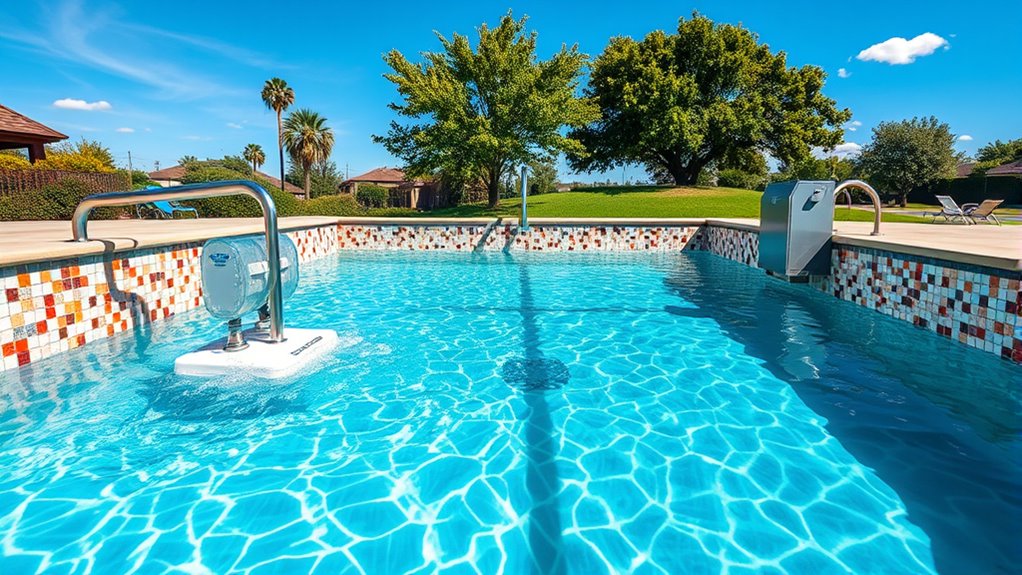
A saltwater pool, on the other hand, uses a salt chlorine generator to produce chlorine from dissolved salt in the water. This setup creates a continuous, low-level chlorine supply, which helps maintain water sanitation with less manual intervention. Once the system is installed, your primary focus shifts to monitoring salt levels and pH balance. Because saltwater pools generate chlorine on-site, they tend to feel softer and less harsh on the skin and eyes, which many swimmers appreciate. The ongoing process of maintaining water chemistry involves less frequent additions of chemicals, but it still requires regular testing to keep everything balanced. Proper water chemistry management in a saltwater pool ensures the generator functions correctly and prevents issues like scaling or corrosion.
Both systems require diligent water chemistry monitoring, but the saltwater pool often simplifies some aspects of pool maintenance. You’ll find that saltwater pools typically need fewer chemical adjustments, which can reduce the time and effort involved. However, they do involve initial investment in the generator system and ongoing salt replenishment. Chlorine pools may feel more familiar and straightforward initially but demand more frequent chemical testing and adjustments.
Additionally, it’s important to note that saltwater pools can lead to corrosion issues, so proper monitoring and maintenance are crucial to prevent equipment damage. Ultimately, your choice depends on your community’s needs and preferences. If you want a system that feels gentler to swimmers and reduces chemical handling, a saltwater pool might be the better option. Conversely, if you prefer a more traditional setup with straightforward chemical management, a chlorine pool could suit you better. Regardless of the system you choose, consistent attention to water chemistry and pool maintenance will ensure a safe, clean swimming environment for everyone.

Intex Krystal Clear Saltwater Pool Chlorine System for Above Ground Pools up to 15,000 Gallons, Pool Cleaner with Automatic Timer and Self Cleaning
✔ UPGRADE TO A SALTWATER POOL – QS1200 saltwater system lets you enjoy the same process used for…
As an affiliate, we earn on qualifying purchases.
As an affiliate, we earn on qualifying purchases.
Frequently Asked Questions
How Do Maintenance Costs Compare Between Chlorine and Saltwater Pools?
You’ll find that saltwater pools generally have lower maintenance costs because of better chemical stability, meaning you use fewer chemicals and deal less frequent balancing. Equipment longevity tends to be higher, reducing replacement costs over time. With chlorine pools, you might spend more on chemicals and repairs due to corrosion. Overall, saltwater systems save you money long-term, especially in upkeep, thanks to their stable chemistry and durable equipment.
Are Saltwater Pools Suitable for All Types of Community Pools?
Saltwater pools aren’t suitable for all community pools. You need to take into account pool size, as larger pools require more salt and maintenance adjustments. Water chemistry balance is essential; you’ll need to monitor salt levels, pH, and alkalinity regularly to prevent corrosion or irritation. If your community pool can handle these factors and has the space for equipment, a saltwater system can be a great, low-chemical alternative.
What Are the Environmental Impacts of Each System?
Chlorine systems often have a higher environmental impact due to chemical runoff, which can pollute nearby water sources and harm ecosystems. Saltwater systems produce fewer chemical byproducts, reducing runoff concerns, but still require salt and electricity, which have their own environmental footprints. You should consider how each system affects water quality and local environments, weighing chemical runoff risks against resource use, to make an eco-friendly choice for your community pool.
Can Residents With Sensitivities Safely Use Saltwater Pools?
Think of saltwater pools as a gentle breeze, but if you have allergy concerns or skin sensitivities, they might still cause discomfort. While saltwater pools produce fewer harsh chemicals, some residents with sensitivities might experience irritation due to salt or trace chemicals. It is crucial to test and consult with a healthcare professional before swimming, ensuring your comfort and safety are prioritized, just like finding a perfect breeze on a warm day.
How Do Start-Up Procedures Differ for Each System?
When starting each system, your initial setup varies. For chlorine pools, you install basic equipment like chlorinators and test kits, then manually add chlorine. For saltwater pools, you focus on equipment installation, including the salt chlorinator, and add salt before turning on the system. Saltwater systems often require a longer initial setup process, but once running, they need less chemical addition. Proper installation guarantees effective, safe pool operation.

Salt-Water Pool Test Strips Kit: 125 Counts 8-in-1 for Salt Water Pool Testing Kit, Salt Pool Test Strips for Hot Tub Spa Testing Salt Chlorine pH and More
Salt Pool Test Strips: Meet the most comprehensive test strips for saltwater system. Combine sodium chlorine(salt) and regular…
As an affiliate, we earn on qualifying purchases.
As an affiliate, we earn on qualifying purchases.
Conclusion
Ultimately, choosing between chlorine and saltwater is like selecting a trusted guide for your pool’s journey. Chlorine acts as a vigilant guardian, fiercely protecting against germs, while saltwater offers a gentle, soothing embrace that reduces harsh chemical exposure. Think of it as balancing a fiery torch and a calming breeze—each has its charm. Whichever path you take, guarantee it aligns with your vision of a sparkling, inviting oasis where every swim feels like a invigorating escape.

In The Swim 3 Inch Stabilized Chlorine Tablets for Sanitizing Swimming Pools – Individually Wrapped, Slow Dissolving – 90% Available Chlorine – Tri-Chlor – 50 Pounds
Cleaner, Safer Water: Our chlorine tablets remove bacteria, algae, and other organic contaminants to ensure your above ground…
As an affiliate, we earn on qualifying purchases.
As an affiliate, we earn on qualifying purchases.

Hayward CL200EF in-Line Automatic Chlorine Feeder, Offline Pool Chlorinator and Chlorine Dispenser, Up to 9 lb Capacity, for In-Ground Swimming Pools
AUTOMATIC OFF-LINE POOL CHLORINATION: The Hayward CL200EF provides consistent pool chlorine distribution for in-ground swimming pools, helping maintain…
As an affiliate, we earn on qualifying purchases.
As an affiliate, we earn on qualifying purchases.