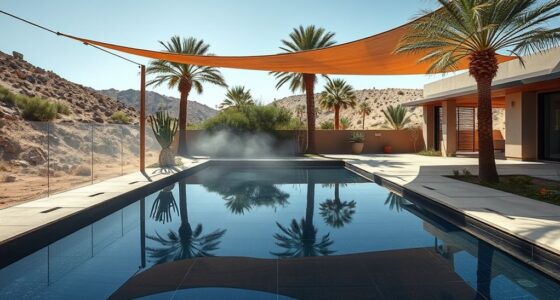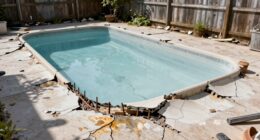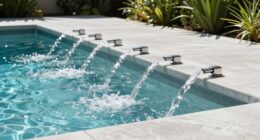

To balance rainfall and overflow in tropical pool design, focus on integrating efficient drainage systems, such as permeable paving and retention basins, to manage heavy storms. Choose durable, weather-resistant materials that resist moisture, mold, and corrosion, and elevate your pool slightly above grade to minimize overflow risks. Incorporate landscape features that channel water away from your pool. Exploring these strategies further will help you create a safe, resilient, and attractive tropical pool environment.
Key Takeaways
- Design effective drainage systems that direct rainwater away from the pool area to prevent overflow.
- Incorporate permeable paving and retention basins to manage excess rainfall sustainably.
- Elevate the pool structure slightly above ground level to reduce flood risk during heavy storms.
- Select durable, water-resistant materials resistant to mold, mildew, and corrosion for longevity.
- Use landscape features to divert and control stormwater flow, balancing rainfall absorption and overflow prevention.

Have you ever wondered how to create a pool that thrives in tropical climates? Designing a pool in these regions requires careful planning to handle heavy rainfall and prevent overflow, all while ensuring durability and safety. Your first step is understanding stormwater management—how to effectively control and direct the frequent, intense rainstorms that characterize tropical weather. Proper stormwater management begins with evaluating your site’s natural drainage patterns and implementing systems that can handle sudden influxes of water. You might incorporate features like permeable paving around your pool area or install retention basins to temporarily hold excess water. These strategies prevent water from overwhelming your pool and surrounding landscape, reducing erosion and property damage.
Material selection plays a pivotal role in ensuring your pool’s longevity and safety in such wet environments. Opt for durable, water-resistant materials that can withstand constant exposure to moisture and fluctuating temperatures. For example, selecting high-quality, non-porous finishes for the pool surface minimizes the risk of cracks and algae growth caused by constant dampness. When choosing pool lining or tiles, prioritize materials that resist mold and mildew, which thrive in humid climates. Additionally, consider corrosion-resistant metals for fittings and fixtures, as the salty, humid air can accelerate deterioration. Your choice of materials should also facilitate easy maintenance and cleaning, reducing the chance of debris accumulation that could block drainage systems or lead to water quality issues. Recognizing the importance of proper drainage helps in designing a resilient pool setup in tropical environments.
Ensuring your pool design integrates effective stormwater management and appropriate material selection isn’t just about aesthetics; it’s about creating a sustainable, functional space that can handle the tropical environment’s challenges. Incorporate an efficient drainage system that directs excess water away from the pool area, preventing flooding and reducing strain on your pool’s structure. Elevating the pool slightly above grade can also help mitigate overflow risks. When selecting materials, always opt for ones proven to withstand high humidity and heavy rainfall, and collaborate with professionals who understand local weather patterns and soil conditions. By doing so, you’ll create a pool that not only complements your tropical landscape but also endures the test of time, rain, and overflow, providing you with a safe, inviting oasis year-round.
Top picks for "balanc rainfall overflow"
Open Amazon search results for this keyword.
As an affiliate, we earn on qualifying purchases.
Frequently Asked Questions
How Do Tropical Storms Impact Pool Safety Measures?
Tropical storms substantially impact your pool safety measures by increasing risks like storm surge and flooding. You should install flood barriers around your pool to prevent water damage and debris. During storms, monitor weather alerts closely, and evacuate or cover your pool if necessary. Ensuring proper drainage and securing loose items also help protect your pool from storm surge and flood-related hazards, keeping everyone safer during severe weather events.
What Materials Withstand High Humidity and Heavy Rain?
You should choose corrosion-resistant materials like stainless steel or composite resins for pool structures, as they withstand high humidity and heavy rain. Additionally, opt for mold-resistant finishes on surfaces and fixtures to prevent mold growth. These materials guarantee durability and safety, even in tropical climates with frequent rainfall. By selecting the right materials, you’ll maintain your pool’s integrity and appearance despite the challenging weather conditions.
How Often Should Pool Maintenance Be Scheduled During Rainy Seasons?
You should schedule pool maintenance weekly during rainy seasons to guarantee effective rainfall management. Heavy rains can cause debris buildup, water balance issues, and overflow risks. Regular seasonal maintenance, including cleaning filters, checking water levels, and inspecting for leaks, helps prevent problems. Staying vigilant and proactive safeguards your pool’s health, reduces potential damage, and keeps your pool safe and clean despite the challenges posed by frequent rainfall.
Are There Eco-Friendly Drainage Solutions for Tropical Pools?
Imagine you’re back in the days of Victorian engineering—today, eco-friendly drainage options are just as innovative. You can incorporate rainwater harvesting systems to reuse rainwater, reducing runoff. Permeable pavements allow water to seep through, minimizing overflow and promoting sustainability. These solutions work together to keep your tropical pool eco-friendly, helping you manage heavy rainfall naturally while protecting the environment and maintaining your pool’s health efficiently.
How Can Pool Design Minimize Mosquito Breeding?
To minimize mosquito breeding, you should focus on mosquito breeding prevention by regularly draining standing water around your pool and ensuring proper water circulation. Using pool cover options, like mesh covers, keeps water clean and prevents mosquitoes from laying eggs. Keep your pool clean, remove debris, and fix leaks promptly. These steps help reduce standing water and create an environment less inviting for mosquitoes.
Conclusion
As you finalize your tropical pool design, remember that balancing rainfall and overflow isn’t just a technical challenge—it’s the key to creating a sustainable oasis. With careful planning, you can prevent surprises that threaten your paradise. But what if the next storm hits harder than expected? Keep your eyes on the horizon, because the true test lies ahead. Will your design hold strong, or will nature’s next move catch you off guard? The answer awaits.