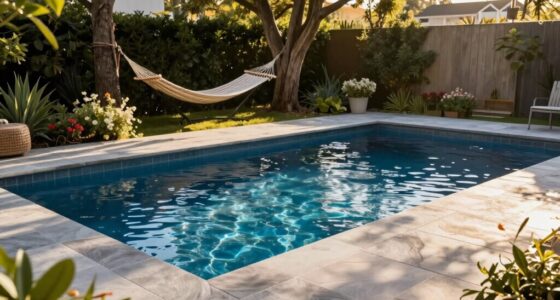
When choosing your pool’s depth profile, focus on safety, activities, and water flow. Include shallow zones for relaxing and kids’ play, and deeper areas for diving or water sports. Smooth progression helps prevent accidents, while proper circulation keeps the water clean and clear. Considering how depth affects heating and maintenance ensures long-term enjoyment. Keep these factors in mind, and you’ll create a pool designed for safety, fun, and easy upkeep—discover more to perfect your plan.

Get pool and patio gear delivered free with Prime
- Fast, free delivery on millions of items
- Prime Video, Amazon Music and more included
- Member-only deals all year
Key Takeaways
- Assess primary pool activities to determine suitable shallow and deep zones for safety and enjoyment.
- Incorporate gradual depth transitions to minimize tripping hazards and enhance safety.
- Consider safety features like signage, barriers, and diving restrictions based on depth variations.
- Ensure water circulation and filtration systems are compatible with the pool’s depth profile for optimal water quality.
- Balance safety, functionality, and maintenance needs to create a versatile, long-lasting pool design.
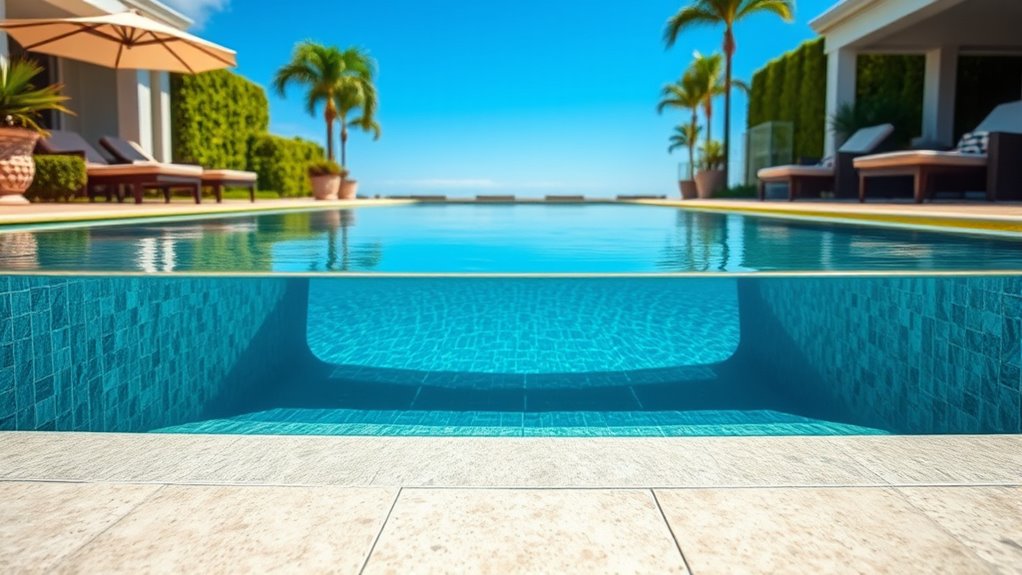
Choosing the right depth profile for your pool is essential to guarantee it meets your recreational and practical needs. The depth influences not only how you enjoy your pool but also how safe and functional it is over time. When considering depth, think about the primary activities you plan to do. If you want to lounge and relax, a shallow area where you can sit comfortably makes sense. For swimming laps or engaging in water sports, a deeper section is vital. Balancing these features ensures your pool supports all intended uses.
Pool safety is a critical factor in selecting the depth profile. Shallow zones reduce the risk of accidents, especially if children or inexperienced swimmers will frequent the pool. They provide a safe space for beginners to practice and play without the danger of deep water. Conversely, deeper areas lend themselves to more advanced activities like diving or water aerobics, but they require proper safety measures such as clear signage, safety barriers, and secure diving boards. Ensuring the pool’s depth transitions smoothly helps prevent trips and falls, enhancing overall safety. Proper design also considers water circulation, which is crucial to maintaining water quality and safety.
Water circulation is another key consideration. Proper circulation maintains clean, clear water and prevents stagnation, which is crucial for both hygiene and safety. A well-designed depth profile affects water flow, as deeper sections can create areas with less movement if not planned correctly. Incorporating features like strategically placed jets or skimmers helps promote consistent circulation throughout the pool. When you choose a depth profile that supports good water flow, you reduce the likelihood of algae buildup and maintain better water quality, making your pool safer and more enjoyable.
Think about how the depth interacts with your pool’s filtration and heating systems as well. A varied depth profile can influence how evenly water is circulated and heated, impacting energy efficiency. For example, deeper zones may require more powerful circulation systems to ensure even temperature and water quality. Additionally, a thoughtful design considers how the depth profile impacts access points and ease of maintenance. You want to make sure that cleaning and servicing the pool won’t become cumbersome due to complex depth changes or inaccessible areas.
Ultimately, selecting the right depth profile balances safety, functionality, and maintenance. It’s about creating a space that’s enjoyable for everyone while minimizing risks and ensuring the water remains clean and safe. When you carefully evaluate how each depth influences water circulation and safety, you’ll design a pool that not only looks great but also functions reliably for years to come. Keep your needs front and center, and make choices that enhance your pool’s usability and safety for all who use it.
inflatable pool with shallow and deep zones
As an affiliate, we earn on qualifying purchases.
As an affiliate, we earn on qualifying purchases.
Frequently Asked Questions
How Does Local Climate Influence Pool Depth Choice?
Your local climate markedly influences your pool depth choice. In colder regions, deeper pools help prevent freezing and ensure safety during winter, aligning with regional safety standards. Conversely, warmer climates may favor shallower pools for easier maintenance and comfortable swimming. Climate considerations also affect water temperature and evaporation rates, so select a depth that balances safety, comfort, and regional safety guidelines for ideal enjoyment year-round.
Can Adjustable-Depth Pools Be Cost-Effective Long-Term?
Sure, adjustable-depth pools are surprisingly cost-effective long-term, especially when you consider their multi-purpose design and aesthetic considerations. Ironically, the ability to change depths means you can host lap workouts or family fun without installing multiple pools. While initial costs might seem high, the flexibility saves money over time, making them a smart investment. You get versatility and style in one sleek package, proving practicality can be stylish.
What Safety Features Complement Different Depth Profiles?
You should install pool fencing around your pool to prevent accidental falls, especially near shallow or deep areas. Anti-slip surfaces on steps and around the pool enhance safety by reducing slips and falls. For different depth profiles, consider adding alarms or covers for extra protection. These features work together to keep everyone safe, regardless of the pool’s depth, giving you peace of mind during swimming and lounging.
Are There Specific Regulations for Pool Depths in Residential Areas?
Yes, there are specific regulations for pool depths in residential areas. Depth regulations and safety standards vary by location, so you should verify local building codes and regulations. These rules often specify minimum and maximum depths, fencing requirements, and safety features. Following these standards helps ensure your pool is safe for everyone, reduces liability, and keeps you compliant with local laws. Always consult your local authorities before construction.
How Does Pool Depth Impact Maintenance and Cleaning Efforts?
Did you know that pools with greater depth require 20% more effort for maintenance? Your pool’s depth directly impacts water circulation, which is essential for even distribution of chemicals and algae prevention. Deeper areas can accumulate debris, making cleaning more challenging and time-consuming. To keep your pool pristine, consider how depth influences circulation and algae growth, ensuring you choose a depth that balances enjoyment with manageable upkeep.
pool safety barriers and signage
As an affiliate, we earn on qualifying purchases.
As an affiliate, we earn on qualifying purchases.
Conclusion
Choosing the right depth profile truly transforms your pool into a perfect oasis. It’s easy to believe that a uniform depth suits everyone, but history shows that personalized designs create more enjoyment and safety. When you tailor your pool’s depth to your needs, you’re not just building a feature—you’re crafting memories and lifelong moments. Trust that thoughtful planning pays off, proving that the right depth isn’t just a detail, it’s the foundation of your dream pool.
automatic pool water circulation system
As an affiliate, we earn on qualifying purchases.
As an affiliate, we earn on qualifying purchases.
pool heating and filtration system for variable depths
As an affiliate, we earn on qualifying purchases.
As an affiliate, we earn on qualifying purchases.
Fall Picks
fall essentials
As an affiliate, we earn on qualifying purchases.